

Marketing has always demanded creativity, speed, and an instinct for what resonates. Now, AI is giving teams the tools to deliver on all three at once.
Today’s marketers can create content at scale, build hyper-personalized campaigns, and streamline the processes that used to eat up their week, freeing up more time for the strategic work that actually drives revenue.
Platforms like monday AI Work Platform are expanding what marketing teams can achieve, with people and agents working side by side to plan, execute, and optimize campaigns faster than ever before.
Key Takeaways
- AI in marketing uses machine learning, data analysis, and natural language processing to automate decisions, predict customer behavior, and deliver personalized content at scale.
- Keeping a human in the loop is not optional. Marketers who deploy AI-driven content testing see a 25% increase in engagement.
- AI is only as good as the data behind it. Clean, well-structured data is the foundation on which every successful implementation is built.
- 76% of customers are frustrated when brands fail to personalize. AI makes personalization at scale possible for teams of any size.
- monday.com’s AI Work Platform puts people and agents on the same team, so marketing teams can move faster and focus on the work that drives results.
In this guide:
- What Is AI in Marketing?
- What Are the Use Cases of AI in Marketing?
- What Are the Benefits of Using AI in Marketing?
- How to Implement AI in Marketing
- What Are the Typical Costs of Implementing AI in Marketing?
- What Are the Data Privacy Implications of Using AI to Contact Customers?
- What Does the Future Hold for AI in Marketing?
- Verdict: How to Use AI in Marketing
- FAQs
What Is AI in Marketing and Why Does It Matter for Marketing Teams?
AI in marketing combines machine learning, data analysis, and natural language processing to help teams automate decisions, predict customer behavior, and deliver personalized content at scale.
AI-powered chatbots, recommendation engines, predictive analytics, and automated content creation, can work together to sharpen how you reach and convert your audience.
The impact goes beyond saving time. AI gives marketers access to insights that were not available before, from real-time signals about how customers are engaging with content, to predictive data that reveals which leads are most likely to convert.
This lets teams make sharper decisions, allocate budget more effectively, and build campaigns that land with the right audience at the right moment.
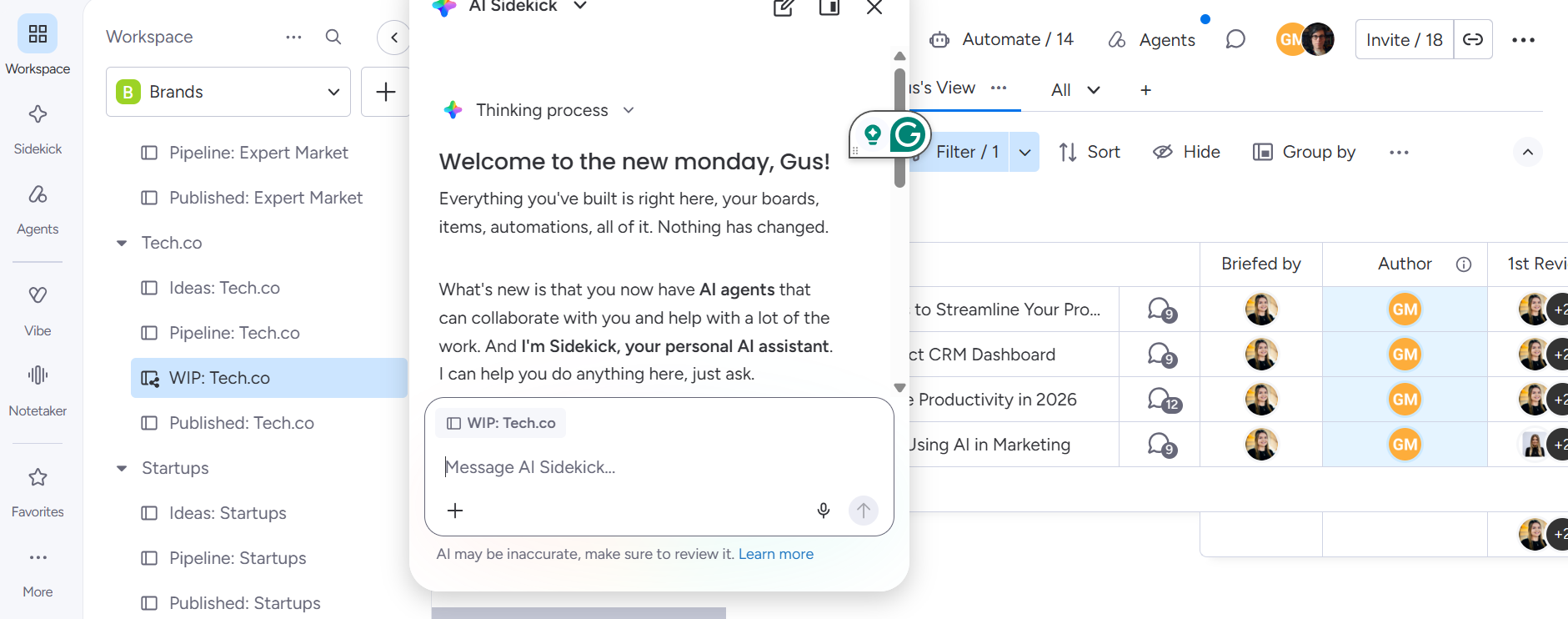
monday.com’s AI Work Platform puts people and AI agents on the same team, handling execution while your team stays focused on strategy, creativity, and the calls that need a human touch.
What Are the Use Cases of AI in Marketing?
AI has a wide range of applications across the marketing function, from content creation to campaign planning to customer engagement. Here is a look at the most impactful ways teams are putting it to work on monday AI Work Platform.
1. Agentic workflow automation
monday agents handle the operational work that typically eats into a marketing team’s day. On monday.com’s AI Work Platform, agents can automatically route tasks, send approvals, trigger follow-up actions, and flag blockers before they slow a project down.
With agents managing the coordination, teams stay focused on the creative and strategic work that actually moves campaigns forward.
2. Content creation
Marketers are increasingly turning to AI to produce social media posts, articles, newsletters, and more.
AI tools and assistants like monday sidekick can draft subject lines, write email copy, caption images, and surface keyword opportunities, automating the time-consuming tasks so teams can focus on high-level decisions like campaign direction and final approvals.
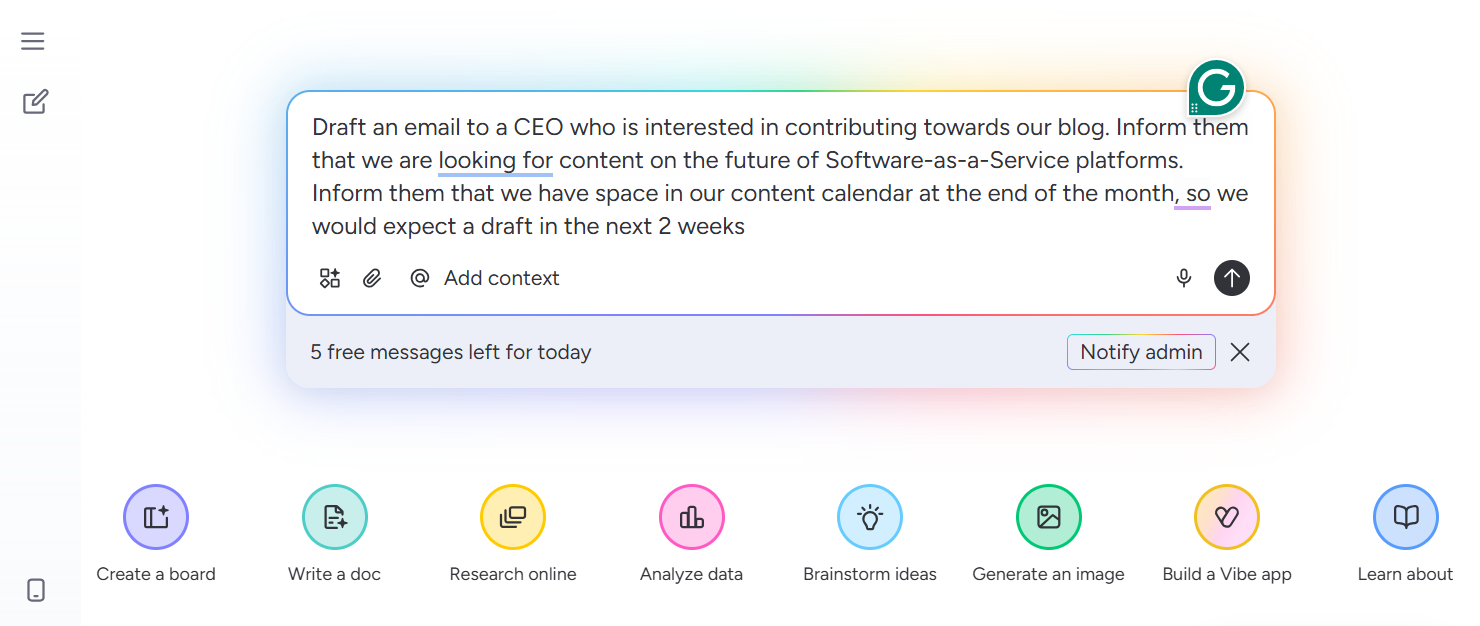
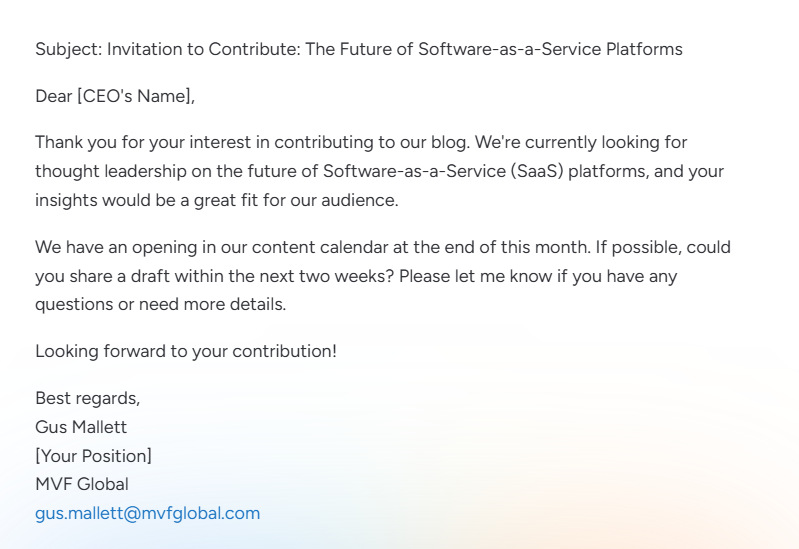
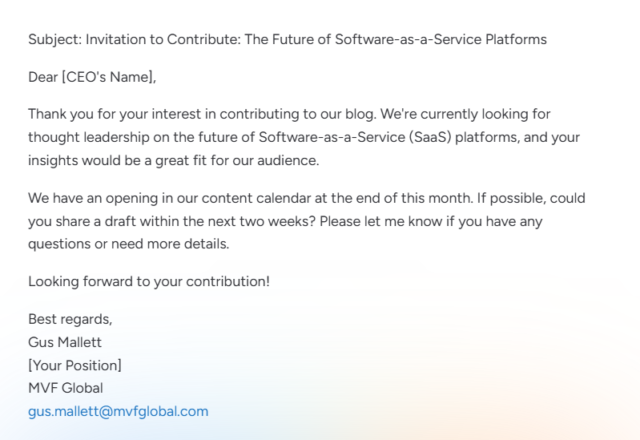
monday Sidekick can generate email copy for specific recipients, producing personalized copy in seconds. Source: Tech.co testing
3. Bespoke product recommendations
AI agents analyze website visitor behavior in real time to identify browsing patterns and surface relevant products. The numbers back this up: 12.3% of shoppers who engage with AI chat go on to make a purchase, compared with just 3.1% of those who do not.
4. Speedy campaign kickoffs
AI enables marketers to get new campaigns off the ground quickly. With monday sidekick, teams can generate end-to-end marketing campaign plans in seconds and populate the corresponding boards automatically, cutting the planning time that typically slows a launch down.
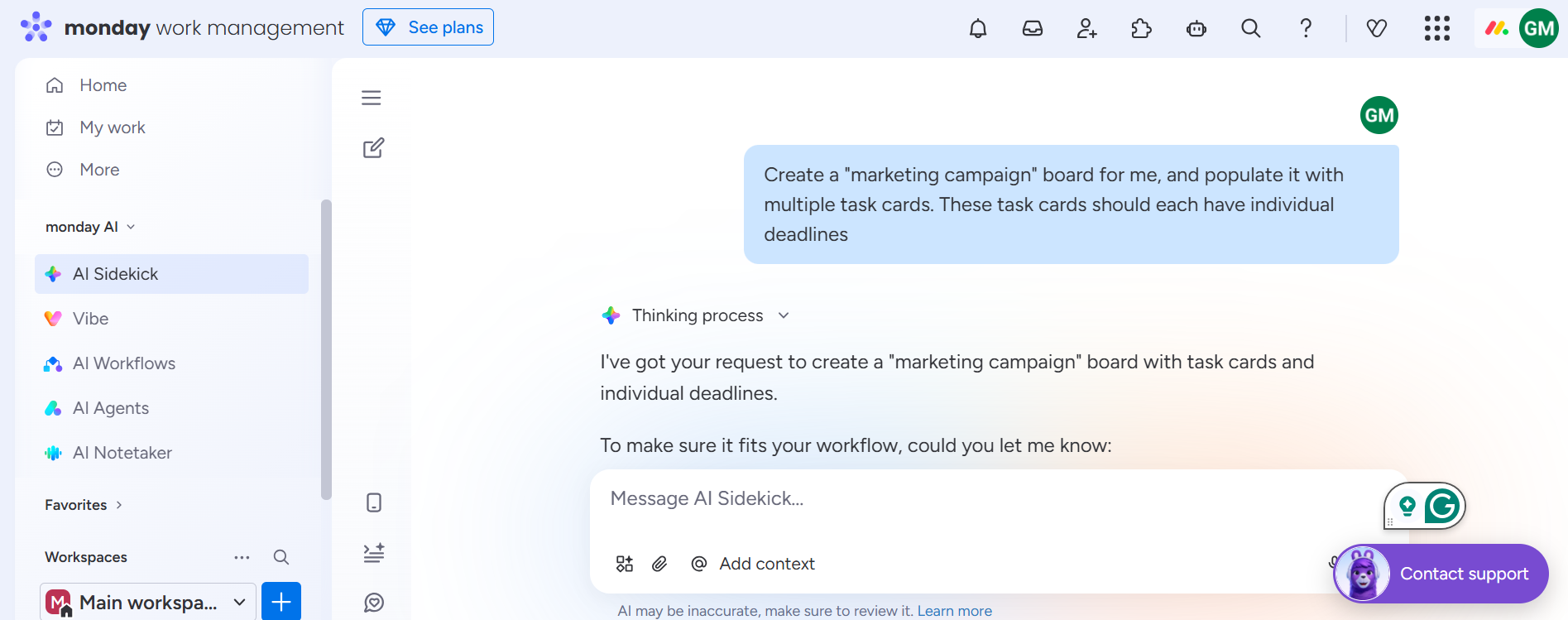
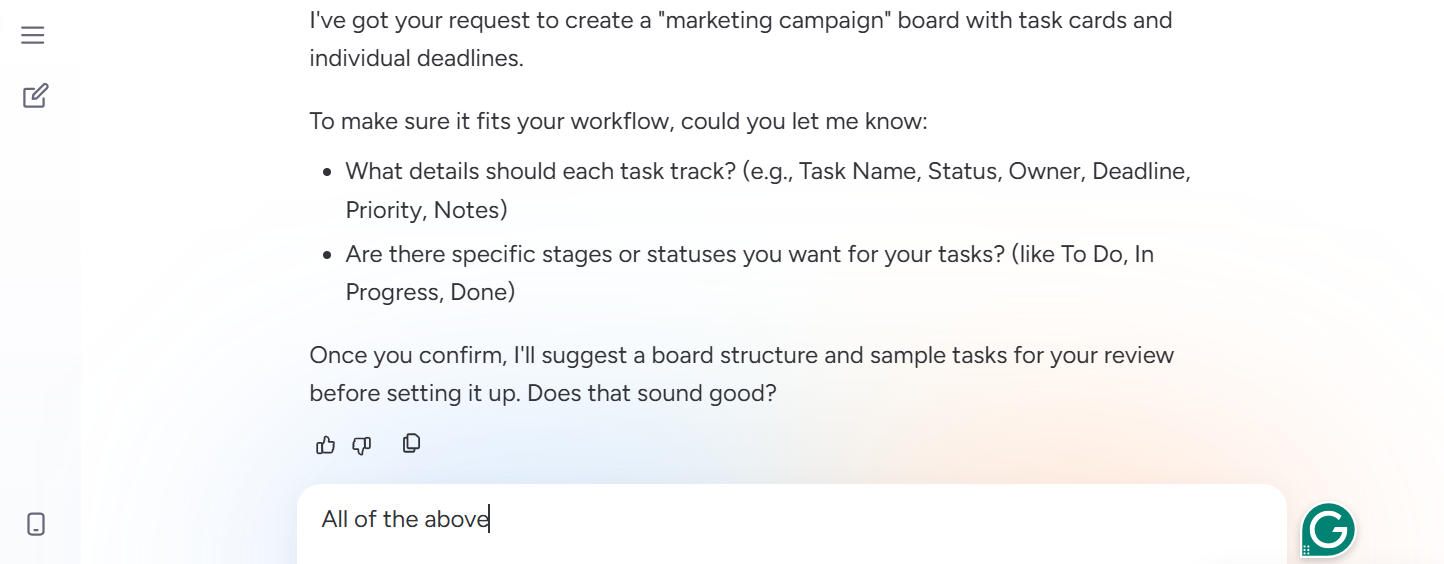
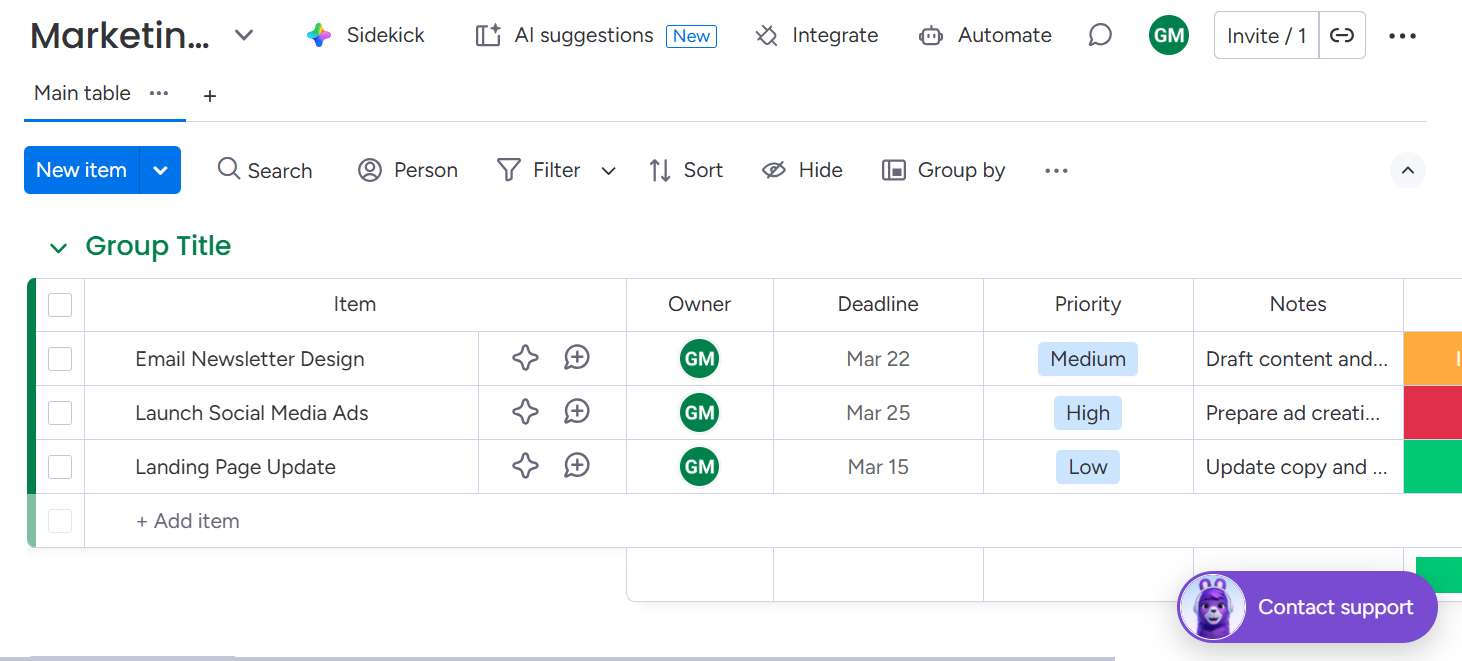
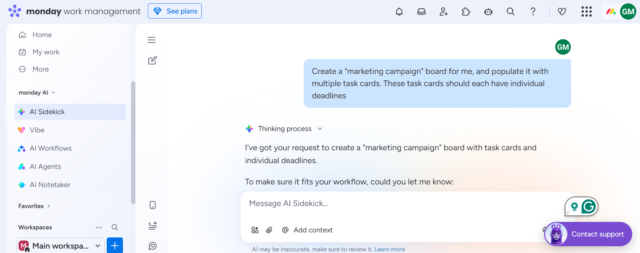
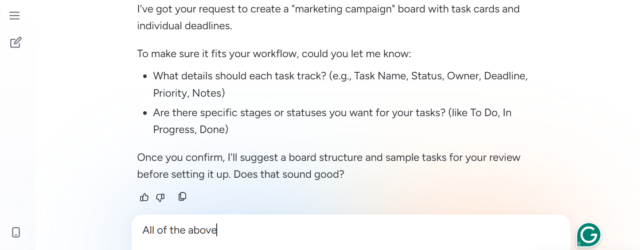
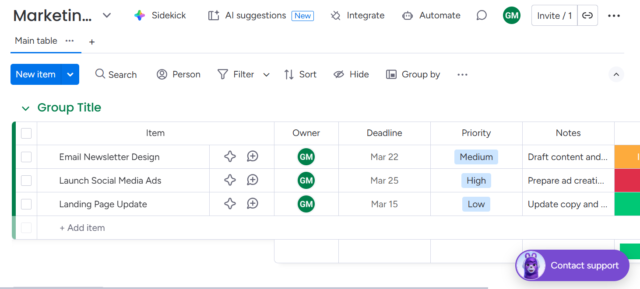
monday Sidekick can generate a marketing campaign and then create a board to host linked tasks. Source: Tech.co testing
5. Performance tracking and reporting
Rather than manually pulling data from multiple sources, AI agents and assistants can monitor campaign performance in real time, flag what is working and what is not, and surface a structured summary when your team needs it. That means faster decisions and less time lost to status updates and reporting admin.
Expert Tip
In 2026, it’s absolutely essential to implement AI into your marketing strategy. However, it’s even more important to make sure that this doesn’t come at the cost of human involvement.
When it comes to automating simple tasks and making life easier for you and your team, AI is unmatched. But remember: only humans can do the human stuff — relatability, empathy, and poignancy.
These emotions are the pillar of every marketing campaign. Don’t forget to include them in yours.

What Are the Benefits of Using AI in Marketing?
AI in marketing brings numerous benefits, including increased efficiency, personalization, return on investment (ROI), and scalability.
1. Increased efficiency
AI takes repetitive, time-consuming tasks off your team’s plate, from data analysis and performance tracking to scheduling and reporting. With monday agents handling the execution, marketers can redirect their energy toward strategy and creative work.
Research suggests that AI can reduce marketing expenditure by 15%–30%, while increasing operational efficiency.
2. Hyper-personalization
AI analyzes customer behavior in real time and uses those signals to tailor messaging, offers, and content to the individual. 76% of customers report frustration when brands fail to deliver personalized experiences, making this one of the clearest areas where AI investment pays off.
3. Improved ROI
By automating the tasks that drain time without adding strategic value, AI ensures teams are spending their hours where it counts. Campaigns get to market faster, resources are allocated more effectively, and the gap between effort and output narrows significantly.
Businesses that operate on a billable basis, such as a marketing agency, will find this valuable, as they can accurately account for time.
4. Sustainable scalability
AI allows marketing teams to scale campaigns across channels and into new markets without a proportional increase in headcount. As complexity grows, real-time data keeps targeting sharp and messaging relevant.
How To Implement AI in Marketing: Tips and Best Practices
Getting AI working for your marketing team is less about the technology and more about how you set it up. These are the practices that make the difference.
1. Supply your AI with good data
AI is only as good as the data behind it. To get meaningful outputs, teams need to feed their tools a high volume of clean, relevant data, particularly around customer preferences and behavior.
When handling sensitive customer information, clear data governance and transparent communication about how it is used are not just best practices, they’re essential for maintaining customer trust.
2. Monitor and optimize your tools
Deploying an AI tool is the starting point, not the finish line. Key stakeholders should track performance continuously against agreed KPIs and iterate as results come in. An email marketing campaign, for instance, might track click-through rate, open rate, and unsubscribe rate as its core measures of success.
3. Keep humans in the loop
AI is a powerful executor, but it takes skilled marketers to deliver empathetic storytelling, build genuine connections, and catch potential ethical issues before they become problems.
Marketers who deploy AI-driven content testing report a 25% increase in engagement, pointing to a hybrid approach as the strongest path forward.
4. Upskill your marketing team
Invest in training programs, mentorship schemes, and other resources to upskill your existing employees on how to use AI in marketing. This builds confidence, reduces friction around adoption, and ensures the technology delivers its full potential.
5. Optimize for AI visibility
Appearing in AI chatbot search results and AI overview snippets is now as important as traditional search engine rankings. To stay visible, teams should create authoritative, experience-led content, answer user queries directly, and keep content updated regularly to maintain freshness.
What Are the Typical Costs of Implementing AI in Marketing?
The cost of implementing AI in marketing can range from $100 to over $500,000 per year, depending on whether you opt for an existing SaaS solution or a custom-built tool, and the scale at which you are operating.
For smaller teams getting started, monday.com’s AI Work Platform has plans from $9 per seat per month, giving teams access to AI-powered workflows and automation without a significant upfront investment. At the other end of the scale, large multinationals with complex, multi-market operations will naturally command higher costs.
What Are the Data Privacy Implications of Using AI To Contact Customers?
Using AI to contact customers raises legitimate security considerations. Many AI models are trained on user inputs, meaning sensitive data shared through an AI tool could surface in future responses if proper safeguards are not in place.
AI also requires large datasets to function effectively, which can sit in tension with data minimization principles that govern how much information businesses should collect in the first place.
To navigate this responsibly, teams should be transparent with customers about how their data is being used and what it informs. Solutions like monday.com’s AI Work Platform are GDPR, SOC 2 Type II, and ISO/IEC 27001 compliant, giving marketing teams a secure foundation to build on.
Handled well, data privacy is not just a compliance requirement, it’s an opportunity to build genuine trust with your audience.
What Does the Future Hold for AI in Marketing?
AI in marketing is still in its early chapters. Here is where the technology is heading next, and what it means for the teams that get ahead of it.
1. Strategy ideation
AI is moving up the value chain. Where it once handled execution, it is increasingly being used to inform high-level marketing strategy, surfacing creative directions and data-backed recommendations to support decision-making at the leadership level.
70% of marketers expect AI to play a larger role in their work in the years ahead.
2. Unique customer experiences
As customers expect more from the brands they engage with, AI will be the engine behind truly individualized experiences.
Streaming platforms like Netflix already use AI to analyze viewing behavior and serve up relevant content recommendations. That same logic is coming to marketing at large, with brands using AI to deliver bespoke experiences at scale.
3. Personalized storytelling
By drawing on deep preference data, AI will allow brands to tailor their narratives to individual customers in ways that feel genuinely relevant. Targeted advertising is already a significant part of the marketing mix, and AI is expanding those capabilities.
4. Agentic AI as an active collaborator
Solutions like monday agents are already changing how marketing teams operate, but the shift is only getting started. Rather than simply executing requests, agents will autonomously launch campaigns, monitor performance, and iterate based on results, acting less like a tool and more like a member of the team.
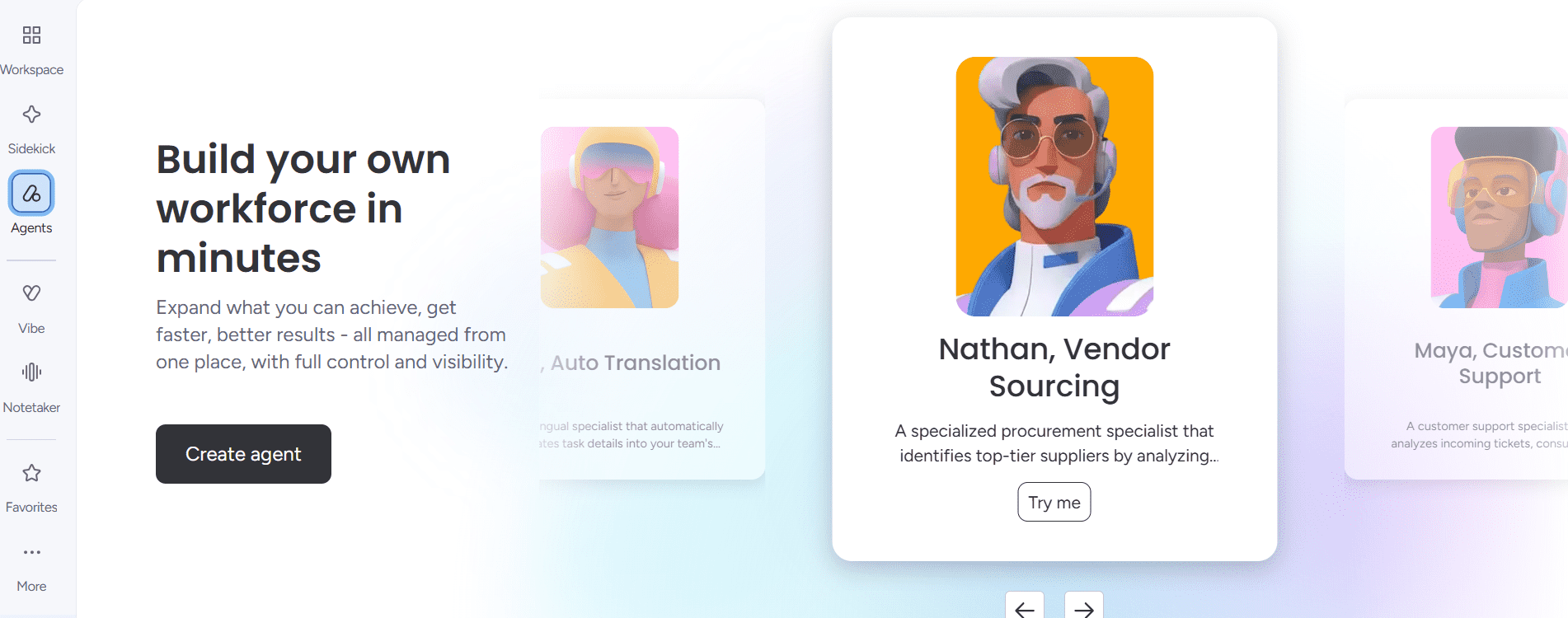
With monday’s AI Work Platform, you can build custom AI agents to supplement your existing workforce. Source: Tech.co testing
5. A renewed appetite for human storytelling
The rise of AI in marketing will sharpen, not diminish, the value of authentic human voices. As AI-generated content becomes more prevalent, audiences will increasingly gravitate toward campaigns that feel real, personal, and grounded in genuine experience.
Verdict: AI in Marketing — The Bottom Line
AI has already changed marketing, and we have barely scratched the surface of its potential. In the years ahead, businesses will use it to bring more personalized, authentic stories to an increasingly demanding audience, while delivering customer experiences that were simply not possible before.
Getting there requires the right foundations: high-quality data, a commitment to monitoring and improving your tools over time, and people involved at every stage to maintain authenticity and catch what AI cannot.
monday AI Work Platform is built to support exactly that, giving teams the infrastructure to scale efficiently without losing the human touch that makes great marketing work.
There is also the ongoing work of monitoring performance, managing ethical considerations, and ensuring your team has the skills to get the most out of the tools available.
monday.com’s AI Work Platform is built around exactly this idea: people and agents working together, not one replacing the other.