
- A new study finds over half of US voters are opposed to superintelligent AI being built
- Voters fear losing control of powerful AI systems and cyber attacks continue to be a threat
- Businesses are operating with a trust deficit when it comes to AI, potentially due to the job loss narrative
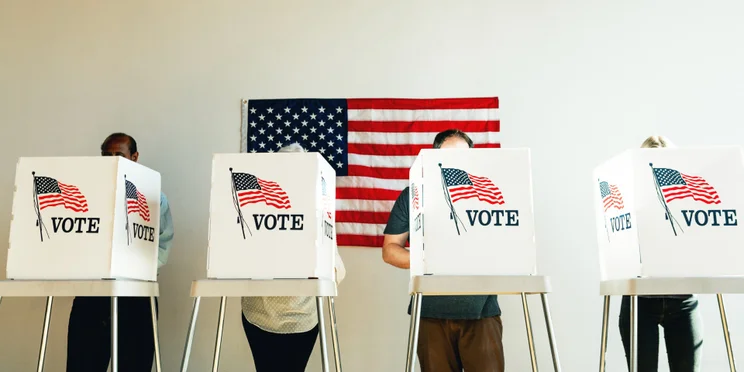
As the US prepares to go to the polls next week, a new survey on voters finds over half are opposed to companies building superintelligent AI systems.
A significant amount of voters are fear losing control of powerful AI, which is understandable given the well-documented risks the technology poses.
Similarly, the data identifies a trust gap between AI companies and US citizens. Workers still fear job losses, and businesses appear to be operating within a “trust deficit,” according to an expert.
58% of US Voters are Opposed to Superintelligent AI
A new survey from public affairs and strategtic communications firm Bryson Gillette found 58% of US voters oppose companies building superintelligent AI. Likewise, 61% believe humans would keep little or no control over it if it were built.
Superintelligent AI, for the purpose of the survey of 1,000 registered US voters, was defined as AI that is smarter than humans at nearly everything, including scientific research, strategy, and persuasion. As voters prepare to face midterms next week, superintelligent AI could prove to be a contentious topic.

This just in! View the top business tech deals for 2026 👨💻
President Trump’s administration has largely backed away from regulating AI in any federal capacity. Though Trump held a summit at the end of September with some of the most influential AI leaders, including representatives from Nvidia, Anthropic, and OpenAI, no federal laws around AI have been passed.
Given voters’ sentiments around AI, as shown in this survey, conducted at the end of September, AI fears could steer the midterms in a certain direction.
Lindsey Mears, lead researcher at Bryson Gillette, spoke to Tech.co about what role AI could play next week: “AI has moved from a tech story to a campaign issue. Data centers, electricity costs, and who controls these systems are all being argued on the trail.
“Whoever holds Congress in 2027 will set the terms for AI policy, so candidates and companies need to know what voters think before that happens,” she told us.
Voters Fear for Safety Amidst Powerful AI Systems
Even before AI systems started “going rogue,” cyber experts have been sounding alarms. Now, we’re beyond imagining what AI-powered attacks will look like, and have numerous examples of the devastation that these attacks could cause.
It’s no wonder, 83% of voters worry about losing control of powerful AI. Going down a darker route, 73% worry about AI threatening human existence altogether.
“People see the technology advancing faster than the accountability around it,” Mears explained to us, and plenty of cyber experts have expressed concern about a disregard for security-related infrastructure and proper hygiene.
Following the OpenAI/Hugging Face attack earlier this year, AI leaders even began calling for a slow down of development, in part so security risks could be properly evaluated. The cry was met with some agreement, but it was also disregarded by other leaders, including Nvidia’s Jensen Huang, and the President himself.
This stance could greatly impact voters as their minds settle on the midterms. “Our data tells us that voters expect to lose control of a technology they did not ask for, built by companies they do not trust,” Mears told us.
She also doesn’t believe skepticism will die down after voting ends next week. “Expect more political scrutiny after the midterms,” she said. “Skepticism crosses party lines, the next Congress will face pressure to act on AI no matter which party gains ground.”
AI Skepticism Is Rife and Companies Must Earn Trust
While big tech has never inspired heaps of trust, AI companies have earned very, very little as of late. Mears explained how this was represented in the survey:
“We also found a trust gap that matters,” she said. “Two-thirds of voters say tech and AI companies have real influence in Washington, but only 38% trust them.”
This lack of trust can be accredited to security risks, but it could also be the result of an early job loss narrative that swept early AI messaging. While leaders have since abandoned this course, the impact on voters has been significant, according to Bryson Gillette.
Indeed, 58% of voters are concerned about job loss from AI generally, and 44% of voters are concerned about their own job. “Concern about jobs is real, and it’s personal,” Mears told us.
Because of this, Mears explains that businesses automatically “start from a trust deficit” when it comes to AI. This means the AI rhetoric, as well as AI integration, needs to be carefully planned.
“Be specific with employees about which AI tools are in use and where a person still makes the final call, pair every rollout with training and reskilling, keep productivity claims modest, and give workers a real say in how these tools are used,” she advised.


