

Vibe coding is a software development method where users build applications by providing natural language prompts — or “vibes” — to AI agents that generate, debug, and deploy the underlying code.
With little technical coding knowledge, you can tell a vibe coding platform what you want to make and how it will work in plain English, and you’ll get a functional, deployable app in a matter of seconds.
Below, we’ll outline some of the benefits and use cases of vibe coding, as well as how you can get started with an AI-powered app-generating tool today.

Key Takeaways
- Vibe coding is a software development process powered by AI that allows users to generate web and mobile apps with natural language prompts.
- The benefits of vibe coding include faster creation and deployment of apps, lowered costs for engineering and development, and a better accessibility to the app creation process.
- Vibe coding is different from standard coding in that it doesn’t require any technical knowledge. You can create full functional apps with normal sentences, rather than code.
- Vibe coding can be used for simple apps, like an internal feedback tool, or complex platforms, like custom book generators, all in service of improving your business.
- Our research found that Base44 is the easiest vibe coding platform to use, but others like Lovable and Cursor might be a better fit depending on your particular needs.
What Is Vibe Coding?
Vibe coding is a means of building web and mobile apps through natural language prompts rather than traditional coding.
As with chatbots, vibe coding tools allow you to chat in plain English with AI agents to ideate and generate executable code.
Essentially, vibe coding is a way to make app building more accessible to those without technical capabilities, like coding and engineering, allowing anyone with a firm grasp of the prompting protocols to create functional apps in seconds. It’s popular: 62% of SMBs are using AI, Tech.co’s April 2026 survey found.
What are the benefits of vibe coding?
- Speed: By generating code from natural language prompts, vibe coding tools make the process of starting your project much quicker, with 26% of senior developers saying that it makes them a lot faster.
- Cost: While the upfront costs of vibe coding platforms might seem like a lot, you can eliminate the need to hire full-time engineering professionals for simple app creation.
- Accessibility: Vibe coding lowers the technical barrier of entry needed to design a sophisticated, genuinely useful app. Previously, this kind of project would have been the exclusive purview of coders and app designers.
How Does Vibe Coding Differ From Normal Coding?
While the end goal is similar, vibe coding and traditional coding represent two fundamentally different approaches to software development.
While traditional coding is a meticulous, hands-on process that involves manually writing each line of code, vibe coding is an AI-powered, top-level process that only requires users to describe their desired outcome.
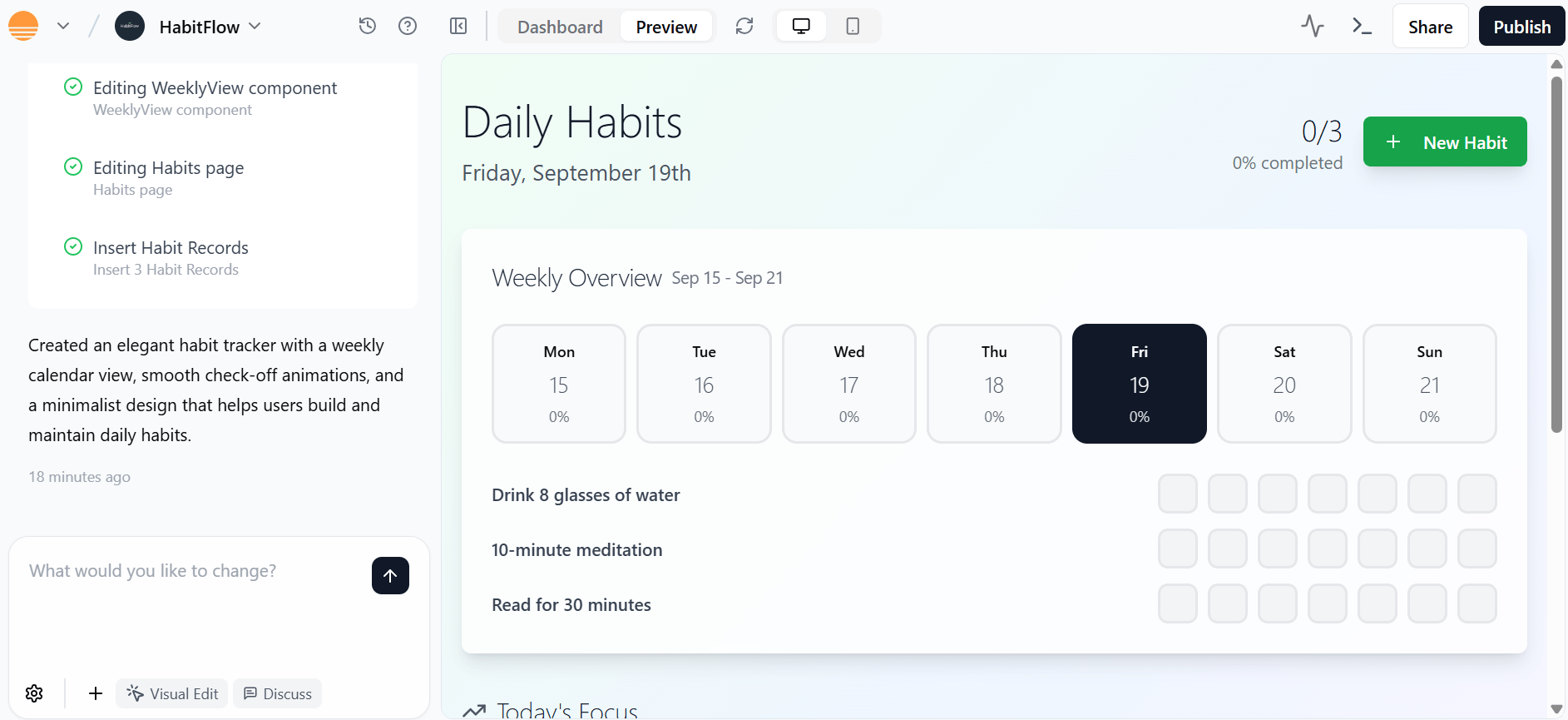
Base44 let me create a habit tracking app from a natural language prompt. Source: Tech.co testing
With vibe coding, the AI handles complex tasks of writing and editing code, leaving the user to focus on other strategic tasks, like running tests and improving the app’s functionality. However, this slicker user experience does come with trade-offs.
Vibe coding vs agentic coding
Vibe coding is a hands-on, creatively-focused methodology for building an app through natural language prompts, while agentic coding is a more automated, set-and-forget process in which the user defines a particular goal for the AI to accomplish in improving existing code.
The primary difference is the level of autonomy given to the particular platform. With vibe coding, you’re talking the AI through the app building process and editing it as you go with natural language prompts until you get exactly what you want. With agentic coding, you’re giving the AI a list of instructions and letting it do its thing.
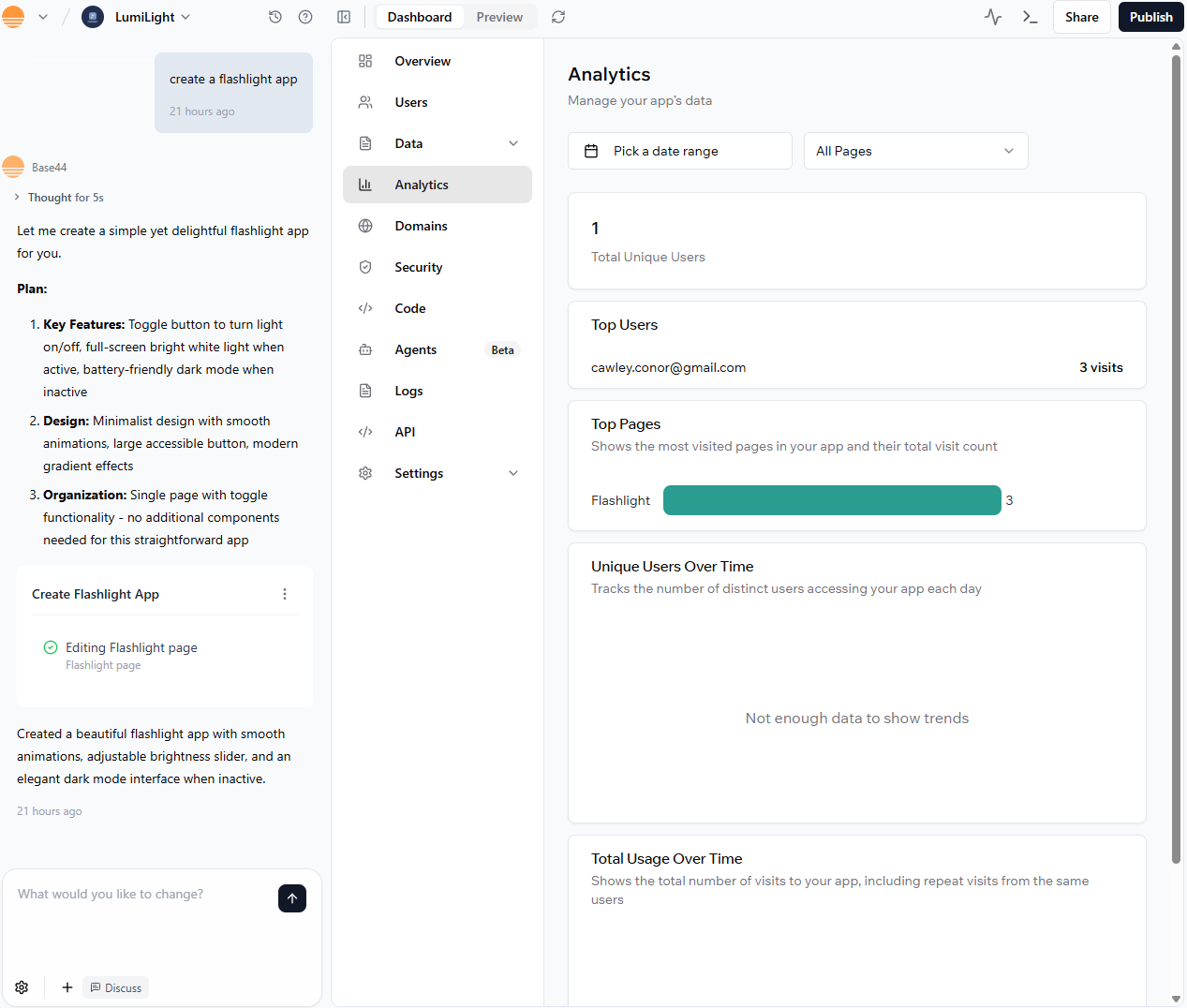
Base44 allows you to access analytics immediately after generating your app. Source: Tech.co testing
Real-World Examples: What Can You Build With Vibe Coding ?
Vibe coding tools are used for a wide range of different functionalities, from internal tools to full-on consumer-facing platforms. Here are some real-life examples of platforms created with vibe coding, from businesses that are doing well in 2026.
- Internal feedback tool: A company called Cirrus Bridge used v0 by Vercel to “to prototype an internal tool for tracking product feedback across multiple client conversations,” and it’s used as the sole customer dashboard across the company.
- Custom book generator: A company called Gift My Book used Base44 to develop a custom book generator app that asks customers simple questions, crafts a custom comedy book, and then sends it to a print-on-demand service.
- Instant background check platform: A company called Plinq created a background checker that can instantly analyze public data sources of criminal and legal records data to protect women.
Even company websites can be built with the aid of AI. Tech.co’s April 2026 survey found that 72% of SMBs have a website, but 28% are still held back by barriers like a lack of time, high costs, and a lack of expertise.
These varied use cases suggest that, no matter how niche your idea, you’ll be able to bring it to life with vibe coding — the limit really is your imagination.
What Are the Limitations of Vibe Coding?
While vibe coding can improve the speed and efficiency of the app building process, there are some notable limitations that could cause problems down the line, if you aren’t prepared.
- Security: Some vibe coding platforms have been found to occasionally use proprietary company data in client-facing code, because it speeds up the process, but it can be a serious security risk.
- Scalability: Data infrastructure on vibe coding platforms doesn’t typically take high volume traffic into account, so make sure you plan for scalability if you plan on making it big.
- Code ownership: Some vibe coding platforms have closed-off systems that won’t let you download your code to use it elsewhere. Additionally, AI generated code isn’t copyrightable in 2026, so you could run into an issue there too.
- Maintenance: If you aren’t technically proficient, you won’t be able to fix broken code if something happens and vibe coding platforms can only do so much to help.
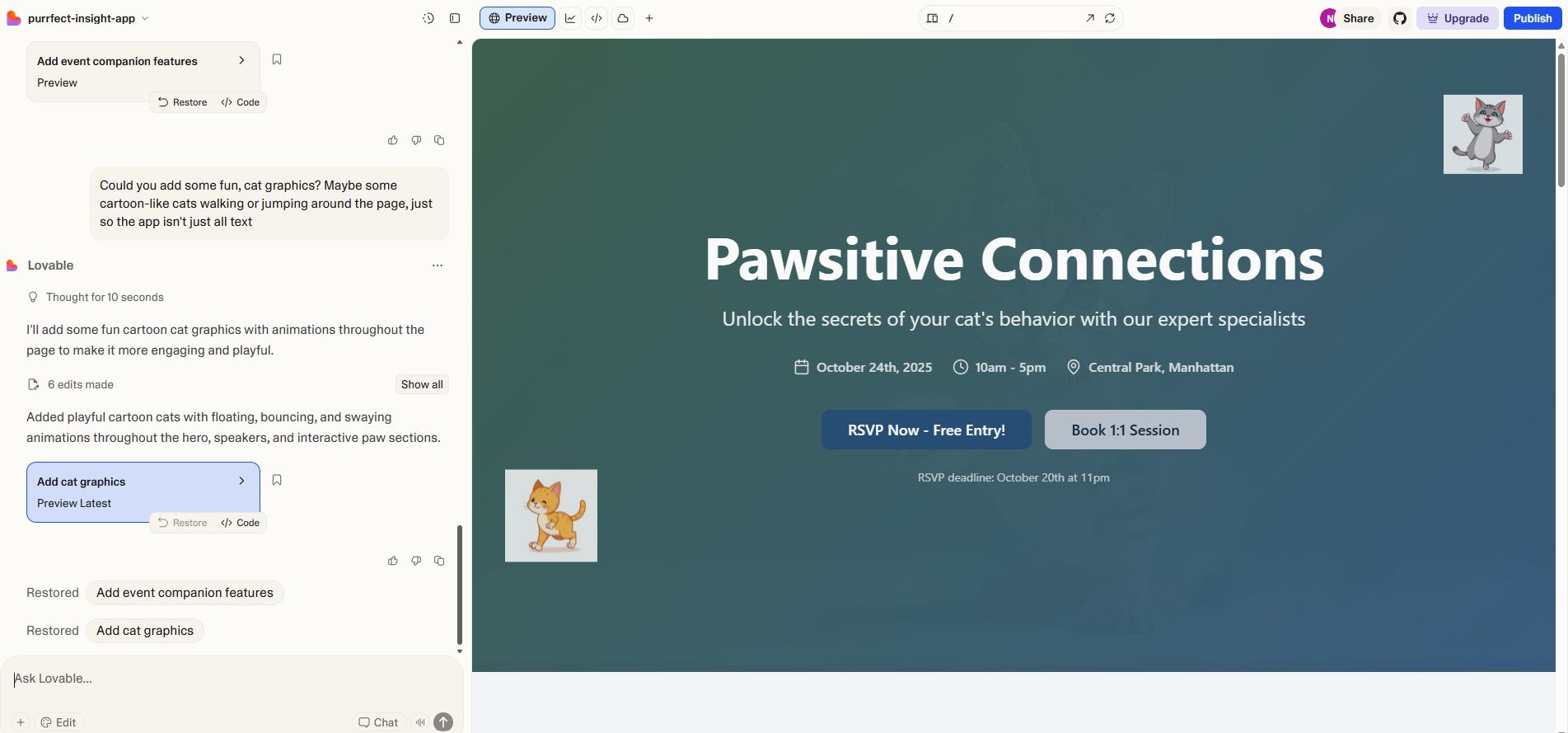
Asking Lovable to add some cat graphics to my new app with mixed success. Source: Tech.co testing
Vibe coding will be right for you if:
- You need to build a prototype to quickly test an idea
- You prioritize speed and ease over granular control
- You want to develop a simple app for internal use
- You want to develop a workplace solution without hiring a full development team
You’d be better off using traditional coding if:
- Your project is highly complex and requires specialized functionality
- You have the budget to invest in a full development team
- The app you intend to design will handle highly sensitive data
- You want full ownership of your codebase without relying on a third-party ecosystem
How to Get Started with Vibe Coding
Interested in seeing what vibe coding can do for you? Getting started is surprisingly straightforward, especially if you’re already familiar with tools like ChatGPT or Gemini. Hit the ground running by following these simple steps:
- Come up with a clear vision: You need to have a clear idea of the app’s core purpose, features, and target user.
- Craft your initial prompt: Describe your app with as much detail as possible. Structure the prompt with context, the task, and important details.
- Refine your app: After you get an initial preview of your app, edit it using the chat feature until you’re happy with the result.
- Test your app: Once you’ve refined your app, deploy it to the web and share it with your wider network using the public URL.
There are a lot of vibe coding platforms to choose from. Base44, for example, which we mentioned earlier on, is a full-stack AI-driven app builder that allows you to create complete applications from natural language prompts alone.
It lets you access the platform’s core features for free, but to unlock more generous message and integration credit limits and backend features, you’ll have to upgrade to one of its paid plans, which at just $20 per month.
Vibe coding tools comparison
We at Tech.co have done some hands-on research of top vibe coding platforms and found that Base44 is the easiest to use for beginners, because it provides a true no-code interface with easy deployment tools.
Hostinger Horizons, meanwhile, is the cheapest option on the market, so is a great option for cost-conscious businesses.
There are other vibe coding platforms out there that may be a better fit depending on your needs. Below, we’ve compared some of best vibe coding platforms available on features and pricing, so you can make the right choice for your business.
| Brand | Price | Free plan | Free trial | Full-stack app generation Does the platform build both the frontend and backend of the app for you? | Browser-based platform Can you access the platform on a browser without downloading an app? | GitHub integration Does the platform integrate with GitHub? | Real-time collaboration Can multiple users collaborate in real-time on the platform? | Edit code Does the platform generate editable code? | Plug-ins/extensions Does the platform offer functionality with plug-ins and extensions? | Key strength | |
|---|---|---|---|---|---|---|---|---|---|---|---|
 |  |  |  |  | |||||||
| Base44 | Bolt.new | Cursor | Lovable | v0 | |||||||
| $16/month | $18/month | $16/month | $21/month | $20/month | |||||||
| | | | | | |||||||
| | | 14 days | | | |||||||
| | | | | | |||||||
| | | | | | |||||||
| | | | | | |||||||
| | | | | | |||||||
| Paid plans only | | | | | |||||||
| | | | | | |||||||
| All-in-one ecosystem | Full-stack browser app generation | In-depth AI-powered coding assistance | Valuable coding integrations | Seamless hosting with Vercel |
If you click on, sign up to a service through, or make a purchase through the links on our site, or use our quotes tool to receive custom pricing for your business needs, we may earn a referral fee from the supplier(s) of the technology you’re interested in. This helps Tech.co to provide free information and reviews, and carries no additional cost to you. Most importantly, it doesn’t affect our editorial impartiality. Ratings and rankings on Tech.co cannot be bought. Our reviews are based on objective research analysis. Rare exceptions to this will be marked clearly as a ‘sponsored’ table column, or explained by a full advertising disclosure on the page, in place of this one. Click to return to top of page