How to Use ChatGPT’s New Voice Command and Image Features

OpenAI has just announced a major ChatGPT update that introduces voice command and image input to the wildly popular chatbot.

In one of the most exciting ChatGPT updates since it became possible to install ChatGPT plugins, the popular AI chatbot now lets you prompt it using voice commands and by uploading pictures.

It means that ChatGPT is now much more than just a text-based companion for all your online endeavors, with the addition of these interactive features moving it one step closer to being able to replicate human-to-human interactions.

The new functionality will initially be available to ChatGPT Plus and ChatGPT Enterprise users, who will get access “in the next two weeks.” This suggests a phased rollout, and if you want to check if you’re one of the lucky ones who can talk to the generative AI tool early, here’s how to use voice commands with ChatGPT.

How To Use Voice Commands on ChatGPT

OpenAI, who owns ChatGPT, announced the blockbuster update in a recent blog post. The voice update will be available only on the ChatGPT apps for Android and iOS, while image-based interactions will be supported on the web platform, too.

If you’re a ChatGPT Plus or Enterprise subscriber and want to check out the new feature for yourself, then it couldn’t be easier to do so. Simply open ChatGPT and make sure you’re logged in to your premium account, then navigate to Settings > New Features and you’ll be able to opt-in to voice conversations. Remember, if you can’t find this option right now, it’s probably just because it hasn’t rolled out to just yet and there’s no need to panic.

Once you have secured access, it’s all about learning to how to use voice with ChatGPT to the best effect. Bearing in mind it’s mobile-only, you’re likely to get the most mileage simply from the convenience of being able to ask it to execute the best ChatGPT prompts, instead of having to type them. It’ll be fascinating to see how people do interact with when it’s more widely available, which is something OpenAI says will happen in due course.


About Tech.co Video Thumbnail Showing Lead Writer Conor Cawley Smiling Next to Tech.co LogoThis just in! View
the top business tech deals for 2026 👨‍💻
See the list button

How To Use Image Input on ChatGPT

The other major addition to ChatGPT is the ability to input images into the chatbot. The use cases here are more obvious, given the visual nature of the society we live in and OpenAI has already offered up a handful of suggestions on how to use the new feature.

“Snap a picture of a landmark while traveling and have a live conversation about what’s interesting about it. When you’re home, snap pictures of your fridge and pantry to figure out what’s for dinner (and ask follow up questions for a step by step recipe). After dinner, help your child with a math problem by taking a photo, circling the problem set, and having it share hints with both of you,” the company writes.

There’s no need to opt in to this feature, apparently, it should just become available to Plus and Enterprise subscribers over the next couple of weeks.

Screenshot of ChatGPT update introducing voice and image support

How Does Voice on ChatGPT Actually Work?

For those interested in the more technical aspects of how voice works with ChatGPT, what we know right now is that the capability is powered by an all-new OpenAI text-to-speech model that’s “capable of generating human-like audio from just text and a few seconds of sample speech.”

OpenAI adds that it’s working with professional voices actors to create the different voice profiles that will be offered when using the feature, while transcription of a user’s words into text is made possible by the company’s Whisper system.

After rolling out to Plus and Enterprise users, OpenAI says that developers will be the next to get access to ChatGPT’s new voice and image input powers.

Written by:
James Laird is a technology journalist with 10+ years experience working on some of the world's biggest websites. These include TechRadar, Trusted Reviews, Lifehacker, Gizmodo and The Sun, as well as industry-specific titles such as ITProPortal. His particular areas of interest and expertise are cyber security, VPNs and general hardware.

What Is Temu and Is It Safe? I Ordered To Find Out

Not sure what Temu is or if it's safe to shop on? I ordered to see for myself and can tell you what it's really all about.

The first time you see its super low prices, you’d be right to wonder if Temu is legit or not. It’s certainly got its share of bad reviews and complaints on sites like the Better Business Bureau (BBB), which could lead you to believe it’s not safe to shop on. You may also just be plain confused by the upstart online retailer suddenly popping up with ads on your social media feed. To really understand what Temu is all about, I took the plunge and ordered a car charger from it. Here’s what you really need to know about Temu, based on this experience.

Before starting my Temu shopping journey, I found it useful to remember that pretty much all online retailers, including giants like Amazon, get routinely slated on sites like the BBB. They’re basically a dumping ground for the frustrations of customers whose orders have been problematic, which is something I’ll touch on in more detail later. Similarly, while Temu’s rock bottom prices seem too good to be true, its direct access to the wholesale Chinese supply chain means it cuts out the middle man and keeps the end cost to you mindbogglingly cheap.

Of course, once you’ve shopped around Temu a bit, you begin to notice it does have its fair share of shortcomings. In this guide, I’ll share both sides of my experience ordering from Temu, so you can see first-hand what it’s all about and then make your own mind up if it’s safe or not. Let’s start with a bit of useful background information on what Temu is.

What is Temu?

Launched in late-2022, Temu is the new kid on the block in the world of online shopping. It’s giving the big dogs a run for their money, with the Temu app currently the most popular shopping app for both iOS and Android, where it’s beating the likes of Amazon, eBay, Walmart and many others.

Temu sells everyday items like electronics, cosmetics and clothing so cheaply it seems like it might be a scam, but having ordered from it myself, I can tell you that’s not the case. More on that shortly.


About Tech.co Video Thumbnail Showing Lead Writer Conor Cawley Smiling Next to Tech.co LogoThis just in! View
the top business tech deals for 2026 👨‍💻
See the list button

Another essential thing you should know about Temu is that it offers global shipping coverage. You can order directly from Temu in US, UK, mainland Europe, Australia, and much of Asia. Best of all, Temu shipping is free, even though you might spend more on lunch at the local sub shop than you do getting Temu to send you cheap HDMI cables. There’s also a generous 90 day returns window, in line with what’s offered by other online mega stores.

Who owns Temu?

Temu is owned by a company called PDD Holdings. Before Temu, it was best known as the parent firm of another online retailer, Pinduoduo. That site specialized in budget agricultural equipment but had a questionable reputation. Specifically, it was suspended from the Google Play Store over malware concerns and found itself at the center of a scandal after two worker deaths.

This hasn’t exactly helped Temu’s standing, but it should be said that serious concerns over employee conditions in the Chinese supply chain have plagued big tech for years – Apple’s relationship with Foxconn being another problematic example.

Where is Temu located?

There are two answers to this questions. Temu itself is headquartered in Boston, MA, while parent company PDD Holdings recently moved its headquarters from Shanghai to Dublin. In terms of the goods Temu is supplying, these are still coming direct from China, which is why its prices are so cheap.

Why is Temu so cheap?

Temu is so cheap because it cuts out the middle man and provides shoppers with prices direct from the Chinese wholesale supply chain. It’s reportedly losing a lot of money doing this, but it’s a strategy that has allowed it to quickly establish a foothold is Western markets previously dominated by the likes of Amazon. In terms of the US market specifically, it’s also able to take advantage of the de minimis loophole, which sets out that imports under $800 are not subject to duties, taxes or other tariffs.

What is Temu Actually Like To Shop On?

On the whole, not that different from shopping on other online retailers. Head to the Temu website and you’ll find a familiar interface with products available to browse by type, along with plenty of deals, promos and special offers. When I last went to check out Temu’s wares, it was the retailer’s Fall Sale in the spotlight, along with Halloween merch being pushed.

Temu US homepage featuring items for sale

As you can see, the main nav bar provides easy access to a number of other useful landing pages, from specific product categories to deals and a “Best Sellers” section that I found useful to get an idea of what sorts of things other people are buying on Temu. The answer? Apple Watch lookalikes and sneakers, it would seem.

The Best Sellers page on the Temu website

If you decide to investigate something further, you’ll find that individual product pages are laid out in a user friendly manner that’s likely looks familiar to online shoppers. As well as having a user review system in place, Temu also clearly states a delivery window for each item, as well as that item’s success rate at arriving in that window. While seeing that there’s a more than 20% chance an item might be delivered late isn’t great, at the same time I actually found Temu’s honesty here reassuring, as it reflects the realities of ordering something direct from China.

Want to be the next Temu? Read our guide to the Best Ecommerce Website Builders

A product page on the Temu website with the delivery window highlighted

Having recently bought a wireless iPhone car charger on Temu, what I was really interested in was the “Your orders” section to see what kind of order tracking you can expect from the retailer. For anyone shopping on Temu for the first time, it’s a pleasant surprise to discover that it provides the same kind of thorough and transparent order tracking that you get from other big name online retailers. This is visible on the website itself, but I also received regular update emails from the retailer confirming key stages of the dispatch and shipping process. This was reassuring, given poor communication was one of the more common Temu complaints I’d encountered in my research prior to ordering.

Order tracking page on the Temu website showing an item's progress


The main thing to note here is that you’ll notice my item was indeed being delivered. Not only that, I can tell you that it was delivered on time, based on the window Temu gave me at the start of the shopping process. I saved about $15-20 and, ironically, the only hiccup in delivery was down to Evri, who failed to deliver it when promised.

Of course, you may notice that there’s a lot more to order tracking on Temu than when you task Amazon with delivering the new Madden every September. That’s obviously because there’s a lot more to delivering straight from China than from your local Amazon warehouse.

Which brings us to Temu’s shortcomings.

What Isn’t So Good About Temu?

My Temu order arrived 10 days after I ordered it, which is in keeping with the “roughly 10 days” window I was expecting based on my pre-purchase research. The fact is that Temu takes longer – a lot longer – to get stuff to your front door. This means it won’t be for everyone, at least not all of the time. The lengthy transit took its toll on my item, too, and you can see the wear and tear for yourself.

I knew it was never going to be like unboxing a new iPhone, so this isn’t really a problem. The problem is the lengthy delivery itself. Much of what’s bought online these days falls into the category of “semi-panic” shopping. When I lost the last of my child safety lock keys the other day, there was no question of checking if I could get them from Temu for less – I needed them tomorrow and Amazon was the only place for that. In other words, Temu is only really an option if you can afford to wait for something. This means it’s good for, say, kitting yourself our with a new season wardrobe on the cheap – but less suitable when you forget a birthday or anniversary and have to snap something up at the last minute.

There were also a couple of things I searched for where Temu wasn’t able to live up to my hopes. For instance, when I searched Temu for golf balls, what was available wasn’t actually any cheaper than buying them new from a local budget retailer, or bagging a lake ball deal off Amazon. The so-called top deal, featuring 12 non-brand name golf balls for $34, is actively bad value – and the idea of it being “originally” priced at $80 and therefore over 50% off is also questionable. Let’s not pretend other retailers are immune to this, but this is a particularly bad example.

Golf balls on the Temu website

Ultimately, if you shop on Temu it’s your responsibility to know if a deal is legit or if it’s a lemon. You’re also likely to quickly discover what you personally are able to use Temu for, and where it comes up short for you. In my case, I’d happily use it to get cut-price versions of gadgets I don’t really need (like wireless iPhone car chargers) but want nonetheless. It’s useful if you want to try a particular type of product to see if it works for you, before potentially upgrading to something more premium.

Verdict: What Temu is Depends on Who You Are

Based on my experience, Temu is a perfectly legitimate online retailer that will get you the items you ordered, most likely within the timeframe it says it will. If it doesn’t, you’ll be reasonably compensated. That much is clear.

Its overall utility as an online retailer, therefore, isn’t really in question. Its utility to you, as an individual shopper, is what you need to ask yourself. If you go in with realistic expectations, such as to buy a bunch of fast fashion on the extra cheap or try out new gizmos, you’ll probably (like me) be pretty happy. If you’re expecting premium goods delivered to you on military deadlines, you’ll discover pretty quickly it’s not for you.

To come full circle, another way to answer the key question of “What is Temu?” would simply be: whatever you want it to be. Temu is neither a great value retailer for everyday essentials or a purveyor of cheap Chinese goods. It’s both.

Read Next: The Main Ways Technology is Impacting Your Daily Life

Written by:
James Laird is a technology journalist with 10+ years experience working on some of the world's biggest websites. These include TechRadar, Trusted Reviews, Lifehacker, Gizmodo and The Sun, as well as industry-specific titles such as ITProPortal. His particular areas of interest and expertise are cyber security, VPNs and general hardware.

The Best Free and Paid AI Resume Builders for 2023

We've put the best free and paid AI resume builders available online to the test to find out which one is the most useful.

For months now, AI has been helping businesses complete tasks, saving them valuable time and money – but it’s also great at helping employees secure new jobs by building them resumes.

Resume building can be a long, arduous process. Knowing precisely how to showcase your experience and present yourself as a great fit for any job isn’t an easy task. But, as with many things, that’s where AI can now help you out.

In this guide, you’ll find out why Zety is the best AI resume builder, how its closest competitors stack up, and how to use ChatGPT to improve your resume.

What Is an AI Resume Builder?

An AI resume builder is any program or service that utilizes artificial intelligence to automate the resume-building experience for users.

With an AI resume builder, you simply have to input your qualifications and experience, and the software will take care of all of the design and formatting duties. Some of the more sophisticated AI resume builders currently available can auto-generate text, and others will analyze your resume and suggest improvements.

Along with dedicated AI resume builders, you can also ask generative AI tools like ChatGPT or Bard to write specific aspects of your resume, provide examples of good resumes and make aesthetic recommendations, but they don’t have design functionalities.

The Seven Best Resume Builders

Below, we’ve reviewed the top 7 resume builders with expansive paid plans. A lot of them, like Enhancv, also have free plans – which we’ll discuss later on in this article.

  1. Zety Resume Builder
  2. KickResume
  3. MyPerfectResume
  4. Rezi
  5. NovoResume
  6. Enhancv
  7. Teal

1. Zety Resume Builder

Zety Resume Builder has a wide range of templates and color schemes to choose from. Impressively, it’ll auto-generate relevant text for the different sections of your resume. Even if you end up editing it, it’s often easier to start with something and work from there, rather than a blank slate.

Overall, Zety is very easy to use. We didn’t run into any problems while testing it, and found the overall building process to be much quicker than the likes of Teal, Novoresume, and Rezi.

What’s more, the “final summary” section is really intuitive – you can edit any part of the resume by just clicking on it. If you want to change something, it’ll take you back to the section of the building journey where you want to make the change.

All in all, our mock resume took about 15 minutes to build. This is really, really quick, and almost all of the copy was generated by Zety, which only tasked us with filling in the bare minimum needed to make it personalizable.

However, Zety costs $2.70 for 14-day access, during which you can do unlimited printing and downloading. If you’d like monthly access, it’ll cost you $5.95.

2. KickResume

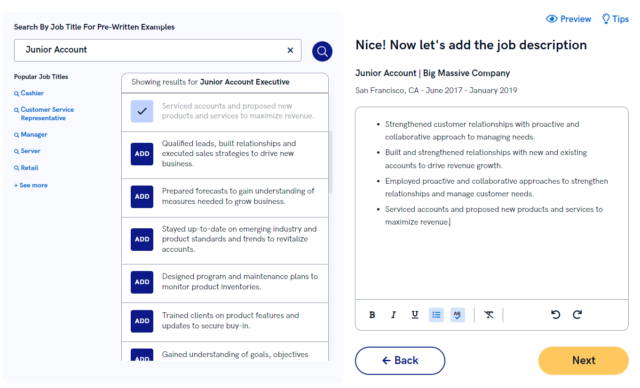
KickResume’s setup process starts with a conversation with an AI chatbot, which asks you for your name and your job title. After that, you’ll have a resume generated for you with some mock text, which provides a good foundation to build on.

KickResume has an AI toolbox that will analyze your resume and then award you a score out of 100. If you upgrade to Premium, however, you’ll unlock more in-depth feedback that you can action instantly.

KickResume is one of the only resume builders on this list with a live chat function – which comes in handy if you get stuck with anything.

Along with a limited free plan, KickResume has a $5 per month yearly plan, a $12 per month quarterly plan and a $19 per month monthly plan.

3. Resumaker.ai

Resumaker.ai is an AI resume builder that will generate an entire resume for you from scratch if you select the “AI writer” option when you’re setting up.

Resumaker.ai told us that over 1300 resumes had been built using the software on the day we tested it – so it’s clearly quite popular with job hunters. You can probably see why if you look at the below image – Resumaker.ai generated a pretty solid foundation for a resume for a promoter, which is the job we chose from its drop-down menu when we tested it.

If you want to download your resume, however, you’ll have to pay a 7-day access fee of $0.99.

A professional plan, which will grant you access to premium templates and a spell checker, costs $23.75 for 3 months. The expert plan, on the other hand, is $45.75 for half a year and comes with unlimited downloads.

4. MyPerfectResume

MyPerfectResume looks a little bit like our top-rated AI resume builder, Zety – in fact, the initial setup screen is almost identical. You’ll get almost 40 templates to choose from with this AI resume builder, which is a lot more than some of the other providers on this list.

MyPerfectResume provides a lot of prompts, suggestions, and AI-generated copy for your resume, which means it’s a much quicker process for resume building than a standard resume builder, or just doing it from scratch yourself.

You do have to pay to download your final resume, however, much like Zety, MyPerfectResume will grant you access to premium features like a resume checker if you purchase a subscription.

A 14-day full-access subscription costs just $2.70, whereas a monthly subscription is available for $5.95.

4. Rezi

Rezi is geared towards customers who want to make a range of resumes, rather than just one – it has a dashboard where you can view all of your resumes side by side.

One unique thing about Rezi is the video tutorial that accompanies all the different parts of your resume that you’ll build. It also has an AI-powered job-matching tool that’s included but is currently in Beta.

However, to unlock the AI resume writer, AI cover letter writer, and various other useful features, you’ll need to pay for a premium subscription, which starts from $19 per month on the quarterly plan. If you just want to pay for one month, however, it’ll set you back $29.

You can also purchase “AI credits” separately which can be used to activate these types of features within the software.

5. Novoresume

Novoresume doesn’t ask for much information when you sign up – all you have to do is select a template. In this sense, it was pretty quick to get going.

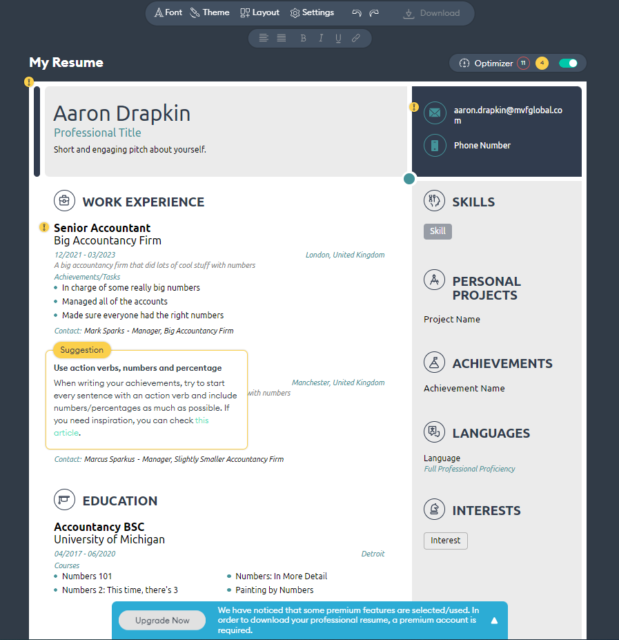
Although not much of the information is filled in for you automatically, Novoresume does provide a variety of optimization suggestions for each section of your resume, as well as tips on what to write and examples of what you could put.

However, there aren’t many more advanced AI capabilities other than that – but we did like how simple the editor provided by Novoresume was. It’s worth noting that a lot of the templates are reserved exclusively for premium members.

Novoresume has a limited free plan that you can use to make one single-page resume. Premium plans start from $19.99 per month and will let you create a ten-page resume, using more fonts and color themes, and create multiple versions with the same information.

6. Enhancv

Enhancv is a free AI resume builder that will construct a resume from a selection of pre-determined templates, which all look very professional. It’s definitely quality over quantity here, which can’t be said for every resume builder. You will, however, have to make an account if you want to download your finished resume.

The setup process is quite short. After clicking “Build Your Resume” we were introduced to Julia, a “personal resume expert”, who guides you through the initial steps. Although it’s a very basic addition to the standard AI resume-building experience, it did make it feel a little more personable and human-led.

Once you’ve entered some information, you’ll have your resume template generated, which you’ll have to go on to fill in. Although it’s very straightforward, Enhancv loses marks by not automating more of the process. Therefore, it still took us a while to finish.

Enhancv has a free plan that lets you build Two resumes/CVs and cover letters, but there’s also a $24.99 per month monthly plan, a $16.66 per month pro quarterly plan, and a semi-annual plan for $13.32 per month.

7. Teal

Teal is a resume builder that exclusively contains templates that are ATS-proven, which just means they’re amenable to the applicant tracking systems many companies use to process resumes and CVs.

Although you’ll have to input pretty much all of the text for your resume yourself, Teal does use AI to analyze the content of your resume and provide both structural and keyword-based feedback.

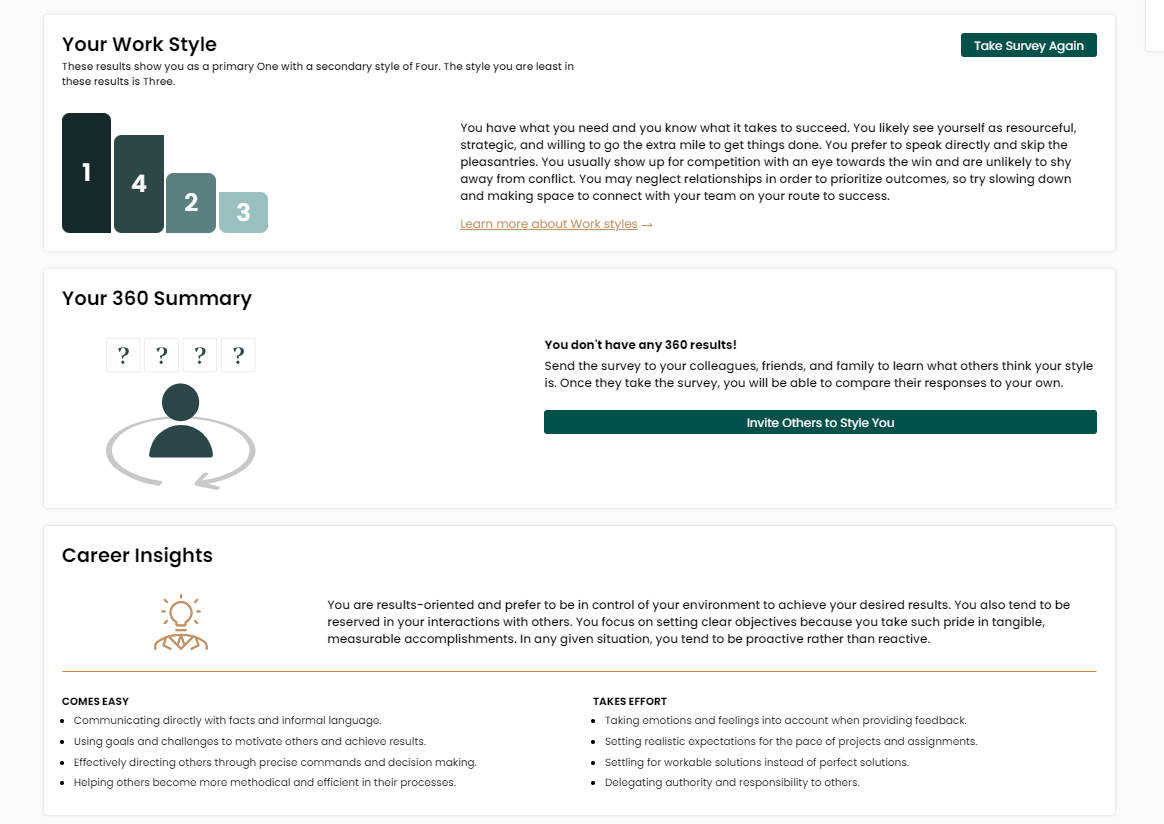
Another useful Teal feature is the “Work Styles” area, which will take you through a quiz on your traits and provide you with insights on how your strengths and weaknesses will impact different aspects of the job-finding process. This is useful to know when you’re building your resume.

Along with its resume builder, Teal also has a Chrome extension which will let you bookmark jobs from the likes of LinkedIn and Indeed, automatically source salary information from job descriptions, highlight skills and keywords from Job Description, and send you follow-up reminders.

Teal’s premium version, Teal+, costs $9 per week, $29 per month, or $79 for three months. If you upgrade, you’ll get a more in-depth analysis of your resumes.


The Top Free AI Resume Builders

Along with the subscription-based AI resume builders reviewed above, there are some out there that you can use completely free of charge.

Jobscan

Jobscan isn’t a resume builder by trade – instead, it can scan already-built resumes and optimize them for specific job roles. However, it also provides an AI resume builder that you can use for free.

Like Teal, Jobscan’s AI resume builder will format your resume so it’s amenable to Applicant Tracking Systems (ATS) which automate much of the initial selection process. Jobscan also says that its resumes templates are “universal” and will autofill into any job application.

Resumake

This AI resume builder requires you to input quite a lot more information than some of the others on this list – the only automated bit is the formatting. There are nine templates to choose from, but they’re all pretty similar.

However, Resumake has a sleek interface, is very easy to use and you can instantly download your finished resume as a PDF after you’re finished with the final touches.

Paid AI resume builders with free plans

Almost all of the AI resume builders featured on our paid list have free plans worth checking out. For instance, Novoresume, Teal, and Enhancv have limited free plans you can take advantage of. Other tools, like Resumaker.ai, offer week-long access programs for a very small amount of money.

Novoresume will let you build one single-page resume using their pre-defined layouts. You won’t be able to create multiple versions or access the provider’s premium templates, however, but if you just need a simple resume, it’s worth a look.

Teal’s free version, despite costing nothing, still has a significant number of features, which we’ve discussed earlier on in the article. You’ll still be able to use its analysis tools and access the Work Styles area without purchasing a subscription.

Enhancv, on the other hand, will let you build two resumes with basic resume sections – although you’ll have access to all the software’s design tools, which isn’t all that usual for a free AI resume builder.

Can ChatGPT Improve My Resume?

Although ChatGPT won’t spit out a fully formed resume for you, it can certainly help you improve aspects of your resume, provided you’re using the correct ChatGPT prompts to help you.

You can, for instance, paste your resume into ChatGPT and ask it to make some suggestions on how to optimize it for specific roles, or how to showcase your experience in a more impressive (yet still truthful) light. It’s particularly good at making linguistic suggestions and you can ask the chatbot to paraphrase your sentences so that they sound more resume-appropriate and professional.

However, we’d strongly recommend reading through OpenAI’s privacy policy first – as well as other chatbots – before you paste any personal information into them. The same goes for the AI resume builders on this list.

Frequently Asked Questions

The best AI resume builder is Zety. It has a huge range of vibrant templates, and perhaps the most powerful, useful AI tools on the market. It has a really simple setup process and is one of the only AI resume builders that generates practically all the text you need for your resume. The only downside is that you have to pay for a membership to download it.

Yes – using an AI resume builder can significantly reduce the time you spend writing your resume. What’s more, AI resume builders like Teal will analyze your resume and make suggestions on how to improve it, while Zety will auto-generate text for your resume based on a few basic prompts you provide.

Yes! A lot of popular AI resume builders, such as Novoresume and Teal, have free versions of their software you can use for free. However, the most powerful AI resume builders like Zety, which can autofill your entire resume with AI-generated text, command a small fee.
Written by:
James Laird is a technology journalist with 10+ years experience working on some of the world's biggest websites. These include TechRadar, Trusted Reviews, Lifehacker, Gizmodo and The Sun, as well as industry-specific titles such as ITProPortal. His particular areas of interest and expertise are cyber security, VPNs and general hardware.

Top 10 Cities Getting Back to the Office

A new study from Kastle Systems found the top ten cities for office occupancy and how much has changed since Labor Day.

Wonder which cities are embracing the return-to-office movement more than others? A new study discovered where employees are losing out on flexible schedules the most.

As the pandemic gets further and further in the rear-view mirror, more businesses have announced return-to-office mandates, much to the chagrin of employees that got used to a bit of work-life balance.

If you’re working from home and have no intention of commuting any time soon, watch out for these cities, which have higher rates of office occupancy than any others.

Top 10 Return-to-Office Cities

Office occupancy is as good as a metric when it comes to measuring how employes are returning to their commutes, which is what Kastle Systems used for their Getting America Back to Work study.

According to their data, there are 10 cities that stand out above the rest. Here are the top 10 cities for office occupancy in September 2023:

  1. Houston, TX – 61.6%
  2. Austin, TX – 59.3%
  3. Dallas, TX – 53.9%
  4. Chicago, IL – 53.6%
  5. New York, NY – 50.1%
  6. Los Angeles – 49.4%
  7. Washington DC – 47.9%
  8. Philadelphia – 42.7%
  9. San Francisco – 42.6%
  10. San Jose – 41.5%

Suffice to say, if you want to keep your flexible work arrangements, you’re going to want to get out of Texas as fast as possible. Beyond that, though, it seems that these are merely a list of some of the largest hubs in the office, and that the overall trend getting rid of remote work.

The Labor Day Shift

Not only did the research from Kastle Systems — a credential and access administration systems company — point to the cities with the largest office occupancies, but they also noted how they changed over time.

More specifically, researchers noted that Labor Day has represented a massive increase in office occupancy after the long holiday week, as return-to-office mandates typically hit that Tuesday.


About Tech.co Video Thumbnail Showing Lead Writer Conor Cawley Smiling Next to Tech.co LogoThis just in! View
the top business tech deals for 2026 👨‍💻
See the list button

“This post-Labor Day jump in occupancy mirrors the pattern from the past three years. If the pattern continues, the Barometer may reach a new, higher base level as more workers return to the office.” – Kastle Systems researchers

The list of cities with the biggest change reads quite differently. From Wednesday, September 6th to Wednesday September 13th, for example, New York increased office occupancy from 42.5% to 50.1%, representing a 7.5% increase, making it the biggest shift in the country. San Jose, Philadelphia, and Washington DC all saw a 4.1% increase, which makes them all tied for second place.

Should You Get Rid of Remote Work?

As a business owner, you may feel a lot of pressure to get your employees back to the office. After all, big corporations like Amazon and Apple are doing it, and even if their employees are revolting, they must be onto something, right?

The reality is that getting rid of remote work does little more than alienate top talent and worsen employee well-being. In fact, some remote workers have had to sell their homes at a loss due to rushed return-to-office mandates, which many executives regret, based on recent studies.

All that to say, if your remote workers are productive, happy, and committed to getting work done, don’t throw a wrench in the works because you think it’s what you’re supposed to do.

Written by:
James Laird is a technology journalist with 10+ years experience working on some of the world's biggest websites. These include TechRadar, Trusted Reviews, Lifehacker, Gizmodo and The Sun, as well as industry-specific titles such as ITProPortal. His particular areas of interest and expertise are cyber security, VPNs and general hardware.

Study: Gen Z Falls for More Online Scams Than Boomers

The study found that younger generations have higher rates of victimization for phishing, identity theft, and romance scams.

A new study found that younger generations like Gen Z and Millennials are actually more likely to be the victim of online scams than older generations like Gen X and Boomers.

Online scams have become a common part of the digital world, with personal data and financial information being targeted everywhere from social media to messaging apps.

Well, despite all the memes about their inability to pronounce “Chipotle,” this study shows that older generations are actually keeping their information safer than younger generations.

Younger Generations More Victimized by Online Scams than Older Generations

The Annual Cybersecurity Attitudes and Behaviors Report from the National Cybersecurity Alliance looks at three types of online scams — phishing, identity theft, and romance scams — to determine which generations were most likely to fall victim to these kinds of cyberattacks.

According to their data, Gen Z is the generation most victimized by phishing scams, with 34% noting that they have been tricked by hackers into giving up their information. On top of that, Millennials were more often victimized by identity theft (20%) and romance scams (18%) than any other generation.


About Tech.co Video Thumbnail Showing Lead Writer Conor Cawley Smiling Next to Tech.co LogoThis just in! View
the top business tech deals for 2026 👨‍💻
See the list button

Comparatively, Baby Boomers seem quite technically proficient. Only 12% have fallen victim to phishing scams, as well as only 8% having their identity stolen and 4% falling for romance scams.

Why Are Younger Generations Getting Scammed?

While this study seems to debunk the popular theory that boomers are ripe for the picking when it comes to online scams, there are some clear reasons that younger generations would be more prone to getting scammed online.

For starters, the level of online usage from generation to generation plays a big role. 64% of Gen Z and 48% of Millennials respondents, for example, noted that they were “always connected” when it came to online presence. Comparatively, only 33% of Boomers said the same, with 60% saying they were only online “a few times a day.”

False confidence could also be playing a role, as thinking you’re secure when you’re not can leave you vulnerable to more sophisticated attacks. In the study, 47% of Gen Z and 52% of Millennials agree with the statement “I find it easy to be secure when I am online.” Conversely, only 30% of Boomers agree with that statement.

How to Stay Safe Online

The study noted that Gen Z and Millennials should be far more proficient when it comes to securing their data online, but that the complicated nature of cybersecurity and the desire for convenience over protection does a lot to impede their success.

As a result, the report states that supporting users with more easy-to-use tools like password managers to ensure that staying safe online is not only effective, but also simple to enact.

“Gen Zs and Millennials were found to be particularly at risk. Although around half of them have access to training, they reported the highest victimization rates across generations, while simultaneously rating cybersecurity to be less of a priority than other activities. This suggests more support—not more training—is needed to help younger generations stay safe online.” – National Cybersecurity Alliance researchers

All that to say, cybersecurity efforts and attitudes right now are far behind where they need to be to ensure that the online world is a safe place for everyone. But if you’re a Millennial looking to throw shade at older generations, you might want to keep the “ok boomer” to yourself.

Written by:
James Laird is a technology journalist with 10+ years experience working on some of the world's biggest websites. These include TechRadar, Trusted Reviews, Lifehacker, Gizmodo and The Sun, as well as industry-specific titles such as ITProPortal. His particular areas of interest and expertise are cyber security, VPNs and general hardware.

Amazon Bets Big on AI with $4 Billion Investment in Anthropic

The ecommerce giant is investing in the company behind Claude 2, a popular AI chatbot that works similarly to ChatGPT.

Amazon is finally inserting itself more prominently in the generative AI discussion, announcing a collaborative partnership with Anthropic to the tune of a $4 billion investment.

ChatGPT and Bard have been a formidable one-two punch when it comes to AI platforms. The driving force behind their popularity have been their resource-laden backers, with Bard created by Google and ChatGPT partnered up with Microsoft in a big way.

Now, Anthropic has its own sugar daddy, but is Amazon too late to the party to seriously compete?

Anthropic and Amazon Enter Partnership

Announced in a press release, Amazon and Anthropic — the company behind the generative AI platform Claude 2 — have entered into a partnership that will see a $4 billion investment in the innovative technology.

“We have tremendous respect for Anthropic’s team and foundation models, and believe we can help improve many customer experiences, short and long-term, through our deeper collaboration.” – Andy Jassy, CEO of Amazon

Much like OpenAI’s partnership with Microsoft, this means that Amazon will now have a minority ownership position with Anthropic.

In addition to the $4 billion investment and minority ownership, Amazon Web Services (AWS) “will become Anthropic’s primary cloud for mission critical workloads, including safety research and future foundation model development.”

Anthropic will also use Amazon’s Trainium and Inferentia chips “to build, train, and deploy its future foundation models.”


About Tech.co Video Thumbnail Showing Lead Writer Conor Cawley Smiling Next to Tech.co LogoThis just in! View
the top business tech deals for 2026 👨‍💻
See the list button

How Will Amazon’s Investment Boost Anthropic?

Anthropic was founded in 2021 but has been noticeably behind the likes of ChatGPT and Bard due to its lack of resources. After all, when you’re competing with Microsoft and Google, it’s hard to keep up when it comes to finances and tech infrastructure.

Fortunately, this investment from Amazon should position the company to be more competitive, if only by increasing the bandwidth it will have to manage more and more users.

“By significantly expanding our partnership, we can unlock new possibilities for organizations of all sizes, as they deploy Anthropic’s safe, state-of-the-art AI systems together with AWS’s leading cloud technology.” – Dario Amodei, CEO of Anthropic

As a result, this new partnership makes it seem like the two-party system of AI chatbots could potentially turn into a free-for-all to see which big tech firm can lock down generative AI dominance in the future. However, the reality is a bit more complicated.

Anthropic’s AI Love Triangle

Life is much easier when you can separate entities into neat like boxes: Coke versus Pepsi, McDonald’s versus Burger King, Apple versus Android. However, when it comes to generative AI platforms, the waters are much murkier than many realize.

Yes, ChatGPT and its creator OpenAI are partially owned by Microsoft, but the AI company is also partnered with Salesforce, Atlassian, Shutterstock, and a few others.

Anthropic is the same way. While this investment from Amazon is poised to be a primary focus for the company, Anthropic is still also partnered with Google since February this year. Suffice to say, the AI platforms like Anthropic are happy to play the field for the time being in hopes of becoming the go-to solution for users around the world.

Written by:
James Laird is a technology journalist with 10+ years experience working on some of the world's biggest websites. These include TechRadar, Trusted Reviews, Lifehacker, Gizmodo and The Sun, as well as industry-specific titles such as ITProPortal. His particular areas of interest and expertise are cyber security, VPNs and general hardware.

You Have Less Than a Week to Claim $68M Instagram Settlement

You'll get your portion of the $68.5 million settlement if you are eligible and you file a claim. 

The deadline for a recent class action lawsuit against Instagram is drawing to a close. Residents of Illinois may be eligible for a $68.5 million Instagram settlement, but only if they make a claim before September 27th.

According to the lawsuit, Instagram parent company Meta collected biometric data illegally. Meta has denied this and is paying a tiny fraction of its multi-hundreds-of-billions net worth to settle the issue.

To qualify, you must have used Instagram within Illinois between August 10th, 2015, and August 16th, 2023. That’s a lot of people! Here’s how to file your claim and when you might get paid.

What to Know About the New Instagram Settlement

The class action lawsuit is, “Parris v. Meta Platforms Inc, case no 2023LA000672” and claims that Meta Platforms, Inc. violated the Biometric Information Privacy Act when it allegedly collected and stored “biometric identifiers and/or biometric information” through Instagram without complying with that act’s requirements.

Since the Biometric Information Privacy Act is specific to Illinois, the settlement applies to its residents. You can read a notice summing up the details online.


About Tech.co Video Thumbnail Showing Lead Writer Conor Cawley Smiling Next to Tech.co LogoThis just in! View
the top business tech deals for 2026 👨‍💻
See the list button

The settlement gives everyone who is a member of the Settlement Class five different options, although the deadline has run out for a few of them. We’ll start with the easiest: Doing nothing. You’ll get no settlement, and you’ll also lose the right to bring your own lawsuit against Meta about these specific claims.

If that sounds a little unfair, consider your other options: You can attend a hearing to tell the court your opinion, or you can object in writing — although the deadline for objecting was August 16th, 2023, so the time has run out for that option. That’s something to bring up in your hearing, perhaps.

The option to request an exclusion has also run out, thanks to an August 16th deadline. But there’s one final option left that could land you a payout: Submitting a claim form.

Want to take a break from the app? Read our guide to deleting Instagram here.

How to Submit a Claim Form

You’ll get your portion of the $68.5 million settlement if you are eligible and you file a claim. To make that claim, visit the claim form.

Check your email inbox for an email about this claim — you will likely have received a Notice ID and Confirmation Code that can help you out when filing the claim.

You don’t need the email, though. Just fill out the form as normal and pick the payment method you prefer from the four options: Mastercard, Venmo, Zelle, or a paper check.

You’ll still be eligible even if you haven’t lived in Illinois since 2015, when the window of eligibility starts.

When Will You Get Paid?

The actual settlement comes after administration costs and taxes have been removed, and you’ll have to split it with every other member of the settlement class.

There’s no set deadline for when you’ll get paid quite yet, but the final hearing will likely be on October 11th. Pending final approval, eligible members should receive their payout within 90 days, or any time before January 9th, 2024.

It’s just the latest tech giant lawsuit settlement — we’ve covered similar tales for Google, Zoom, and Meta’s other top social platform, Facebook.

Written by:
James Laird is a technology journalist with 10+ years experience working on some of the world's biggest websites. These include TechRadar, Trusted Reviews, Lifehacker, Gizmodo and The Sun, as well as industry-specific titles such as ITProPortal. His particular areas of interest and expertise are cyber security, VPNs and general hardware.

Report: Insider Cybersecurity Threats Have Jumped 40% in 4 Years

The total number of insider incidents across 2023 rose to reach 7,343, up from just 6,803 the year before.

The average cost of an insider cybersecurity attack has sharply risen by 40% across the past four years, a new research report has found.

On top of that, the typical annual cost of these types of cyber threats has risen to reach $16.2 million per attack in the past 12 month period.

The biggest costs happen after the attack has occurred, which means that businesses everywhere should prepare their potential responses now in order to lose the least.

The Number and Costs of Insider Attacks Are Rising

“Insider” attacks, according to the new report, might be both malicious (Espionage, IP threat, sabotage, or fraud) or non-malicious (when an insider is negligent, mistaken, or outsmarted). The report, sponsored by insider cybersecurity firm DTEX Systems and out from the data privacy-focused Ponemon research institute, is titled 2023 Cost of Insider Risks Global Report.

It finds that insider threats are on the rise, and not just when it comes to the cost of each attack: The total number of insider incidents across 2023 rose to reach 7,343, up from just 6,803 the year before. 


About Tech.co Video Thumbnail Showing Lead Writer Conor Cawley Smiling Next to Tech.co LogoThis just in! View
the top business tech deals for 2026 👨‍💻
See the list button

Most of the incidents — 75% — were traced back to non-malicious insiders, often due mistaken insiders (55%).

The biggest costs: Containment and remediation, which on average account for $179,209 and $125,221 per incident, respectively. The longer a response takes, the greater the cost.

Why Cyber Budgets Aren’t Spent in the Right Places

Insider attacks are up. In other words, the call is coming from inside the house.

But businesses haven’t adjusted their budgets to account for this. 88% of them are still devoting 10% or less of their IT security budget to managing insider risk specifically… with 91.8% of budgets going towards external threats.

But social engineering, which targets insiders to phish or otherwise trick employees into leaking sensitive information on their own company, remains a huge concern. We lost a collective $6.9 billion to phishing attacks in 2021, and just last year the FBI declared phishing to be the most common form of cyber attack.

Staying Safe From Insider Threats

Change is coming, the report found. Nearly half of organizations, or 46%, are set to increase their investments in insider risk programs in 2024.

But what could that look like for you? Here are the top tips for avoiding a phishing attack.

  • Use two-factor authentication
  • Double-check the URL
  • Don’t give out your login credentials
  • Monitor your personal financial accounts

You can also consider a few extra security tools — we’ve ranked the top VPNs for businesses and the best password management tools to boot.

Written by:
James Laird is a technology journalist with 10+ years experience working on some of the world's biggest websites. These include TechRadar, Trusted Reviews, Lifehacker, Gizmodo and The Sun, as well as industry-specific titles such as ITProPortal. His particular areas of interest and expertise are cyber security, VPNs and general hardware.

Thanks to AI, Amazon Alexa Is More Human Than Ever

With Alexa's new large language model (LLM), using the device could feel "just like talking to another human being."

Amazon’s voice assistant Alexa will shortly be boasting a more human-like voice and more natural conversational tone, due to an integration with its very own generative AI large language model (LLM).

The update was announced in Amazon’s annual devices bonanza on Wednesday, where a slew of other software and hardware AI updates were also revealed.

Amazon’s Alexa’s new capabilities mark a massive leap forward in voice assistant technology, but with its unit recently weathering major cuts for poor product performance, the pressure for the AI-powered device to perform is definitely on.

Amazon’s Alexa Welcomes New Generative AI LLM

Just like every major tech company in 2023, Amazon has been busy cashing in on the power of generative AI, and this time the company is bringing it to its home devices.

At Amazon’s fall hardware event on Wednesday, Rohit Prasad, the company’s senior vice president and head scientist for artificial general intelligence announced the rollout of Alexa LLM — a generalized model that has been optimized for voice applications.

Alexa’s LLM can talk about any topic, respond to multiple queries at once, intuitively connect with the correct APIs, and even offer tailored recommendations based on recent purchases.


About Tech.co Video Thumbnail Showing Lead Writer Conor Cawley Smiling Next to Tech.co LogoThis just in! View
the top business tech deals for 2026 👨‍💻
See the list button

Aside from the device’s new LLM upgrade, it’s now even easier to activate Alexa devices, too. In addition to using code words, users can just look at the screen of a camera-enabled Alexa device to turn it on, and its acoustic processing helps it to determine whether a customer is speaking to the device or someone else.

Unlike its former iterations, Alexa will also be able to offer opinions, like which movies should have won an Oscar but didn’t, and which type of cuisine it prefers.

Alexa’s AI Demo Encounters Some Hiccups

While Amazon’s new generative AI features represent an exciting breakthrough in the company’s home devices unit, Wednesday’s demo wasn’t without its tribulations.

When devices chief Dave Limp was trialing the product’s new “Let’s chat” feature, Alexa lagged in response, and Limp had to repeat his question multiple times to get an answer.

Despite these slight shortcomings, Limp assured consumers that Alexa would be unlikely to display any form of AI hallucination — a phenomenon that other generative AI models — including Google Bard and ChatGPT have been guilty of exhibiting in the past.

Will Alexa’s AI Upgrade Be Enough to Recover Sales?

Despite being a major cash cow for Amazon, the Alexa team faced major cuts at the end of 2022 after the company’s Worldwide Digital unit lost over $3 billion in the first quarter of 2022.

This loss in sales has been attributed to a “collateral failure of imagination,” by one former employee working in the division, while even Amazon’s own CEO Andy Jassy is reportedly less excited about the division than former chief executive Jeff Bezos.

Even analysts at UBS announced that Amazon could improve its North American margins by reducing investments in “moonshots” like Alexa, according to the Financial Times.

However, while experts may remain skeptical about Alexa’s latest upgrade, leveraging generative AI is an excellent way to bring the device’s capabilities into 2023, and the only way the hardware manufacturer will be able to compete with fellow top dogs Google and Microsoft.

Written by:
James Laird is a technology journalist with 10+ years experience working on some of the world's biggest websites. These include TechRadar, Trusted Reviews, Lifehacker, Gizmodo and The Sun, as well as industry-specific titles such as ITProPortal. His particular areas of interest and expertise are cyber security, VPNs and general hardware.

Is Google Calendar Down? Normal Service Resumes After Outage

Google Calendar went down and thousands of users were affected. Here's the latest updates and everything that happened.

Google recently confirmed that its Calendar application, a key part of its larger Google Workspace productivity suite alongside Google Meet, suffered a widespread outage on Thursday, September 21.

The internet giant’s Workspace status dashboard first logged reports of a problem at 14:17 UTC (Coordinated Universal Time), which is 11:14am US Eastern time and 8:14am PT on the West coast that day.

It subsequently updated the page with more information at 14:35 UTC, or 11:35am ET / 8:35am PT, it which it provided additional details of the problems being experienced by Google Calendar users.

Very shortly thereafter, at 11:49am ET / 8:49am PT, Google said the problem had been resolved.

Right now, Google Calendar is not down – but we’ll update this page with any future problems that may arise, as soon as they happen.

Google Calendar Down: How Thursday’s Outage Evolved

Thursday’s unexpected Google Calendar outage was owned early on by Google, with the following information coming direct from the Mountain View-based tech giant about the outage.

The company said: “The affected users are able to access Google Calendar, but are seeing error messages, high latency, and/or other unexpected behavior.”

It chimed with reports on social media, where people were saying that their Calendar events were suddenly deleting events and other similar problems.

In a further update on Google Calendar being down, Google suggested that customers instigate a browser refresh as a potential workaround to any issues being experienced, adding that its engineers hoped to have a timeframe on the problems being resolved by 16:00 UTC (12pm ET / 9am PT). This was successfully achieved, according to both Google and general user reports.


About Tech.co Video Thumbnail Showing Lead Writer Conor Cawley Smiling Next to Tech.co LogoThis just in! View
the top business tech deals for 2026 👨‍💻
See the list button

The IT team at our publishing company also independently verified the outage by way of a team services update.

Thousands Report Google Calendar is Down in September

Reports first started surfacing about Google Calendar being down on Thursday, September 21 on the Down Detector website, which crowdsources and compiles user reports of outages of various popular services.

As you can see from the below graph, Calendar incidents starting spiking mid-afternoon, and at the time of writing had run into their thousands.

Graph from Down Detector website showing Google Calendar outage reports

Stay tuned, as we’ll continue to update this article with the latest on Google Calendar being down as soon as more information becomes available.

Related News: Google Calendar Now Lets You Log Paid Appointments

Google Calendar Downtime Resolved

Google then updated its status dashboard at 12:05pm ET, noting that the problem was still persisting for some, but that a fix was likely coming soon that would fully resolve the issue.

“Google Calendar service has already been restored for some users, and we expect a resolution for all users within the next 1 hour.”

Google stated that “this time frame is an estimate and may change” but users were pleased to see that it didn’t and Google Calendar was no longer down.

Written by:
James Laird is a technology journalist with 10+ years experience working on some of the world's biggest websites. These include TechRadar, Trusted Reviews, Lifehacker, Gizmodo and The Sun, as well as industry-specific titles such as ITProPortal. His particular areas of interest and expertise are cyber security, VPNs and general hardware.

OpenAI’s New and Improved DALL-E 3 Integrates With ChatGPT

DALL-E 3's capabilities are leaps and bounds ahead of DALL-E 2. Here's what you need to know about the new model.

AI research lab OpenAI has just unveiled DALL-E 3, the third iteration of its AI image generator with even more potential for interpreting nuance and detail than DALL-E 2.

Currently in research preview, DALL-E 3 also integrates directly with ChatGPT. This allows the chatbot to do the heavy lifting by creating prompts, opening its use up to a less tech-savvy audience.

OpenAI’s soon-to-be-launched image creator also boasts enhanced safety measures to reduce algorithmic bias and the generation of harmful content. But whether DALL-E 3 is doing enough to assuage the concerns of independent creators remains yet to be seen.

OpenAI Unveils DALL-E 3: its User-Friendly, Advanced AI Image Creator

ChatGPT creators OpenAI recently launched its first official preview of DALL-E 3 – its most sophisticated and easy-to-use image generation program to date.

According to its new release page on OpenAI’s website, the text-to-image generator understands “significantly more nuance and detail” than previous systems, making it easier than ever for users to translate ideas into accurate images.

Unlike all previous iterations of DALL-E, this new model integrates with the company’s chatbot, ChatGPT, too. This allows users to use ChatGPT to create tailored and detailed prompts, making it easier for users with less technical know-how to bring their ideas to life.


About Tech.co Video Thumbnail Showing Lead Writer Conor Cawley Smiling Next to Tech.co LogoThis just in! View
the top business tech deals for 2026 👨‍💻
See the list button

“Modern text-to-image systems have a tendency to ignore words or descriptions, forcing users to learn prompt engineering. DALL·E 3 represents a leap forward in our ability to generate images that exactly adhere to the text you provide.” – ChatGPT website

OpenAI has also taken additional steps to limit DALL-E 3’s ability to generate violent, adult, or hateful content, and improved safety performance in risk areas like harmful biases around over and under-representation.

Since OpenAI launched its seminal text-to-image generator DALL-E in January 2021, the market has become rife with a number of high-quality copycats. A number of platforms like Midjourney and Stable Diffusion have gained more notoriety than DALL-E due to their enhanced image quality and customization options.

However, OpenAI believes this product update could cement DALLE-3 in prime position, due to its powerful ability to generate output that adheres exactly to the text the user provides.

Is DALL-E 3 More Friendly to Creatives?

Since DALL-E’s initial launch in 2019, its training process, and potential to infringe on copywritten work, have been the source of much controversy.

Similarly to ChatGPT, DALL-E 2 was trained on millions of images scraped off the web without necessarily gaining the consent of their owners. While this unlocked an abundance of rich source material, it also sparked a debate over the ownership of AI-generated images, as well as a number of lawsuits brought about by disgruntled artists and image creators.

To avoid these ethical quandaries, OpenAI is doing things a little differently with DALL-E 3. The text-to-image generator will reject requests that ask them for an image created in the style of living artists. The tool is also allowing creators to opt their images out from training their future image generation model.

OpenAI efforts clearly mark a step in the right direction, especially for creatives looking to remove their art from DALL-E’s training set permanently. However, for those who believe their art has already been stolen through OpenAI’s invasive scraping practices, these amendments do little to quell their concerns.

When is OpenAI’s DALL-E 3 Available?

DALL-E 3 is currently limited to research preview, which means that its use is currently not available to the public.

However, DALL-E’s newest version will be released to ChatGPT Plus and ChatGPT Enterprise users throughout October, shortly followed by research labs and its API service later in the fall.

OpenAI has not commented on when a free version of DALL-E 3 will be released.

Written by:
James Laird is a technology journalist with 10+ years experience working on some of the world's biggest websites. These include TechRadar, Trusted Reviews, Lifehacker, Gizmodo and The Sun, as well as industry-specific titles such as ITProPortal. His particular areas of interest and expertise are cyber security, VPNs and general hardware.

TikTok is Becoming a Hotbed for Elon Musk Cryptocurrency Scams

Threat actors are using deepfakes of the tech billionaire to make it seem like he's promoting free crypto giveaways.

Social media platform TikTok is becoming “flooded” with Elon Musk-themed crypto scams designed to coax people into handing over their hard-earned cash, according to a new report.

Elon Musk scams have started to make the headlines more frequently since the billionaire’s tumultuous takeover of Twitter in November 2022, with digital con artists attempting to leverage the tech mogul’s success, fame, and perceived eye for a good deal to make their shady schemes look authentic.

Elon Musk Deepfakes Flood TikTok

According to a recent report authored by Bleeping Computer, streams of TikTok videos that appear to show Elon Musk talking about lucrative cryptocurrency investment opportunities are making their way around the social media platform.

The videos show Musk being interviewed by Fox News and other media outlets, overlaid with AI-generated audio designed to mimic Musk’s voice. The original audio is either heavily edited or removed completely. Similar videos have been circulating on Facebook and Instagram, with similar tactics used by some mobile games and online casino apps.

In a lot of these videos, it’s very obvious that the clip of Musk is fake – but the scammers are hoping that not everyone is paying close attention to the clips.


About Tech.co Video Thumbnail Showing Lead Writer Conor Cawley Smiling Next to Tech.co LogoThis just in! View
the top business tech deals for 2026 👨‍💻
See the list button

How the Crypto Scam Works

The TikToks in question contain links to fake crypto websites, which encourage users to sign up and enter promotional codes posted alongside or within the videos.

If you enter one of the codes, the site will say that cryptocurrency worth thousands of dollars will shortly be deposited into your wallet.

However, the website will demand a relatively small “activation” fee in order to withdraw the money. When Bleeping Computer went along with one of the scams to see how it functioned, this fee totaled $132.

The scam will also try to obtain victims’ KYC (Know Your Customer) information, which is used to verify the legitimacy of users and perform due diligence when someone sets up an account.

How to Avoid Crypto Scams

There are some simple steps you can take to avoid online cryptocurrency scams – even when AI is making them a lot more difficult to spot.

First up, treat companies or products that claim to be endorsed by uber-rich celebrities like Elon Musk, Mark Zuckerberg, or Jeff Bezos with extreme caution – even when video “evidence” is provided. This goes for any advertisement or any product you run into online.

Secondly, this specific scam uses a common tactic of withholding the “bait” – in this case, a large amount of cryptocurrency – until you send over a small amount of money. Never send money to an unknown source, and certainly not one that promises that a larger amount will be sent back.

Lastly, remember that almost all crypto giveaways are going to be completely fake – so entertaining the offers of any organization or individual claiming to be giving anything away for free is not worth the risk.

Written by:
James Laird is a technology journalist with 10+ years experience working on some of the world's biggest websites. These include TechRadar, Trusted Reviews, Lifehacker, Gizmodo and The Sun, as well as industry-specific titles such as ITProPortal. His particular areas of interest and expertise are cyber security, VPNs and general hardware.

How to Claim Your Share of the $245 Million Fortnite Settlement

The claims process is open, but not everyone who played Fortnite during the past six years is eligible for compensation.

If you’re an avid Fortnite player and have been playing the game since its release, you might find yourself entitled to some compensation. Developers Epic Games have agreed to pay $245 million to users as part of a settlement with the Federal Trade Commission (FTC), which recently hit Microsoft with a multi-million dollar fine.

The news follows on from recent Instagram and Facebook settlements, which also gave users the opportunity to claim a small fraction of a much larger amount agreed upon during legal proceedings.

There are likely to be other big tech companies paying out soon too as governments seem increasingly inclined to hold them accountable for violating different consumer rights.

Why Is Fortnite Paying Users Back?

In December 2022, Fortnite developers Epic Games settled two US lawsuits, one of which alleged the company had used deceptive methods to ensure users were purchasing in-game products. This lawsuit specifically will cost the company $245 million.

The FTC says that “the company charged parents and gamers of all ages for unwanted items and locked the accounts of customers who disputed wrongful charges with their credit card companies.”

Around 37 million users are thought to have been impacted by the first lawsuit and may qualify for compensation.


About Tech.co Video Thumbnail Showing Lead Writer Conor Cawley Smiling Next to Tech.co LogoThis just in! View
the top business tech deals for 2026 👨‍💻
See the list button

As part of a separate settlement, $275 million will be paid to the US government for compiling the personal information of individuals under the age of 13 without their parent’s consent.

Although the case was settled more than eight months ago, the claims process has only just opened up, which is why it’s been hitting the headlines again.

How to Claim Your Fortnite Settlement Compensation

The claims process is now open, and you can make your settlement claim here. You have to be over the age of 18 to apply, but if you aren’t, a parent can complete the form on your behalf.

However, the FTC says that you have to satisfy at least one of the below conditions if you want to be considered eligible for a claim:

  • You were charged in-game currency for items you didn’t want between January 2017 and September 2022
  • One of your children made charges to your credit card between January 2017 and November 2018 without you knowing about it
  • You were locked out of your account between January 2017 and September 2022 after you made your credit card company aware of the wrongful charges

When submitting your claim, make sure you have a claim number – which you will have received by email – or your Epic account ID close to hand.

When Is the Deadline to Apply?

You don’t have to rush to apply for your portion of the settlement money right this second – you’ve got almost three full months to apply, with the deadline being January 17, 2024.

But if you were a Fortnite player active between the above-listed dates – and you experienced issues relating to deceptive or unauthorized payments – then it’s definitely worth going through the short application process for.

Written by:
James Laird is a technology journalist with 10+ years experience working on some of the world's biggest websites. These include TechRadar, Trusted Reviews, Lifehacker, Gizmodo and The Sun, as well as industry-specific titles such as ITProPortal. His particular areas of interest and expertise are cyber security, VPNs and general hardware.

How To Set Up the New Google Bard Extensions With Your Google Apps

A significant update to Google Bard means it now integrates with a huge range of different Google apps.

Google is always announcing major expansions of its ChatGPT competitor, Google Bard. One recent update allows users to ask Bard questions about information contained within their Google Workspace, as well as videos hosted on YouTube.

Although Microsoft-funded ChatGPT remains the most popular chatbot on the web, Bard has provided stiff competition since its February 2023 release, and actually performs better when presented with a number of different scenarios.

Roughly three billion people use Google Workspace worldwide, dwarfing Microsoft Office’s 270 million users.

Google Bard Extensions: What You Need to Know

Google announced the launch of Bard Extensions this week. The tech giant described it as “a completely new way to interact and collaborate with Bard” in a recently published blog post.

Bard’s new capabilities mean the chatbot is now on hand to assist users with tasks relating to information, documents, and files stored within the full suite of products and services offered by Google.

“With Extensions”, the tech giant says, “Bard can find and show you relevant information from the Google tools you use every day – like Gmail, Docs, Drive, Google Maps, YouTube, and Google Flights and hotels – even when the information you need is across multiple apps and services.”


About Tech.co Video Thumbnail Showing Lead Writer Conor Cawley Smiling Next to Tech.co LogoThis just in! View
the top business tech deals for 2026 👨‍💻
See the list button

This will allow users cut down on the time they’re spending on consuming tasks like summarizing meeting notes and building resumes.

Google explains that you can now use Bard to plan trips in a more comprehensive way, too.

For example, you could task Bard to find dates that work for everyone in your party via Gmail, source flight and accommodation information, compile Google Maps directions to and from the airport, and watch YouTube videos in order to provide sightseeing recommendations.

How to Use Google Bard Extensions

Using the new features is really simple. All you have to do is ask Bard questions, just like you normally would – the only difference being that you need to preface your question with “@[the extension you’d like to use]”.

For example, you can get Bard to scan your email inbox and find specific information by prefacing your question with “@mail”, or get it to perform a task that requires information from Google Maps by starting your query with @Google Maps.

To find and enable your Bard extensions, open Bard and click on the Extensions icon located in the top right corner of the Bard interface. This will bring you to a list of the extensions currently available to you. To access Google Workspace extensions, you’ll have to be logged into your Google Workspace account.

Other Google Bard Updates

Excitingly, users will now be able to continue specific conversations with Bard after they’re been sent links to them by other users.

Another interesting update being rolled out is a “Google it” button designed to make it easier for users to check the chatbot’s responses on the internet.

Users will also be able to access more of Bard’s English language features, like Search images in responses, in a wider range of languages.

Are There Any Privacy Concerns?

As a lot of companies use Google Drive to store sensitive client, customer, and employee data – and with privacy concerns a major issue for the chatbot market, it’s only natural if users are a bit apprehensive about deeper integration between Bard and their Google Workspace tools.

However, Google has confirmed that Bard will not be using any Google Workspace information it has access to for training, and human reviewers won’t have access to or be able to view any information being processed by Bard.

Users can turn off Bard Extensions at any time, so it’s possible to find out what they’re capable of before you officially incorporate them into your workspace. For the billions that now have access, however, this is a very exciting development.

Written by:
James Laird is a technology journalist with 10+ years experience working on some of the world's biggest websites. These include TechRadar, Trusted Reviews, Lifehacker, Gizmodo and The Sun, as well as industry-specific titles such as ITProPortal. His particular areas of interest and expertise are cyber security, VPNs and general hardware.

Amazon Is Hiring 250,000 US Workers Right Now – Here’s How to Apply

As part of a seasonal recruitment drive, Amazon is currently advertising for 250,000 positions in the US.

Amazon is hiring for the festive season – and they’re not holding back. The ecommerce giant announced this week that it’s planning to hire a staggering quarter of a million staff to work in its customer fulfillment and transportation teams.

The tech behemoth has opened over 50 new fulfillment centers and delivery stations in the past 12 months and is now investing $1.3 billion to expand its payroll. However, none of the 250,000 roles are remote working positions.

Amazon has created more jobs in the United States than any other employer over the last five years and is now the second-largest employer in the country after Walmart.

Amazon Jobs: How to Apply

“The holiday season is always a special time at Amazon and we’re excited to hire 250,000 additional people this year to help serve customers across the country,” explains John Felton, Amazon’s SVP of Worldwide Operations, in a recent blog post.

Many of the full-time, part-time, and seasonal roles – available in “hundreds” of US cities and towns – are currently listed on the Amazon Jobs portal.

Hourly opportunities include Grocery Warehouse Associate, Sortation Center Associate, Amazon Flex delivery partner, and roles in Amazon pharmacies.


About Tech.co Video Thumbnail Showing Lead Writer Conor Cawley Smiling Next to Tech.co LogoThis just in! View
the top business tech deals for 2026 👨‍💻
See the list button

At present, there are only four remote roles currently open at Amazon, and they’re all customer service-related roles that aren’t part of this recruitment drive.

Amazon Warehouse Hiring Day

Along with the company’s wider hiring initiative, Amazon will be hosting an Amazon Warehouse Hiring Day on September 22, 2023. It’s the company’s biggest hiring event of this year.

On that date, there are hiring events taking place at Amazon warehouses in Ohio, Utah, Michigan, Kansas and New York, as well as a number of other states.

You can find a full list of warehouses holding events, as well as the vacant roles available at each location, on Amazon’s Warehouse Hiring Day portal.

How Much Will You Be Paid to Work for Amazon

Amazon’s recent $1.3 billion investment, the company says, means they can now offer an average wage of $20.50 per hour to customer fulfillment and transportation staff.

Some locations will offer up to $28 per hour to employees, but no other information is provided on precisely which centers offer the highest wages.

The ecommerce giant says on their jobs portal that “most” roles now offer over $21 per hour, but there are very few roles listed for over $20.50. However, knowing Amazon, they won’t have trouble filling them.

Written by:
James Laird is a technology journalist with 10+ years experience working on some of the world's biggest websites. These include TechRadar, Trusted Reviews, Lifehacker, Gizmodo and The Sun, as well as industry-specific titles such as ITProPortal. His particular areas of interest and expertise are cyber security, VPNs and general hardware.

Does Elon Musk Really Want Everyone to Pay for Twitter/X?

Elon Musk said this week that the company is moving towards charging more users for access to the popular platform.

Rumors have swirled that Elon Musk has plans to make all Twitter/X users pay for access to the system. Is it true or is has the controversial CEO been somewhat misquoted?

Many believe that Musk has done nothing good for X since taking over, not the least of which includes ditching the decades-old brand name for a single letter, a true nightmare for anyone remotely familiar with SEO.

However, Musk does not appear to have plans to charge all Twitter users a fee to scroll the popular social media app, but rather plans on adding a more affordable tier for its Verified plan.

Lower Tier Pricing Coming to Twitter/X?

In a one-on-one discussion with Benjamin Netanyahu streamed live on X, Elon Musk mentioned that the company was “moving to having a small monthly payment for use of the system,” which many believed was a reference to an all-user fee was coming.

However, if you watch the video, you’ll notice the emphasis on “small” appears to refer to a more affordable version of the Verified plan, which is already in place for $8 per month.

This would make Twitter/X very similar to other business software on the market, which offers tiered pricing that unlocks a wide range of different features, while for the time being, preserving the free plan.

Why Would Twitter/X Charge a Subscription Fee?

So, why does Elon Musk want to provide a more affordable pricing tier for Verified accounts on X?

Well, the most obvious reason is that the company isn’t making any money. Reports have noted that the company is still down big when it comes to ad revenue. On top of that, Musk keeps picking legal fights and getting fined, which surely can’t be helping the financial woes of the social media company.


About Tech.co Video Thumbnail Showing Lead Writer Conor Cawley Smiling Next to Tech.co LogoThis just in! View
the top business tech deals for 2026 👨‍💻
See the list button

However, Musk insists that his go-to scapegoat, “bots,” remains the drive force behind this controversial decision.

“The single-most important reason we’re moving to having a small monthly payment for use of the X system is it’s the only way I can think of to combat vast armies of bots.” – Elon Musk, CEO of Twitter/X

As for the confusion surrounding whether Musk wanted to charge all users a fee, take it as a lesson on why firing your entire PR department is a bad idea.

Will More Affordable Options Save Twitter/X?

There’s no denying that Twitter/X is having trouble right now. Beyond its fast-dropping ad revenue, the platform is consistently losing users and regularly experiencing technical difficulties, likely due to the waning number of employees from layoffs.

Plus, with Musk getting rid of most content moderators for the platform, reports have shown that instances of antisemitism, sexism, racism, and general hate speech have increased, which is steadily driving more and more users away.

Even worse, the X rebrand hasn’t gone as planned for Musk, with the majority (69%) of users still calling it Twitter months after the change.

All that to say, a more affordable version of a service widely lambasted by the majority of Twitter users is likely not the answer to the social media platform’s woes.

Written by:
James Laird is a technology journalist with 10+ years experience working on some of the world's biggest websites. These include TechRadar, Trusted Reviews, Lifehacker, Gizmodo and The Sun, as well as industry-specific titles such as ITProPortal. His particular areas of interest and expertise are cyber security, VPNs and general hardware.

AI Tools Like ChatGPT Can Hurt Your Chances of Getting a Job

Using AI tools like ChatGPT and Bard to create resumes and cover letters could actually hinder your job search.

Think twice before using ChatGPT to build your resume or write your next cover letter, as recruiters are saying the practice may hinder your chances at landing a job.

ChatGPT, Google Bard, and other AI tools have been all the rage over the last year. They’ve been used at businesses around the world for everything from coding to returning emails and are continuously being added to popular software like Salesforce and Microsoft 365.

However, these tools obviously have their limitations, and it appears that getting you a job is one of them.

Recruiters: Don’t Use AI for Cover Letters and Resumes

A report from ABC Gold Coast in Australia found a number of recruiters pointing out that the increase of AI tools has led to more and more cover letters sounding “robotic.”

Even if ChatGPT can get you in the door, you’ll still have to get through the interview process, which makes it even more painfully obvious that your words weren’t your own.


About Tech.co Video Thumbnail Showing Lead Writer Conor Cawley Smiling Next to Tech.co LogoThis just in! View
the top business tech deals for 2026 👨‍💻
See the list button

“The downfall could be when the applicant is progressed to the interview, where they fail to articulate themselves the same way, or are unable to provide examples of their experience to accurately reflect what ChatGPT produced for them in the cover letter.” – Kelly Charity, a recruiter in Gold Coast Australia

Beyond that, online services that can detect when content is produced by AI have become more and more common, which means recruiters can easily eliminate candidates that use AI tools as a shortcut.

How to Use ChatGPT to Get a Job

As is often the answer when it comes to the use of ChatGPT, a light touch is the best touch. Don’t allow ChatGPT or any other AI tool to do all the work for you. Yes, you can allow it to provide you with helpful prompts and jumping off points, but you need to ensure that your personality comes through more than anything.

“I believe that personal connection and that human touch is irreplaceable.” – Pam Foster, career coach

The reality is that most recruiters and businesses in general are looking for culture fits more than wrought proficiency. Show them that you can add value to the business in a human way, and you’ll have that offer letter before the end of the week.

How to Use ChatGPT to Make Money

If you aren’t looking for a new job, but you still want to use ChatGPT to make money, you’ve come to the right place. Our guide in the above link can help you come up with a wide range of methods for building your finances with the help of AI.

From creating a website to building a Chrome extension, you’ll be able to sit back and enjoy some passive income, all thanks to generative AI technology like ChatGPT.

Still, if you’re looking to get a job, your best bet remains sticking to the personal, human side of things to convince recruiters you’re up to the task.

Written by:
James Laird is a technology journalist with 10+ years experience working on some of the world's biggest websites. These include TechRadar, Trusted Reviews, Lifehacker, Gizmodo and The Sun, as well as industry-specific titles such as ITProPortal. His particular areas of interest and expertise are cyber security, VPNs and general hardware.

Study: Remote Work Can Reduce Carbon Footprint

"Remote workers could have a 54% lower carbon footprint compared to onsite workers," a new study finds.

The benefits of remote work keep rolling in, with a new study discovering that that working from home cuts carbon emissions in half.

From improving work-life balance to earning more money, there’s no denying that remote work has generally improved the lives of employees around the world.

Now, it appears the popular workplace perk is also beneficial to the environment, which should give business decision makers pause before enacting any return-to-office mandates.

Remote Work: Could Reduce Carbon Footprint by 54%

A study from peer-reviewed journal Proceedings of the National Academy of Sciences (PNAS) found that “remote workers could have a 54% lower carbon footprint compared to onsite workers.”

On top of that, hybrid workers that are working from home between two and four days per week can cut emissions by between 11% and 29%.

However, when it comes to hybrid workers that are only working one day a week at home, the numbers drop all the way down to 2%, further illustrating that more flexible accommodations are better in the long run.


About Tech.co Video Thumbnail Showing Lead Writer Conor Cawley Smiling Next to Tech.co LogoThis just in! View
the top business tech deals for 2026 👨‍💻
See the list button

Is Remote Work Environmentally Friendly?

By itself, remote work is clearly good for the environment. As the research points out, that office energy use and commute travel — two of the primary contributors to climate change — decrease dramatically when any employee is fully remote.

However, when considering external factors, the answer gets a bit murkier. Remote and hybrid workers typically move out of big cities, increasing general vehicle ownership and non-commute-related travel. Additionally, remote and hybrid workers typically live in bigger homes and earn more money, which can increase residential energy usage.

“While remote work shows potential in reducing carbon footprint, careful consideration of commuting patterns, building energy consumption, vehicle ownership, and non-commute-related travel is essential to fully realize its environmental benefits.” – PNAS researchers

All in all, there’s a lot to consider when it comes to whether or not remote work is actually environmentally friendly, but it’s certainly a worthy cause to put in the effort.

Should You Get Rid of Your Flexible Work Policy?

Given the wide range of corporations trying to get employees back in the office, you’d be forgiven for assuming that the popular workplace perk become more of a hindrance than a benefit. After all, if companies like Apple and Amazon are willing to go to battle with their employees over return-to-office mandates, it must be for a good, data-driven reason.

However, many executives have admitted to regretting the decision to rush return-to-office mandates, with a senior vice president from Amazon admitting that there was “no data” to back up the decision for the ecommerce giant.

The reality is that remote work is a boon for employees and employers alike. Studies have shown that companies with flexible arrangements are more productive and attract better talent overall. Just saying, if you’re thinking about forcing employees back to their commute, you better have a good reason.

Written by:
James Laird is a technology journalist with 10+ years experience working on some of the world's biggest websites. These include TechRadar, Trusted Reviews, Lifehacker, Gizmodo and The Sun, as well as industry-specific titles such as ITProPortal. His particular areas of interest and expertise are cyber security, VPNs and general hardware.

Remote Jobs Are the Most at Risk From AI, Experts Claim

A new report by leading Oxford University academics suggests that remote working jobs will the first to be replaced by AI.

Remote workers are likely to be the first to start losing their jobs to AI, academics at the internationally renowned Oxford University have warned.

A draft paper penned by Professors Carl-Benedikt Frey and Michael Osborne cautions that tasks able to be completed remotely are also the easiest to automate, making home workers more vulnerable to being replaced by AI systems.

Office-based work is harder to replace, they add, as AI is unable to replicate the value of in-person conversations and meetings. It’s certainly food for thought, as many employees continue to fight companies ending fully remote work.

AI Can Do It All – Except Replace the Office

The Oxford University professors are experts when it comes to the risks posed by AI to human jobs. Back in 2013, they warned that automation would lead to the loss of millions of job, saying that a shocking 47% of roles in the US could be at risk in the future. While we haven’t reached those alarming levels just yet, data suggests that 4,000 US jobs were replaced by AI in May alone.

Now, they are warning that people intent on only working for companies still hiring for remote working roles may want to rethink their position. This is because of the emphasis employers place on “real-life interactions” and the fact that things like ad hoc brainstorming sessions can’t be easily replaced by AI as the kind of tasks able to be completed at home.

“It now looks like AI may be able to replace human labour in many virtual settings, meaning that if a task can be done remotely, it can also be potentially automated. In-person interactions remain valuable, and such real-life interactions cannot be readily substituted,” Professor Frey notes.


About Tech.co Video Thumbnail Showing Lead Writer Conor Cawley Smiling Next to Tech.co LogoThis just in! View
the top business tech deals for 2026 👨‍💻
See the list button

Latest AI Chatbots Can Replicate “Social Intelligence”

Can AI replace workers? That’s the big question and the Oxford academics are clear: if you only work remotely, then yes. Central to their report, which is due to be published in the Brown Journal of World Affairs, is the fact that the new generation of chatbots like ChatGPT and its alternatives can complete tasks that “previously required human social intelligence.”

“The potential scope of automation has expanded in that many virtual social interactions can now be automated,” their report argues, noting that bots are now able to do things like analyze language, negotiate, and write persuasively.

This could help to explain why so many companies are now operating enforced return to office policies – Zoom being perhaps the most infamous example, given its leading role in promoting and facilitating home working during the pandemic years. Some of the other big names to go down this route include IBM, whose return-to-office mandate came into force recently, as well as Facebook owner Meta, Amazon, Apple and many others.

World of Work at a Crossroads

Fears of AI job replacement for remote workers may be concerning, but there are still plenty of companies that offer remote roles, as well as remote jobs requiring no qualifications. In addition, the backlash to companies that are insisting staff return to the office shows a real passion for remote work, such as when Grindr recently issuing a return to office mandate, and losing nearly half it’s staff in the process.

That said, Professors Frey and Osborne aren’t alone in sounding the alarm. Some recent reports suggest AI will have replaced 2.4 million jobs by 2030, while even OpenAI CEO Sam Altman admits AI will result in job losses for many. All of which is further cause for concern in already uncertain economic times.

In 2023, it seems that everything to do with work is at a crossroads. Between those who enthusiastically embrace AI and those who fear it. Between those who stand by remote working and those pushing for a return to pre-pandemic, office-first norms. Between those sticking to their 9-to-5, Monday to Friday guns and those who see real 4-day work week benefits.

Now, you can add a further layer to wider debates around AI, home working, and the future relationship between the two.

Written by:
James Laird is a technology journalist with 10+ years experience working on some of the world's biggest websites. These include TechRadar, Trusted Reviews, Lifehacker, Gizmodo and The Sun, as well as industry-specific titles such as ITProPortal. His particular areas of interest and expertise are cyber security, VPNs and general hardware.

Bernie Sanders Says AI Should Mean a 4-Day Work Week for All

Feel the Bern, four-day work week supporters - the progressive Vermont senator has your back and that of the striking UAW.

The US needs to seriously consider the benefits of a 4-day work week as it looks to halt a decline in average American life expectancy, Senator Bernie Sanders (I-Vt.) told CNN in an interview over the weekend.

Sanders said that events such as the recently announced UAW (United Auto Workers) strike highlight the need to have a real and frank discussion about reducing the hours involved in the typical work week. He added the recent technological developments in the field of artificial intelligence should make it possible to work less but accomplish more.

On Friday, the UAW union began strike action against three of the nation’s biggest automakers: Ford, GM and Stellantis. At the heart of the dispute is the new contract being sought by the UAW, which includes a demand for a 32-hour, four-day work week alongside improved pay and retirement benefits. It’s also sparked a larger discussion across the country about the four-day work week.

Sanders Backs UAW’s Four-Day Work Week Demands

Sanders was speaking to CNN’s Jake Tapper on Sunday about the UAW strike, which began on Friday, September 15. While the general theme of the discussion was President Biden’s response to the strike, it also featured the independent Vermont senator talking at length about his support for the four-day work week.

“As a nation, we should begin a serious discussion – and UAW is doing that – about substantially lowering the work week,” Sanders said.

He added that the recent “explosion” in AI means that “worker productivity is going to increase significantly” and put the country in a position where adopting a four-day work week is no longer a pipedream. For example, the best AI website builders  show how previously time consuming tasks can now be automated to generally good effect.


About Tech.co Video Thumbnail Showing Lead Writer Conor Cawley Smiling Next to Tech.co LogoThis just in! View
the top business tech deals for 2026 👨‍💻
See the list button

“It seems to me that, if new technology is going to make us a more productive society, the benefits should go to the workers,” Sanders continued. “It would be an extraordinary thing to see people have more time to be able to spend with their kids, with their families, to be able to do more in cultural activities, get a better education.”

4-Day Week Movement Gathers Steam, But…

Senator Sanders’ comments add to the recent buzz surrounding the progressive four-day work week movement. A number of recent trials have returned promising results, including one boasting a 100% success rate, with the result that now some US states are considering a 4-day work week.

At the same time, while there are a handful of companies offering a 4-day work weekthere is still general wariness of the trend in corporate circles. If anything, 2023 has seen big business as a whole revert to pre-pandemic norms, with many high-profile companies ending remote work entirely in 2023. If organizations are struggling to trust their employees to work from home effectively, how realistic is it for them to rubber stamp shorter working hours?

There will be a great many eyes on the result of the UAW’s negotiations, therefore, with four-day week advocates no doubt hoping a result in the automotive industry could be the start of something much bigger. The latest there has UAW President Shawn Fain telling NPR this Monday that there was still a “long way to go” in conversations between the union and the auto overlords in Detroit.

A Tipping Point for Employee Well-Being?

Among the many varied points made by Sanders in his CNN interview, was the fact that recent data shows life expectancy declining at an alarming rate in the US.

Sanders made the link between this and the stress people are under at work, as well as the other social and economic issues currently affecting the American people.

“People in America are stressed out for a dozen different reasons, and that’s one of the reasons why life expectancy in our country is actually in decline…People are overwhelmed. They’ve got to take care of their kids. They’ve got to worry about healthcare. They’ve got to worry about housing. They’re worried,” the progressive senator said.

No one’s saying that a four-day work week would somehow make housing more affordable again, but what it just might do is give people the extra time to come to terms with some of the more challenging realities of life in 2023.

Written by:
James Laird is a technology journalist with 10+ years experience working on some of the world's biggest websites. These include TechRadar, Trusted Reviews, Lifehacker, Gizmodo and The Sun, as well as industry-specific titles such as ITProPortal. His particular areas of interest and expertise are cyber security, VPNs and general hardware.

An Inside Guide to 4-Day Work Week Benefits and Challenges

These are the pros and cons of a four-day work week, according to an HR manager at a company that successfully operates one.

An increasing number of companies are offering a 4-day work week, but is it really better and is the model right for your business? Here’s what you should know if you’re considering a four-day work week trial, based on the experience of a company that’s successfully implemented one.

The buzz around the progressive workplace trend has really taken off this year, after various trials returned impressive results and some US states started moving towards a 4-day work week entirely. However, shortening the number of days your company works isn’t guaranteed to be a success, and as clear as some of the advantages of a four-day work week are, there are a number of things you need to consider before taking the jump.

To really understand the pros and cons of the four-day work week, we attended a keynote by Cat Goulbourne, HR and Recruitment Manager at UK-based SEO agency SEOMG!, which has introduced a four-day week and has never looked back. As well as appreciating the complexities of the four-day week from an employer and managerial position, she has personal experience of how one can benefit employees, having suffered from chronic illness and burn out in the past.

With the mental health and physical well-being of employees never more important than it is today, let’s take a look at if a four-day work week is the “game changer” your business needs.

4-Day Work Week: Pros, Cons and Key Points

Before we go into more detail, let’s take an overview of the four-day work week, what is has to offer, and what common pitfalls you should be aware of, according to Goulbourne, before diving head first into the new way of working.

Here are the key four-day work week benefits:

  • Better physical and mental health
  • Fewer sick days filed
  • Improved staff retention
  • Positive impact on recruitment and company PR 
  • Employees save money on travel
  • Staff independently upskill in free time


About Tech.co Video Thumbnail Showing Lead Writer Conor Cawley Smiling Next to Tech.co LogoThis just in! View
the top business tech deals for 2026 👨‍💻
See the list button

Businesses should also be aware of the main challenges of implementing a four-day work week, which are:

  • Team and project collaboration is harder
  • 5-day week still the global standard
  • Many companies expected to offer 5-day service
  • Planning brings new complexities, e.g. staff schedules and holidays
  • Attract some questionable applicants
  • Failed trials undermine staff morale

Now, let’s dive a little deeper and look at the benefits of a four-day work week in more detail.

4-Day Work Week: Benefits and Advantages

There are clear advantages to a four-day work week for both workers and their bosses. What’s really interesting to note is how closely the two are linked.

For employees, the main benefits of a four-day work week are improved health and mental well-being. This because it provides additional time to get life admin done, which if neglected can cause stress, as well as for things like physical exercise and rest in general.

In turn, this helps employers, as healthy and well-rested staff are less likely to take sick days, while happy employees are less likely to leave the company. There are also less obvious benefits, such as saving employees money.

“As a chronically ill person, I cannot tell you life-changing it is, not to have to take leave to attend a hospital appointment I have no choice over,” Goulborne says in her keynote, adding, “The less obvious things are helping the cost of living. If you are someone who has young children, and you are home one more day a week, that’s one less day of childcare.”

Moreover, the buzz around four-day work weeks doesn’t just help retain staff, it helps attract the best talent in the first place, as being seen to be at the forefront of this progressive workplace trend is great PR for organizations. It’s also been proven time and time again that happy employees are the most productive ones, while managers might also find that staff with more free time on their hands are able to independently upskill as well as look after themselves.

The Challenges of a 4-Day Work Week

Of course, if the four-day work week was perfect, every company would be adopting it. While there is convincing evidence that the system works well for many, it’s not a perfect fit for all. Goulbourne emphasizes that companies must be realistic about the suitability of a four-day work week at their business.

“Does the four-day work week work? Yes it does. But not for everyone.  Some companies in some industries simply can’t. You have to be prepared for the challenges. It adds a level of complexity you have to be aware of. Be really honest with yourself,” she says.

Goulbourne’s experience suggests that the biggest challenge of a four-day work week is planning, and she notes that even in the convincing UK study, “100% [of participating companies] didn’t say they were going to carry on with it.”

With the five-day week still standard in most countries and many industries, companies that want to adopt the four-day week need to assess if they can deliver their product in a shortened timeframe. In some cases, this just won’t be possible. In others, it might be – but you’ll still be responsible for providing a five day service in a four-day window.

In practice, this means more complicated time and people management – and most likely implementing some kind of staff schedule. You’ll need to figure out how to ensure your business works a five day week, even if individual employees don’t, and it’s not easy ensuring the right personnel are working the right times on a reduced schedule. Holidays need to be staggered even more precisely in a four-day system, too, so it’s far from a case of simply saying: “Everyone now gets Friday off!”

With teams getting less face time with each other, collaboration can also take a hit. The hours you shed in adopting a four-day week might well be at the expense of meetings or project standups. Having the right tools can help you stay on point and make life a whole lot easier, so consider if you’re using the best project management software for your needs, as these kinds of solutions will be doubly important

While operating a four-day work week can be great for luring top talent away from competitors, it can also attract the wrong type of applicants. While many potential hires will be the kind of hard workers you want at your organization, Goulbourne warns that a handful will be “disingenuous” and “just want to work for you because you have a four-day week.”

4-Day Work Week: An Insider’s Verdict

Listening to Goulbourne share her experience of a four-day work week, it’s clear both how positive a change it can be, but also how important it is for businesses to be realistic about if the model is right for them.

This is because a failed four-day work week trial will be devastating for company morale, so she concludes “trying it and it not succeeding is going to be a lot worse” than not trying it at all.

“It is a great benefit for your employees, but there is nothing worse than jumping on a bandwagon when you haven’t thought it through. Starting a trial and failing, it’s not a good way to go about it,” she explains.

As home truths go, it’s one that’s underlined by the current rush of companies ending fully remote work, often to disastrous effect for staff who have moved or taken on big commitments like pet ownership based on home working.

That’s not to say that companies shouldn’t try it. Just that those making the decisions need to know that U-turning in two years’ time if the four-day week hype train slows down isn’t acceptable.

Written by:
James Laird is a technology journalist with 10+ years experience working on some of the world's biggest websites. These include TechRadar, Trusted Reviews, Lifehacker, Gizmodo and The Sun, as well as industry-specific titles such as ITProPortal. His particular areas of interest and expertise are cyber security, VPNs and general hardware.
Back to top