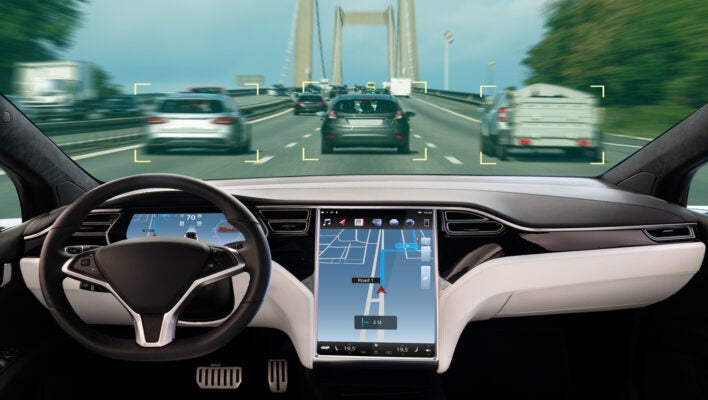
Kodiak And Vay Announce Self-Driving Technology Partnership

Technology companies Kodiak and Vay revealed a partnership ahead of Kodiak's self-driving truck ambitions.

Kodiak Robotics, a leading autonomous vehicle company, and Vay, a provider of remote-driving technology, announced a continuing partnership on Wednesday. Vay is currently providing its technology to help power Kodiak’s Assisted Autonomy technology, an element of Kodiak’s autonomous driving solution.

At the moment, Kodiak employees are utilizing Vay technology in certain low-speed environments. The Kodiak technology remains fully in control and sets limits on what the human can do.

The partnership appears to be a promising one, particularly as self-driving trucks continue to roll out in different states across the country. However, it is uncertain whether the technology will be effective in solving many of the industry’s ongoing problems.

Vay Technology Helping Kodiak’s Assisted Autonomy Technology

Kodiak Robotics has been integrating Vay technology within its self-driving trucks, according to a partnership that was announced on Wednesday. Kodiak uses Vay’s remote-driving technology in its ‘Assisted Autonomy’ technology, which allows a human to remotely control a truck in “low-speed, clearly-defined scenarios.” Assisted Autonomy is part of Kodiak’s autonomous driving solution, the Kodiak Driver.

The companies have been working together since last year, when Kodiak’s self-driving trucks started to make driverless deliveries for Atlas Energy Solutions in the Permian Basin of West Texas and Eastern New Mexico.


About Tech.co Video Thumbnail Showing Lead Writer Conor Cawley Smiling Next to Tech.co LogoThis just in! View
the top business tech deals for 2026 👨‍💻
See the list button

Kodiak initially began experimenting with remote-driving technology as part of a contract with the US Army in 2022, which needed a system that enabled remote operation in certain scenarios. Since then, the company has developed self-driving trucks and Assisted Autonomy.

“Assisted Autonomy is a hybrid approach that blends remote support with onboard autonomy to create a solution that enables flexibility and safety. Assisted Autonomy, therefore, combines the value of human decision-making with the rigorous safety controls of the autonomous system.” – Kodiak press release

Kodiak Employees Using Technology in Low-Speed Scenarios

While the combination of both technologies allows a human to remotely control a Kodiak self-driving truck, Assisted Autonomy remains active and is able to set limits on what the remote human can do. At the moment, the technology is being used in low-speed scenarios. Kodiak has also assured that all employees have commercial driving licenses and undergo rigorous training as part of using the trucks.

Ordinarily, remote-driving technology is used to support sidewalk delivery robots or self-driving forklifts. Recently, it’s being deployed by robotaxi companies. Vay has made this technology a strong element of its car-sharing business. The startup, originating from Berlin, operates as a driverless car-sharing company that uses its tech to allow employees to coordinate vehicles to customers.

Customers take manual control of the car, drive themselves to their destination, and then the employee pilots the vehicle back when the customer is finished. Vay has recorded more than 10,000 commercial trips.

Kodiak to Begin Commercial Driverless Deliveries in 2026

Kodiak plans to begin commercial driverless deliveries on public highways in Texas, during the second half of 2026, and this continuing partnership with Vay seems like a sure way of getting there. The revelation of self-driving trucks and remote-driving technology could prove to be a big one within the logistics industry. It could even help with the ongoing trucker shortage

In fact, a recent Tech.co survey found that 65% of freight professionals expect self-driving trucks to be on the road in the US by 2050. Some even countered this figure, and said the technology could be seen as early as 15 years from now. 

However, there are still be some reservations surrounding self-driving trucks. Significantly, despite positive signs, only a fifth of professionals said they would pick a self-driving truck rather than recruit a new driver.

Written by:
Nicole is a Writer at Tech.co. On top of a degree in English Literature and Creative Writing, they have written for many digital publications, such as Outlander Magazine. They previously worked at Expert Reviews, where they covered the latest tech products and news. Outside of Tech.co, they enjoy keeping up with sports and playing video games.

Study: 73% of Tech Leaders View Expanding AI as Top Priority

According to a new study, the main focus for tech leaders in 2025 is expanding the use of AI.

A new study has found that tech leaders are prioritizing the expansion of AI within their companies for 2025, which contrasts findings that AI adoption may be leveling off in the corporate world.

The main reason leaders are seeking to implement the new technology is related to boosting productivity levels. However, many leaders also expressed concerns for AI’s tendency to make errors, which runs the risk of harming their reputation.

The biggest concern for leaders, though, are connected to privacy and security. Therefore, many are implementing their own measures to ward against this, including ethical AI guidelines and privacy policies. There is also a need for the protection of sensitive information.

AI Expansion Is the Highest Priority for Tech Leaders

The 2025 Reveal Software Development Challenges Survey, released by Infragistics, has revealed that tech leaders are prioritizing the expansion of AI within their companies, with 73% having identified it as their primary focus for the year. 

The study showed that 75% of organizations already used AI for software creation in 2024, and of the organizations who weren’t using the technology last year, 50% plan to this year.


About Tech.co Video Thumbnail Showing Lead Writer Conor Cawley Smiling Next to Tech.co LogoThis just in! View
the top business tech deals for 2026 👨‍💻
See the list button

Similarly, those surveyed who are already using AI revealed some interesting outcomes in relation to hiring. 55% of those surveyed reported new job creation, with 63% of those adding as many as 25 new positions. This represents a more positive shift in the AI-job discourse, particularly as some companies and CEOs have shared bleaker statistics when it comes to the future of jobs.

Companies Are Adopting AI to Increase Productivity

As to why companies are looking to adopt AI, the primary reason appeared to be boosting productivity levels using task automation, according to more than half (55%) of respondents. Other reasons include optimizing code (48%), improving diagnostics (46%), testing software (46%) and fixing code errors (43%), among others.

However, whether AI is effective at generally increasing productivity is up for debate. A recent study has shown that AI may make workers less productive, by creating new tasks for them to complete. This is often the case when individuals have to go through AI-generated work and correct or check for any errors.

Those surveyed seem very much aware of AI’s ability to blunder, too.  More than one third (37%) of respondents flagged the risk of errors, bugs, and inefficiencies in AI-generated code, which could largely affect business performance and reliability.

Despite Boost, AI Privacy Remains a Concern

The main concern for tech leaders, however, was data privacy, with 78% of respondents citing it as their top issue. Privacy violations (38%), bias in AI models (37%), and the deployment of AI tools that have not been securely tested (36%) were also top concerns.

“Organizations must implement governance frameworks and technical safeguards to ensure safe, strategic implementation.” – Casey Ciniello, senior product manager at Infragistics.

Issues with privacy reflect concerns about how AI systems are developed and deployed. Many organizations, therefore, are implementing their own methods of combating this issue. Over 60% are implementing ethical AI guidelines, and 59% are issuing formal privacy policies to protect against misuse. 54% are also putting systems in place to protect any sensitive information.

Considering that leading AI company OpenAI has been breached more than 1,000 times, we can’t blame businesses for exercising caution.

Written by:
Nicole is a Writer at Tech.co. On top of a degree in English Literature and Creative Writing, they have written for many digital publications, such as Outlander Magazine. They previously worked at Expert Reviews, where they covered the latest tech products and news. Outside of Tech.co, they enjoy keeping up with sports and playing video games.

Samsara Announces New AI-Powered Safety Features For Drivers

New AI tools include multicam, Weather Intelligence, and a TikTok-style coaching app that can reward safe driving.

Samsara has announced over a dozen new AI products, with many aimed at tackling driver safety on the road.

The features range from reducing driver blind spots to providing real-time weather updates, as well as introducing AI-powered updates to its existing driver app that allows managers to reward truckers who practice safe driving.

As driver safety continues to be a top concern, these tools could lend a hand in promoting a better culture of road safety amongst them. They could also help companies attract and retain drivers amidst an ongoing and worsening trucker shortage.

Samsara Unveils Over a Dozen New AI Solutions, Including Driver Safety Tools

Fleet management software company Samsara has announced a herd of new AI-powered features for its systems, including many that are aimed towards improving fleet safety and promoting safer driving.

Johan Land, Senior Vice President of Product and Engineering at Samsara, thanked the “rapid advancements in AI technology” that have allowed the company to “build new products that are now empowering drivers to make better decisions on the road and equipping safety teams with the tools for faster, more effective feedback.”


About Tech.co Video Thumbnail Showing Lead Writer Conor Cawley Smiling Next to Tech.co LogoThis just in! View
the top business tech deals for 2026 👨‍💻
See the list button

One of the features released is an AI-multicam option, giving drivers the option to add up to four additional cameras, all accessible through a single in-cab monitor. The monitor provides a 360-degree view for reducing blind spots and provides real-time updates on hazards such as pedestrians or cyclists. Administrators can also retrieve video footage and audio to help resolve any incidents.

What Other AI Safety Features Has Samsara Announced?

Other than the multicam option, Samsara has introduced Weather Intelligence, allowing administrators to tap into real-time weather data pulled from the National Weather Service to view and alert workers of incoming threats that could impact their driving, such as the risk of fire and heavy rain.

Likewise, a safety coaching feature uses AI and automation to scale driver training and recognition. The AI is able to analyze risky driving events and send these to managers for review, and insight into big picture behavioral trends are provided so drivers can be coached based on their driving patterns.

Samsara’s driver app, too, is set for some upgrades. It will now include TikTok-style training videos that are designed to act as a companion for drivers throughout the day. Through the app, administrators can use recognition tools such as gift cards to reward good driving behavior.

To read about all of Samsara’s new features, check out its blog.

Drivers Are Becoming Increasingly Concerned For Their Safety

According to Fleet Owner, there was a 49% increase in fatal crashes on the road as of December 2024. With these kind of numbers, it is no wonder than driving ranks in the top ten of America’s most dangerous jobs.

Drivers are well aware of the dangers, too. A recent Samsara report found that 93% of drivers had experienced the negative effects of risky driving, such as vehicle damage or personal injury. 79% of drivers also reported that they’d experienced a “close-call” while driving in a distracted manner.

In the report, AI-powered detection systems emerged as the top solution for drivers to tackle road safety issues such as distracted driving, and many drivers thought it could play a role in educating drivers on safety procedures.

The new technology could therefore be highly effective in tackling many of trucking’s safety concerns. Likewise, with the trucker shortage expected to get worse, AI safety features could help companies retain and attract new drivers. According to a recent Tech.co survey, 11.8% of sector professionals are prioritizing staff recruitment and retention in June.

Written by:
Nicole is a Writer at Tech.co. On top of a degree in English Literature and Creative Writing, they have written for many digital publications, such as Outlander Magazine. They previously worked at Expert Reviews, where they covered the latest tech products and news. Outside of Tech.co, they enjoy keeping up with sports and playing video games.

Report: Apple Is Considering Buying AI Startup Perplexity

Samsung already has a partnership in the works with Perplexity, potentially complicating an Apple buyout.

Apple has internally discussed acquiring Perplexity, an AI startup with a search engine and chatbot used by around 15 million people, says a new report.

The tech titan has been slow to jump on the artificial intelligence trend, and has even gotten flack in recent months for delays to its AI rollout on Siri, in addition to delivering underwhelming Apple Intelligence features.

Apple has a market cap of over $3 trillion. Buying its way out of its AI problem makes a lot of sense.

What to Know About the Potential Acquisition

Apple’s head of mergers and acquisitions, Adrian Perica, has discussed the possibility of buying Perplexity with top decision makers including services chief Eddy Cue. At least, that’s according to insiders who spoke with Bloomberg, the publication that broke the news.

The discussions, which are “at an early stage,” might not lead to an offer.


About Tech.co Video Thumbnail Showing Lead Writer Conor Cawley Smiling Next to Tech.co LogoThis just in! View
the top business tech deals for 2026 👨‍💻
See the list button

However, there is clear evidence that Apple is eager to develop its own AI-based search engine, which could give its tech devices the layer of AI-powered functionality the company needs to convince consumers that it has its corporate finger on the pulse of modern culture.

Apple’s Biggest Acquisition?

The deal would suddenly look a lot more attractive to Apple if it is forced to end its longstanding relationship with Google’s search engine, in the event of a loss in the Google antitrust trial.

However, a Perplexity acquisition would be a big deal. The AI startup was recently valued at a massive $14 billion. Assuming the deal is anywhere near that number, it would be the biggest in Apple’s history.

In fact, it would more than likely be the biggest by a mile: Apple’s largest acquisition to date was its 2014 purchase of Beats for a relatively paltry $3 billion.

Apple Needs to Catch Up to Meta, Other Tech Giants

Apple’s 2025 Worldwide Developers Conference just wrapped up on June 13. There, the company debuted what Bloomberg terms a “relatively meager slate of new AI enhancements.”

Tech giants are all piling onto the AI hype train. Meta already tried to acquire Perplexity earlier this year, settling instead for a 49% share of Scale AI, which cost the social platform company $14.3 billion.

Samsung already has a partnership in the works with Perplexity, too, potentially complicating an Apple buyout.

However Apple chooses to win over the AI-loving audiences (and shareholders), we can be pretty confident that the company will pay billions to do it.

Written by:
Nicole is a Writer at Tech.co. On top of a degree in English Literature and Creative Writing, they have written for many digital publications, such as Outlander Magazine. They previously worked at Expert Reviews, where they covered the latest tech products and news. Outside of Tech.co, they enjoy keeping up with sports and playing video games.

Major Layoffs Planned at Microsoft’s Xbox Gaming Division

Microsoft seems to be getting in one last round of job cuts for its gaming division before its fiscal year ends on June 30th.

Microsoft is gearing up for a major round of job cuts at its Xbox division, according to new leaks.

It would represent the fourth round of layoffs for the Xbox gaming division across the last year and a half, and comes in addition to the 6,000 jobs Microsoft already cut in May 2025.

Whether due to AI hopes or tax changes, the widespread tech industry layoffs that first started back in 2022 continue to make headlines and worsen the job market.

What We Know About the Xbox Layoff Plans

Bloomberg has broken the news, out from “people familiar with the plans who asked not to be identified discussing nonpublic information.”

According to them, Microsoft’s “major layoffs” are coming next week. The publication previously reported that the tech giant is planning thousands of job cuts across the company for next week, and that they’ll “largely” be in sales teams.


About Tech.co Video Thumbnail Showing Lead Writer Conor Cawley Smiling Next to Tech.co LogoThis just in! View
the top business tech deals for 2026 👨‍💻
See the list button

No specific numbers have been released about the exact amount of employee who’ll soon find themselves on the chopping block at Microsoft Xbox.

Why Would Microsoft Cut Jobs?

Microsoft tends to make big organizational shakeups near the close of its fiscal year, which lines up with these reports: The fiscal year ends on June 30th.

However, Bloomberg notes that the Xbox division in particular has seen pressure from the company’s C-suite to increase its profit margins ever since 2023, when it bought Activision Blizzard Inc. in a $69 billion deal.

Across the larger tech industry, executives have publicly suggested plenty of other justifications for their seemingly constant layoffs across the past three or four years. Some have mentioned “economic uncertainty,” while others have praised the job-replacement potential of AI.

Tax Provision’s Role in Industry Layoffs

Not as well known, though, is a tax provision from 2017’s Tax Cuts and Jobs Act, which took effect in 2022. It rolls back corporation’s ability to immediately deduct all the costs of research and development, including engineer salaries.

Companies that weren’t profitable or didn’t have cash on hand suddenly had higher taxes, and were forced to reduce headcount.

There are plenty of other factors to consider as well, of course, from recently imposed tariffs to larger federal deficits triggering higher costs of borrowing. Ultimately, it’s a complex situation, even if it’s one that’s admittedly not exactly helped by corporate greed.

Written by:
Nicole is a Writer at Tech.co. On top of a degree in English Literature and Creative Writing, they have written for many digital publications, such as Outlander Magazine. They previously worked at Expert Reviews, where they covered the latest tech products and news. Outside of Tech.co, they enjoy keeping up with sports and playing video games.

Tesla Robotaxis Are Officially on the Road in Texas

The 'low-key' launch didn't feature the Cybercab, but instead saw current Tesla models sporting a Robotaxi logo decal.

If you’re in Austin and you see a Tesla without a driver, don’t freak out; the company’s Robotaxi service officially went live this weekend in Texas.

Full self-driving cars have been a pipe dream for the tech industry over the last few years, but there has been some serious progress in 2025. Multiple companies have autonomous vehicles on the road, and self-driving trucks have even started making trips in different states across the US.

Tesla can now count itself among those making moves this year, after getting its Robotaxi service up and running in a “soft-launch” on Sunday.

Tesla Robotaxi Service Is Live

In what was considered a “low-key” launch by some in attendance, Tesla has officially put its Robotaxis on the road in Austin, Texas on Sunday.

Videos of the occasion were posted all over X, with Elon Musk himself even chiming in to congratulate the AI and the team on a job well done.


About Tech.co Video Thumbnail Showing Lead Writer Conor Cawley Smiling Next to Tech.co LogoThis just in! View
the top business tech deals for 2026 👨‍💻
See the list button

“Culmination of a decade of hard work. Both the AI chip and software teams were built from scratch within Tesla.” – Elon Musk on X

Elon Musk also joked that the cost of a ride in a Tesla Robotaxi would be “a $4.20 flat fee,” proving that his sense of humor was not lost with the price of Tesla stock during his time with DOGE.

Is the Tesla Cybercab on the Road?

Given the Robotaxi service was paired with the Cybercab, it’s safe to wonder whether or not the futuristic concept car actually made an appearance on the road in Austin this weekend.

Well, we hate to disappoint, but the Cybercab was not part of the launch, and this vehicle isn’t set to enter volume production until 2026. If you were hoping to see the steering wheel-less self-driving car on the road any time soon, you’re out of luck.

Instead, the launch featured existing Tesla models, like the Model Y, that were cleverly equipped with Robotaxi logos.

The Self-Driving Competition

While this was a big step for Tesla in terms of its self-driving car capabilities, the company certainly isn’t leading the pack when it comes to the technology.

Waymo, for example, is operating a fully autonomous operation — dubbed Waymo One — in four different cities, Phoenix, San Francisco, Los Angeles, and yes, Austin. Cruise is another that operates in Phoenix and the San Francisco Bay Area.

Suffice to say, Tesla has its work cut out for itself when it comes to catching up in the autonomous taxi service game. But hey, at least they’re on the road.

Written by:
Nicole is a Writer at Tech.co. On top of a degree in English Literature and Creative Writing, they have written for many digital publications, such as Outlander Magazine. They previously worked at Expert Reviews, where they covered the latest tech products and news. Outside of Tech.co, they enjoy keeping up with sports and playing video games.

New Bill Would Require US Truck Drivers to Take English Test

This isn't great news for the trucker shortage, which remains poised to cause some serious problems for the supply chain.

A new bill from the US Senate could clamp down even harder on non-English speaking truckers by requiring full-on speaking and reading tests for proficiency in the language before awarding commercial driver’s licenses (CDLs).

The logistics industry has been consistently struggling over the last few years. Trucker shortages and supply chain uncertainty has made it hard to keep up with demand, and there have been virtually no signs of it getting better.

Now, English-speaking requirements proposed by the Trump administration and other GOP senators threaten to make the trucker shortage infinitely more complicated.

New Bill Could Create English Testing Requirements for Truckers

A new bill introduced in the US Senate would create new requirements for a CDL, including the “ability to read and understand traffic signs, communicate in English with law enforcement, and provide and receive feedback and directions in English.”

“Common sense would tell us that anyone driving on American roads, especially those operating large trucks and trailers, should be capable of understanding what the road signs say or how to communicate with police.” – Senator Roger Marshall (R-Kansas)

The bill is called the Commercial Motor Vehicle English Proficiency Act and, it was proposed by Senator Roger Marshall (R-Kansas), cosponsored by John Barrasso (R-Wyoming) and Cindy Hyde-Smith (R-Mississippi).

The Push for English Proficiency in Trucking

This news isn’t the first we’re hearing about English proficiency in the trucking industry. It’s merely an escalation of a trend that has been gaining traction since the Trump administration took office.

It started in May 2025, when President Trump signed an executive order — dubbed Enforcing Commonsense Rules of the Road for America’s Truck Drivers — that directed the Department of Transportation to begin enforcing English proficiency requires more thoroughly.


About Tech.co Video Thumbnail Showing Lead Writer Conor Cawley Smiling Next to Tech.co LogoThis just in! View
the top business tech deals for 2026 👨‍💻
See the list button

As a result, logistics agencies began doing just that, with the likes of the Commercial Vehicle Safety Alliance (CVSA) establishing stricter guidelines for English proficiency, including labeling drivers that don’t comply as out-of-service immediately.

How Will English Proficiency Testing Impact Trucker Shortage?

The trucker shortage is poised to cause some serious problems for the supply chain in the coming years, with estimates putting the discrepancy at around 160,000 drivers by 2030.

As you can imagine, creating more obstacles, like English proficiency testing, isn’t going to help much. While specific data isn’t available, estimates put the potential number of non-English speaking truckers as high as 3 million, which would account for 10% of all truckers in the US.

Subsequently, it’s safe to assume that the increasingly stiff requirements in regard to English proficiency in trucking could have a drastically negative impact on the logistics industry, the supply chain, and the global economy.

Written by:
Nicole is a Writer at Tech.co. On top of a degree in English Literature and Creative Writing, they have written for many digital publications, such as Outlander Magazine. They previously worked at Expert Reviews, where they covered the latest tech products and news. Outside of Tech.co, they enjoy keeping up with sports and playing video games.

US Insurance Companies Are the New Cybersecurity Threat Target

The specific concerns to keep an eye out for are social engineering attempts, likely aimed at help desks and call centers.

Add hackers to the list of those who aren’t thrilled with the US insurance business: Google Threat Intelligence Group warns that a new pattern is emerging, and hackers are now targeting US companies in the insurance industry.

Specifically, the concerns are centered on a group of teenagers and young adults called “Scattered Spider” (or UNC3944, or a number of other names).

The group directs its attention at one sector at a time, the researchers say, with indications pointing to insurance companies as their next target.

What to Know About the Threat

John Hultquist, Chief Analyst at Google Threat Intelligence Group (GTIG), told BleepingComputer about their concerns.

“Google Threat Intelligence Group is now aware of multiple intrusions in the US which bear all the hallmarks of Scattered Spider activity. We are now seeing incidents in the insurance industry.” -Hultquist


About Tech.co Video Thumbnail Showing Lead Writer Conor Cawley Smiling Next to Tech.co LogoThis just in! View
the top business tech deals for 2026 👨‍💻
See the list button

The specific concerns to keep an eye out for are potential social engineering attempts, likely aimed at help desks and call centers.

What’s Scattered Spider?

According to the US Department of Homeland Security, Scattered Spider is “a cybercriminal group that targets large companies and their contracted information technology (IT) help desks,” with data theft for extortion as its typical MO.

In the recent past, the group had targeted retail operations in the UK, followed by those in the US.

Just in June 2025, two insurance companies have disclosed that they’ve been impacted by cyberattacks. First, Philadelphia Insurance Companies (PHLY) says it discovered unauthorized access on its network, but was able to disconnect the affected systems before the issue spread.

During the same month, Erie Insurance suffered business disruptions, and soon said that the outage was caused by “unusual network activity.”

Staying Safe From Cybersecurity Threats in 2025

The Google team recommends keeping role-based indentities and strong authentication criteria such as password resets and multi-factor authentication.

Staying safe when the big threat is social engineering is tough, however: Workers will need to be trained to pay attention at all times for impersonation attempts that might arrive via SMS, phone calls, or messaging platforms.

For threats that target help desks, companies can try to stave off cyberattacks by reviewing how the service initially authenticates credentials before they’re reset. Plus, any process that highlights any logins from unusual sources may be useful for surfacing potential threats before they succeed.

Written by:
Nicole is a Writer at Tech.co. On top of a degree in English Literature and Creative Writing, they have written for many digital publications, such as Outlander Magazine. They previously worked at Expert Reviews, where they covered the latest tech products and news. Outside of Tech.co, they enjoy keeping up with sports and playing video games.

Yet Another Study Finds That AI Is Making Us Dumb

LLM users displayed the "weakest" brain connectivity in a new MIT study that hints AI use harms critical thinking.

A new study has found that those who use LLMs like ChatGPT to write essays have lower brain activity than those who just used their own thoughts to write similar essays.

It’s not an unexpected finding. Teachers everywhere have been fond of the weight-lifting analogy to explain why you shouldn’t rely on generative AI to help you with your homework: You go to the gym to make your muscles bigger, not to lift weights really fast, so using robots to help you doesn’t make sense. Working hard is the point.

Now, we’ve got evidence to back up that claim.

How the New MIT Study Worked

The study, run by researchers at the Massachusetts Institute of Technology and available online this month, split up participants into three groups, dubbed “LLM, Search Engine, and Brain-only (no tools).”

The groups were studied across three sessions of essay-writing, while their cognitive load was tracked with electroencephalography (EEG). Their essays were analyzed, and were also scored by human teachers and an AI judge. The results?


About Tech.co Video Thumbnail Showing Lead Writer Conor Cawley Smiling Next to Tech.co LogoThis just in! View
the top business tech deals for 2026 👨‍💻
See the list button

“EEG revealed significant differences in brain connectivity: Brain-only participants exhibited the strongest, most distributed networks; Search Engine users showed moderate engagement; and LLM users displayed the weakest connectivity. Cognitive activity scaled down in relation to external tool use.” -the study

The study also notes that LLM users “struggled to accurately quote their own work,” which makes sense, given that it was more the LLM’s work.

AI for Homework Is Like a Motorcycle at the Tour de France

In short, LLM users saw a trade-off that limited their neural, linguistic, and behavioral levels, a result that the researchers concluded raises “concerns about the long-term educational implications of LLM reliance.”

It’s hard to argue with those results. AI definitely doesn’t seem set to go away any time soon, but schools may want to continue looking into banning its use for homework, for the same reason we’d ban a motorcycle at the Tour de France.

Regardless of anything else, this revelation gives us a nice break from the news cycles letting us know that social media use and microplastics are making us dumb.

Previous Studies Also Found AI Makes Us Dumb

Scientific research is all about verifying results through repetition, so we’re happy to announce that this isn’t the first study that has indicated that AI use makes humans use their brains less.

One January 2025 study titled “AI Tools in Society: Impacts on Cognitive Offloading and the Future of Critical Thinking” found that “Younger participants exhibited higher dependence on AI tools and lower critical thinking scores compared to older participants.” Using AI is a form of cognitive offloading, the study found — it saves the brain from completing cognitive tasks itself.

In another study from February, researchers at Microsoft and Carnegie Mellon University polled 319 “knowledge workers” to find that participants with higher confidence in AI tools held lower confidence in their own critical thinking skills.

AI tools may be able to supplement critical thinking. Use them too often, studies indicate, and they’ll replace it instead.

Written by:
Nicole is a Writer at Tech.co. On top of a degree in English Literature and Creative Writing, they have written for many digital publications, such as Outlander Magazine. They previously worked at Expert Reviews, where they covered the latest tech products and news. Outside of Tech.co, they enjoy keeping up with sports and playing video games.

Can You Lock in a Deal Before Salesforce Prices Rise in August?

Enterprise Editions and Unlimited Editions for Sales Cloud and Service Cloud are among those getting cost increases.

Salesforce just announced price hikes for a range of products, including the popular work messaging app Slack alongside staples like Sales Cloud and Service Cloud.

On average, the price hikes will be about 6% higher, according to the announcement.

The new prices will go into effect at the start of August this year. Are you subscribing to one of the products that will see a price jump? If so, you may want to lock in a few years of the current price to save a little money.

What Products Are Increasing in Cost?

Salesforce hasn’t cited all the exact price increases that are coming on August 1, 2025, but it has announced the specific plans that will be impacted.

  • Enterprise Editions and Unlimited Editions for:
    • Sales Cloud
    • Service Cloud
    • Field Service
    • “Select Industries Clouds”


About Tech.co Video Thumbnail Showing Lead Writer Conor Cawley Smiling Next to Tech.co LogoThis just in! View
the top business tech deals for 2026 👨‍💻
See the list button

For the above plans, prices will increase an average of 6%.

Prices will remain the same for the Salesforce Foundations, Starter, or Pro Editions.

Slack Business+ Plan Hikes Costs by $2.50 Per User Per Month

Salesforce completed its $27.7 billion purchase of the workplace communication app Slack back in 2021. Now, it’s announcing some changes. More specific numbers are available for Slack’s new pricing, in contrast to the updates that the Salesforce Clouds will be getting. Here’s what to know.

  • Slack Business+ plan pricing will increase to $15 from $12.50 per user per month
  • A new Enterprise+ plan will debut, for a custom price

The Free plan will stay free, and the Pro Slack plan will stay the same price.

AI Updates Are Coming as Well

Salesforce users may be able to lock in their old prices with an annual or multi-year contract, but Salesforce has not yet confirmed if price changes will be effective across all existing plans when they arrive on August 1, 2025, or if they will only impact new users or subsequent subscription renewals.

AI tools are a big focus of the feature updates that will roll out alongside the new prices, with all Slack plans (even Free) set to get new AI features.

“Empowering every employee with AI isn’t just an advantage‌ — ‌it’s a strategic imperative for driving customer success. At Salesforce, we’re committed to putting our customers at the forefront of innovation and making it easy to give every employee access to the best AI and agentic tools.” -Salesforce

Agentforce add-ons and Agentforce 1 Editions are already generally available for the big Salesforce products that are getting price hikes soon (Sales Cloud, Service Cloud, Field Service, and Industries Clouds). These Agentforce tools are replacing the Einstein add-ons that users would previously rely on for AI help.

Written by:
Nicole is a Writer at Tech.co. On top of a degree in English Literature and Creative Writing, they have written for many digital publications, such as Outlander Magazine. They previously worked at Expert Reviews, where they covered the latest tech products and news. Outside of Tech.co, they enjoy keeping up with sports and playing video games.

Intel Will Lay Off Oregon Factory Workers Starting in July

Chipmaker Intel reveals plans to lay off personnel from mid-July. Jobs susceptible to automation are on the chopping block.

Intel has released a statement to workers regarding a round of layoffs across its Intel Foundry unit in Oregon, which are expected to begin in mid-July. Though there are no estimates as to how many workers will go, sources within the company have suggested this could be close to the 15,000 that were made redundant last year.

The move is part of an ongoing shift in Intel’s operations. Back in April, new CEO Lip-Bu Tan announced layoffs and an additional office day for workers.

As certain fabrication (fab) roles could be vulnerable to automation, there is the potential for laid off workers to be replaced by new technologies such as AI. Although, as many companies are backtracking on AI initiatives, it is unknown how much this will benefit Intel.

Intel Will Start Laying Off Factory Workers in Mid-July

Intel is set for another round of layoffs starting in mid-July, this time impacting the Intel Foundry unit in Oregon. Reportedly, the company communicated with employees about the layoffs, saying they are expected to end by the end of the month, and there are currently no estimates as to how many workers will lose their jobs.

The layoffs will affect fabrication, or fab workers, and appears part of a scheme to restructure its Intel Foundry manufacturing group and make it more focused on engineering and technical roles.


About Tech.co Video Thumbnail Showing Lead Writer Conor Cawley Smiling Next to Tech.co LogoThis just in! View
the top business tech deals for 2026 👨‍💻
See the list button

The communication released by Intel to employees highlighted the seriousness of the decision, and how the step was necessary to improving the company’s financial position. In a statement to Tom’s Hardware, Intel stated: “Removing organizational complexity and empowering our engineers will enable us to better serve the needs of our customers and strengthen our execution.”

Changes of Pace at Intel

In August of 2024, previous chief executive Pat Gelsinger laid off around 15,000 workers. As a result, Intel’s workforce stood at about 108,900 at the end of last year. Although no predictions have been released by Intel, sources from other divisions within the company have reported they expect a similar level of reductions.

Since the appointment of CEO Lip-Bu Tan in March, changes have come quickly for Intel. Two months ago, Tan announced that workers would be expected to come into the office four days a week, rather than three. He also announced layoffs, in which 20% of Intel’s workforce was made redundant.

The changes could potentially speak to a wider problem at Intel, which faces increasing competition from companies such as Nvidia. In the first quarter of 2025, the company reported a widened loss of $821 million. At the time, Tan said that the company needed to change its culture, and that it was: “too slow, too complex and too set in [its] ways.”

Possibility of Automation Across Some Roles

Included in the fab personnel vulnerable to layoffs at Intel, are jobs that are easily susceptible to automation, such as fab operators, logistics personnel and lower-skill technicians in highly automated areas. Therefore, we could see Intel replacing some of these workers with more efficient systems, potentially even AI.

Intel wouldn’t be the first company to do this alongside layoffs. In its letter to workers announcing its own set of layoffs, CrowdStrike CEO George Kurtz explained the potential of AI, which could indicate the company’s plan to introduce the technology in some capacity.

Whether this will work for Intel specifically, no one can be sure, particularly as some companies have regretted replacing laid off workers with AI. Klarna have most recently backtracked on an AI overhaul in its customer services department after reports of poor customer satisfaction.

Written by:
Nicole is a Writer at Tech.co. On top of a degree in English Literature and Creative Writing, they have written for many digital publications, such as Outlander Magazine. They previously worked at Expert Reviews, where they covered the latest tech products and news. Outside of Tech.co, they enjoy keeping up with sports and playing video games.

Nvidia CEO Criticizes Anthropic CEO Over AI Comments

Nvidia CEO Jensen Huang has slammed Anthropic CEO Dario Amodei for his recent AI predictions.

Nvidia CEO Jensen Huang disagreed with comments made by Anthropic CEO Dario Amodei about the potential impact of AI. Amodei claimed that AI has the potential to wipe out 50% of all entry-level white collar jobs and raise the unemployment rate.

As the technology continues to dominate headlines, Huang’s criticism shows that even big technology CEOs aren’t completely aligned on the capabilities of AI, and the impact it could have on society.

Despite this, businesses continue to implement the technology, and mixed results are causing some businesses to go back on AI initiatives. However powerful AI currently is, it doesn’t appear to be going anywhere.

Nvidia CEO Disagrees With Anthropic Over AI Claims

Jensen Huang, CEO of multinational technology company Nvidia, slammed Anthropic CEO Dario Amodei over comments he made regarding the potential risks of AI. Amodei recently spoke with Axios about the future of the technology, making bold claims that it could wipe out 50% of all entry-level white collar jobs, and raise the unemployment rate up to 20%.

Huang said he “pretty much disagree(s) with almost everything” Amodei prophesized, and suggested that Amodei’s comments were an attempt to put Anthropic at the center of AI development.


About Tech.co Video Thumbnail Showing Lead Writer Conor Cawley Smiling Next to Tech.co LogoThis just in! View
the top business tech deals for 2026 👨‍💻
See the list button

“I think AI is a very important technology; we should build it and advance it safely and responsibly. If you want things to be done safely and responsibly, you do it in the open… Don’t do it in a dark room and tell me it’s safe.” -Jensen Huang, CEO of Nvidia.

Anthropic focuses on developing AI in a safe and ethical way. The company was formed from ex-OpenAI employees in 2021, who left the AI giant after concerns about safety and the company’s direction.

Two Tech CEOs At Odds on AI Impact

Jensen Huang’s response to Dario Amodei is evidence of how even big technology companies are disagreeing on the impact AI could have on society. While Huang agreed that AI will have an impact on some employees, he couldn’t get behind the idea that it will dramatically cut white-collar jobs, as Amodei and his researchers claimed it will.

This is not the first time the Anthropic CEO has raised concerns about AI. He has previously said that humanity may one day lose control of AI systems if they become smarter than humans, which sounds a lot like early AI concerns from before the technology became so widespread. In contrast, Huang believes there will be more openings and opportunities for people as companies become more productive through AI.

Anthropic have responded to Huang’s comments: “Dario has never claimed that ‘only Anthropic’ can build a safe and powerful AI… Dario has advocated for a national transparency standard for AI developers (including Anthropic) so the public and policymakers are aware of the models’ capabilities and risks and prepare accordingly… Dario stands by these positions and will continue to do so.”

Should We Heed The Warnings About AI?

It can be a difficult task to properly gauge how powerful AI technology is at the moment. There have been conflicting studies on how effective it is, with some suggesting that AI has no significant impact on hours or employee pay.

However, some studies have also already found that AI is already shrinking entry-level tech jobs, and a recent Microsoft Report suggests that businesses ought to embrace a new way of working that involves human-AI agent teams.

This shows that in spite of the uncertainty, businesses are still implementing the technology – even if the figures appear to be leveling off, and a future for businesses without AI seems almost inevitable.

Written by:
Nicole is a Writer at Tech.co. On top of a degree in English Literature and Creative Writing, they have written for many digital publications, such as Outlander Magazine. They previously worked at Expert Reviews, where they covered the latest tech products and news. Outside of Tech.co, they enjoy keeping up with sports and playing video games.

Amazon Partner United Natural Foods Hit by Cyberattack

One of the largest food wholesale distributors in the US has suffered a data breach. Currently, the full impact is unclear.

United Natural Foods, the main distributor for Amazon Whole Foods, has been hit by a cyberattack. The company disclosed the breach in a filing to the Securities and Exchange Commission (SEC) on Monday.

United Natural Foods is the largest full-service grocery partner in North America, with products delivered in over 30,000 locations, from supermarkets to independent retailers. It generates more than $30 billion in annual revenue, with over 50 distribution centers around the US. Clearly, despite its large network, it failed to prevent the attack in question.

With data breaches often proving terminal for companies, execs will anxiously await news of the full extent of the damage. Beyond the immediate financial impact and inevitable legal costs, reputational damage can be extremely difficult to come back from. Depressingly, news like this is becoming all-too-common in the US.

United Natural Foods Suffers Cyberattack

United Natural Foods, one of the largest grocery distributors in North America and main partner to Amazon Whole Foods, has suffered a cyberattack. The company disclosed the breach in a filing with the SEC on Monday, prompting its stock price to tumble by a massive 7%.

In the filing, the company revealed that it detected unauthorized activity on some of its IT systems on June 5th. In response, it took some of its systems offline. This has had a knock-on effect on customer orders, with United Natural Foods saying in a statement: “The incident has caused, and is expected to continue to cause, temporary disruptions to the Company’s business operations.”


About Tech.co Video Thumbnail Showing Lead Writer Conor Cawley Smiling Next to Tech.co LogoThis just in! View
the top business tech deals for 2026 👨‍💻
See the list button

The wholesaler is currently conducting an investigation to determine the extent of the damage, as well as working to restore affected systems so that customer disruption is minimized.

Size Doesn’t Matter for Cybercriminals

United Natural Foods describes itself as the largest full-service grocery partner in North America, as well as the main partner to Amazon Whole Foods. It delivers products to more than 30,000 locations, from supermarket chains to independent retailers, and turns over more than $300 billion in annual revenue.

At this stage, it’s not known if the attack is the work of one or more attackers, or if it forms part of a wider ransomware plot. What is clear is that, as one of the biggest players in the food wholesaler game, the announcement will send shockwaves through the industry.

Despite its enormous size and means, United Natural Foods was not infallible to an attack. Company execs now begin an anxious wait for the full scope of the damage.

Urgent Action Required

News of high-profile data breaches is becoming depressingly familiar. Recently, payroll and benefits solutions provider, Kelly Benefits, was hit in a similar attack that exposed the confidential information of nearly half a million people. A few months prior to that, a DISA Global Solutions hack compromised data belonging to over 3 million individuals.

The common thread that runs through these breaches is a lack of sufficient resources to counteract a growing cybersecurity threat. Disconcertingly, this problem is felt right across the business. According to our Impact of Technology on the Workplace report, a staggering 98% of bosses can’t identify all the signs of a phishing scam.

Not only is this setting a bad example for junior employees, but it suggests that cybersecurity just isn’t a high priority for a lot of businesses. While recent evidence would indicate that many businesses are aware of the scale of the threat, businesses have a long way to go. Without urgent action, incidents like this will keep recurring.

Written by:
Nicole is a Writer at Tech.co. On top of a degree in English Literature and Creative Writing, they have written for many digital publications, such as Outlander Magazine. They previously worked at Expert Reviews, where they covered the latest tech products and news. Outside of Tech.co, they enjoy keeping up with sports and playing video games.

Study: OpenAI Has Been Breached More Than 1000 Times

The company behind ChatGPT has suffered a security breach 1,140 times, according to data from Cybernews.

Being the most popular AI chatbot on the market certainly puts a target on your back, with a new study revealing that OpenAI has suffered more than a thousand security breaches.

On top of that, the study found that five out of the top 10 large-language models (LLMS) on the market have experienced security breaches, further outlining the serious security concerns associated with the generative AI industry.

Companies face mounting pressure to introduce rigorous measures governing how employees use AI tools. As history shows us, data breaches can be extremely costly – with the impacts often terminal for many businesses.

New Study Analyzes AI and Cybersecurity

A new study from Cybernews aimed to look at how effective businesses are when it comes to cybersecurity.

In the study, it was revealed that half of the biggest LLM providers on the market have experienced data breaches. More importantly, OpenAI — the company behind the popular ChatGPT platform — was revealed to have been breached 1,140 times.


About Tech.co Video Thumbnail Showing Lead Writer Conor Cawley Smiling Next to Tech.co LogoThis just in! View
the top business tech deals for 2026 👨‍💻
See the list button

To evaluate their online security protocols, the company created the “Business Digital Index,” which assesses custom scans, IoT search engines, IP, and domain name reputation. The LLM providers in question include OpenAI, Claude, Perplexity, and DeepSeek, among others.

AI Businesses Deserting Basic Duties

Given the exorbitant cost of breaches and the resources available to these companies, why the heck aren’t they making a cybersecurity more of a priority?

For one, the study found that almost half (45.4%) of sensitive data prompts are sent from personal accounts rather than business ones, meaning that they’re not safeguarded by the same corporate cybersecurity protocols – and corporate data is more exposed as a result.

To make matters worse, every LLM provider in the study displayed SSL/TLS configuration vulnerabilities, which can expose data to interception via man-in-the-middle attacks. These findings are backed up by a recent study, which found that most cybersecurity breaches are preventable, and businesses are simply not doing enough.

Senior Leaders Should Face Scrutiny

The research poses some worrying questions for business leaders everywhere. With AI increasingly a key cornerstone of the modern workplace, tech leaders face growing pressure to properly vet the LLM providers that their business is using, as well as to adequately train their staff on how to safely use these platforms.

According to our Impact of Technology on the Workplace report, just 27% of senior leaders say that their organization provides safeguards to restrict which information they can input into chatbots. This is backed up by the Cybernews report, which paints a pretty lawless picture of employees’ chatbot usage.

What is plainly clear is that businesses are not taking their cybersecurity practices seriously enough. A shocking 98% of business leaders can’t identify all the signs of a phishing scam, which demonstrates that the problem is rife right across the business. If we’re to turn the tide on data breaches, action is required from the bottom to the top.

Written by:
Nicole is a Writer at Tech.co. On top of a degree in English Literature and Creative Writing, they have written for many digital publications, such as Outlander Magazine. They previously worked at Expert Reviews, where they covered the latest tech products and news. Outside of Tech.co, they enjoy keeping up with sports and playing video games.

Musk’s Self-Driving Tesla ‘Robotaxis’ Hit First US State this Month

The company is pinning its hopes on an autonomous taxi initiative, after shares tumble and sales slide.

Elon Musk and Tesla are set to launch a self-driving “robotaxi” pilot in Austin, Texas this month. The pilot will comprise between 10 and 20 Model Y vehicles, with June 22 earmarked as the date for the rollout.

The electric car manufacturer is determined to arrest a slide in global sales, with many attributing the downturn in fortunes to Musk’s recent political forays. The Tesla boss has long promised that self-driving vehicles will be the future of his company.

His vision is complicated by state laws surrounding autonomous vehicles. Texas can lay claim to one of the most forward-thinking approaches in this particular area, with Aurora recently testing self-driving trucks on roads between Houston and Dallas. But with significant pushback from figures in the logistics industry, as well as safety advocates, progress in this area is never far from disruption.

Musk and Tesla Piloting Autonomous Taxis on Texas Roads

Tesla is set to launch a self-driving vehicle pilot in Texas, with 10 to 20 “robotaxis” scheduled to hit the road on June 22. The vehicles will be open to the public, meaning that willing participants can get a ride at their leisure.

The launch was originally scheduled for June 12, but the Tesla boss later revised that date, writing on X: “We are being super paranoid about safety, so the date could shift.”


About Tech.co Video Thumbnail Showing Lead Writer Conor Cawley Smiling Next to Tech.co LogoThis just in! View
the top business tech deals for 2026 👨‍💻
See the list button

As of June 11, the Austin Transportation and Public Works site lists Tesla as a “known” autonomous vehicle operator in the city. It’s further categorized as being in the “testing” phase of autonomous operations. By contrast, Waymo, one of the biggest players in the space, is in the “deployment” phase.

Musk Pins Hopes to Autonomous Vehicles

The planned rollout has been in the pipeline for a long time. Musk is a big advocate of self-driving vehicles, and has maintained that Tesla’s future hinges on the technology. In the face of mounting pressure related to his political exploits, as well as the company’s recent performance, the pilot is a pivotal one.

Tesla’s stock has significantly diminished in recent times, with the electric vehicle manufacturer taking a battering in the stock market. Musk’s relationship with President Trump, and subsequent fallout, appears to have cost the company dearly.

Now that his dealings with the president have apparently ceased, Musk will hope better times for Tesla lay ahead. However, his pursuit of autonomous vehicle supremacy is a complicated one, with each state exercising a different level of permission, and levels of public enthusiasm and pushback also varying from state to state.

Bumpy Road Ahead for Self-Driving Vehicles

While Texas is one of the more progressive regions in this area, Austin officials have begun to push for more stringent regulation. According to Austin Police Lieutenant William White, who oversees self-driving vehicle safety for the department: “It’s been very frustrating on our end from a safety standpoint. If these machines are learning, they’re not learning at a quick enough pace for sure.”

This growing level of opposition puts Tesla’s plans in jeopardy – and threatens to stymie the wider movement for autonomous vehicle technology. Progress in this area has been notoriously slow, with several states enshrining the testing of autonomous vehicles into law, but only a few acting on that permission.

Texas has recently seen self-driving Aurora trucks on its highways, and Ohio and Indiana are set to follow suit. With a massive labor shortage in the logistics industry as a whole, the benefits are obvious. But will state legislatures across the country listen? That’s another question entirely.

Written by:
Nicole is a Writer at Tech.co. On top of a degree in English Literature and Creative Writing, they have written for many digital publications, such as Outlander Magazine. They previously worked at Expert Reviews, where they covered the latest tech products and news. Outside of Tech.co, they enjoy keeping up with sports and playing video games.

OpenAI Delays Open-Weight AI Model for ‘Something Amazing’

The open-weight model was set to release in June, but the CEO has delayed that for "something unexpected and quite amazing."

Usually set backs are a bad thing, but Sam Altman just announced that the release of the open-weight AI model from OpenAI will be slightly delayed because of “something unexpected and quite amazing.”

The AI market is nothing if not competitive right now. More and more companies are joining the fray to see which platform will be top dog when the dust settles, which means even the slightest delay could have a big impact.

OpenAI has the most to lose as the owner of the most popular AI chatbot in 2025, so let’s hope this delay is as worth it as Altman seems to think.

Open AI Announced Open-Weight AI Model Delay

In a post on X, CEO of OpenAI Sam Altman announced that the upcoming open-weights model that was slated to release in June would be delayed by at least a month.

“We are going to take a little more time with our open-weights model, i.e. expect it later this summer but not June.” – Sam Altman on X

OpenAI initially announced the open-weight AI model in April with promises that it would “gather feedback” from developers to ensure it meets industry standards.

Why Is the Open-Weight Model Delayed?

It’s been a few months since OpenAI initially announced its open-weight AI model, and the market hasn’t stayed still in the meantime. In fact, there has been some notable competition in the open-weight AI model space, with Meta, DeepSeek, and xAI all now offering open-weight options.

This may be adding to the pressure on OpenAI and Altman to provide a platform that is competitive enough to match expectations, leading to a delay on the guise of “something amazing” on the horizon.

“Our research team did something unexpected and quite amazing and we think it will be very very worth the wait, but needs a bit longer.” – Sam Altman on X

Whether or not OpenAI sticks to that summer deadline remains to be seen, but it’s safe to say the open-weight AI model better seriously impress given all this build-up.

What Is an Open-Weight AI Model?

An open-weight model describes a system that has its core settings — or “weights” — available to the public, allowing other developers to view, comment on, and edit them for their own particular needs.

You might be more familiar with the term “open-source,” which is a bit similar, although open-weight describes just the core settings being available, whereas open-source offers all the code to a particular platform.


About Tech.co Video Thumbnail Showing Lead Writer Conor Cawley Smiling Next to Tech.co LogoThis just in! View
the top business tech deals for 2026 👨‍💻
See the list button

All that to say, the open-weight model from OpenAI will provide a bit of transparency on the platform, which the company could certainly use after launching the generative AI revolution we have on our hands in 2025.

Written by:
Nicole is a Writer at Tech.co. On top of a degree in English Literature and Creative Writing, they have written for many digital publications, such as Outlander Magazine. They previously worked at Expert Reviews, where they covered the latest tech products and news. Outside of Tech.co, they enjoy keeping up with sports and playing video games.

FDA Will Use AI to Approve Drugs and Devices Faster

The agency launched a large-language model, dubbed Elsa, just last week to streamline operations.

It looks like there’s no limit to the uses for AI, with the US Drug and Food Administration (FDA) announcing that it plans to use the technology to approve drug and medical devices faster in the future.

It seems like AI is being added to everything in 2025. From business software to social media apps, generative AI has found its way into every day life in more ways than we can count.

Now, the government may start using AI to speed up approval for things like vaccines and gene therapy. We just hope they’ve ironed out all the AI errors by then.

FDA Wants AI to ‘Radically Increase Efficiency’

According to an article published in JAMA, the FDA is exploring the possibility of using generative AI technology to “radically increase efficiency” when it comes to reviewing new drugs and medical devices.

“The advent of generative artificial intelligence (AI) holds several promises to modernize the FDA and radically increase efficiency in the review process.” – Dr. Marty Makary, the FDA commissioner, and Dr. Vinay Prasad,  head of the vaccine and gene therapy division, in the JAMA article

With review times often in the months to years range, the FDA could certainly use a bit of help in addressing the needs of the public.

How Will the FDA Use AI?

Everyone says they’re using AI in 2025, but how does the FDA actually plan to take advantage of the technology to improve efficiency at the agency?

Well, just last week, the FDA launched Elsa — a large-language model similar to ChatGPT — to streamline operations where possible. The AI model is used to “summarize adverse events to support safety profile assessments, perform faster label comparisons, and generate code to help develop databases for nonclinical applications.”


About Tech.co Video Thumbnail Showing Lead Writer Conor Cawley Smiling Next to Tech.co LogoThis just in! View
the top business tech deals for 2026 👨‍💻
See the list button

Given it’s only been around for a week, the agency is confident that its functionality will branch out substantially to include data processing and other generative AI operations. But for now, they have to work out the kinks before they can move forward.

Can the FDA Trust AI Will Actually Help?

There’s no denying that AI has faced a bit of a rocky start as far as efficiency is concerned. Businesses implementing the technology haven’t seen the time-saving benefits they hoped, with many reporting that AI actually adds more tasks while not actually saving any time.

Subsequently, trusting the nation’s food and drug safety to the technology is causing a bit of a backlash. After all, AI hallucinations have become far too common, and some studies found that AI gets medical diagnosis wrong about half the time.

Even worse, the FDA admits that Elsa has seen some serious problems so far. Staff members at the agency noted that the large-language model regularly provided incorrect information and that it was really only good for summarizing text.

Written by:
Nicole is a Writer at Tech.co. On top of a degree in English Literature and Creative Writing, they have written for many digital publications, such as Outlander Magazine. They previously worked at Expert Reviews, where they covered the latest tech products and news. Outside of Tech.co, they enjoy keeping up with sports and playing video games.

Google Is Offering to Pay US Employees to Quit

Google is also issuing a return-to-office mandate, which could be a prelude to more layoffs.

Google is looking to trim its workforce even more, offering buyouts to US employees ” who don’t feel aligned” with the company’s strategy in 2025.

It’s no secret that the tech industry has had a serious layoffs problem over the last few years. Between the evolution of AI and the economic uncertainty of a Trump presidency, companies across the industry have been culling employees like it’s going out of style.

Google has been leading the pack on this front, laying off employees on an unfortunately consistent basis over the last few years, with these buyouts representing a prelude to the next round.

Google Offers Buyouts in Multiple Departments

According to an internal memo obtained by CNBC and Business Insider, Google is offering US employees a buyout to leave the company.

Workers on the Core, Marketing, Research, Knowledge & Information (K&I), and Communications teams all received access to the offer, which Google calls a voluntary exit program.


About Tech.co Video Thumbnail Showing Lead Writer Conor Cawley Smiling Next to Tech.co LogoThis just in! View
the top business tech deals for 2026 👨‍💻
See the list button

“The Voluntary Exit Program may be a fit Core Googlers who aren’t feeling excited about and aligned with Core’s mission and goals, or those who are having difficulty meeting the demands of their role.” – Jen Fitzpatrick, the Senior Vice President of Core Systems at Google in internal memo

The number of employees that were offered the buyout was not disclosed by Google, but considering the company’s history of layoffs over the last few years and the departments listed, it seems likely many workers will have the option to leave if they want.

Google Also Announced Another Return-to-Office Mandate

In addition to offering buyouts to US employees, Google has also informed some employees that their remote work status will be in question moving forward.

More specifically, Google noted that local remote employees — those working remotely while living within 50 miles of an office — will have to abide by the company’s three days in, two days out hybrid policy moving forward.

“When it comes to connection, collaboration, and moving quickly to innovate together, there’s just no substitute for coming together in person.” – Jen Fitzpatrick, the Senior Vice President of Core Systems at Google in an internal memo

Are More Layoffs Coming at Google?

While voluntary buyouts are certainly a more humane approach to firing employees, the reality is that they almost always lead to full-on layoffs. Sure, some companies are able to meet their quotas after voluntary programs like this one, but in many cases, they’re merely a prelude to firing employees non-voluntarily.

This is almost certainly going to be the case at Google. The company laid off 12,000 employees in 2023, with a steady stream of layoffs following over the last few years.

As for why Google is laying off employees at such a high rate, look no further than the new technology of the moment. AI has made companies pivot and pivot hard, with many looking to restructure, so that they can focus on developing this new technology to replace human workers.

Written by:
Nicole is a Writer at Tech.co. On top of a degree in English Literature and Creative Writing, they have written for many digital publications, such as Outlander Magazine. They previously worked at Expert Reviews, where they covered the latest tech products and news. Outside of Tech.co, they enjoy keeping up with sports and playing video games.

Anthropic Discontinues Blog from AI Chatbot Claude

Claude Explains, the blog from Anthropic's AI chatbot Claude, has been shut down.

Anthropic has wound down its AI-generated blog by chatbot Claude, known as Claude Explains. The blog aimed to produce content for users looking for various Claude-related solutions.

While users complained about a lack of transparency regarding who was writing the blog, more than 24 websites were linking to Claude Explains posts before it shut down. An Anthropic spokesperson has shared that the blog was seen as a collaboration between human content experts and AI.

Businesses considering Claude or other AI chatbots as part of their content strategy shouldn’t aim to replace humans altogether, as a history of mistakes could indicate the AI is ill-equipped to carry out editorial duties independently as we know it today.

Anthropic Shuts Down AI Bot Claude’s Blog

AI startup Anthropic has removed its AI chatbot Claude’s blog, with the page now being redirected to its homepage. The blog, known as Claude Explains, provided content surrounding technical support for Claude users, and demonstrated the chatbot’s writing ability.

Speaking to TechCrunch, an Anthropic spokesperson previously said that Claude Explains would expand to topics ranging from creative writing to business strategy. It has since been revealed from a TechCrunch source that the blog was only a pilot meant to help with Anthropic customer requests and content marketing goals.


About Tech.co Video Thumbnail Showing Lead Writer Conor Cawley Smiling Next to Tech.co LogoThis just in! View
the top business tech deals for 2026 👨‍💻
See the list button

Similarly, there have been questions raised via social media about how much of the writing on the blog was done by Claude. Anthropic has stated that the blog was overseen by “subject matter experts and editorial teams” who elevate Claude’s writing, providing “insights, practical examples, and […] contextual knowledge.”

However, on the now-defunct blog, it describes itself as “the Anthropic universe where Claude is writing on every topic under the sun,” which understandably caused confusion amongst readers.

‘Collaboration Between AI & Humans’

Anthropic has said that Claude Explains is a great example of collaboration between AI and humans, reminiscent of Microsoft’s Frontier Firm prediction for future businesses. In the setup, humans and agents work together, with one human worker managing several AI agents. Microsoft claimed this would help humans get back to doing the creative tasks that they do best.

The fact that Claude Explains was a collaboration suggests that AI in its current iteration, is unable to compete with the creative and editorial skills of humans. An Anthropic spokesperson said that:

“The editorial process requires human expertise.” – Anthropic spokesperson

Likewise, the company previously confirmed that it was still hiring across roles that involve writing, despite Claude’s blog drafting abilities. This further suggests a future where AI is assisting professional, human content writers and editors.

How Effective Could AI Be for Your Business’s Content Needs?

Evidence beyond Claude suggests that AI may not currently be powerful enough on its own to tackle your business’s content needs. Even the most sophisticated AI tools have been known to “hallucinate,” or make information upThis fault of many AI chatbots could contribute to why so many businesses are pivoting from the tech.

However, there have been a few developments as of late in the field of AI writing. OpenAI CEO Sam Altman has predicted that AI could one day handle “95% of what marketers use agencies, strategists, and creative professionals for today.” OpenAI have also reportedly developed an AI model that is tailored for creative writing, but this has come with various ethical complaints about using authors’ works to train machines.

If you are considering using AI as part of your company’s content strategy, we would suggest implementing it as part of a team of established marketers.

Written by:
Nicole is a Writer at Tech.co. On top of a degree in English Literature and Creative Writing, they have written for many digital publications, such as Outlander Magazine. They previously worked at Expert Reviews, where they covered the latest tech products and news. Outside of Tech.co, they enjoy keeping up with sports and playing video games.

New Research Reveals Corporate AI Adoption May Be Leveling Off

New research reveals that the adoption of AI tools within corporate US is leveling off after a period of significant rising.

The Ramp AI Index, which measures AI adoption within US businesses, has revealed that corporate implementation of the technology may be leveling off.

This contributes to a possible sense of frustration amongst businesses who have adopted the technology and not seen any results internally, or significant return-on-investment.

However, conflicting studies don’t seem to be slowing down any big tech companies. Companies such as Google and Meta continue to develop and invest in AI, and Anthropic CEO Dario Amodei recently stated that AI will change the job market, particularly for white-collar workers.

Recent Ramp Data Suggests Corporate AI Adoption is Leveling Off

According to transaction data from Ramp, AI adoption may be leveling off within the corporate world. Ramp’s AI Index estimates the rate of AI adoption within US businesses by drawing on the fintech company’s card and bill pay data.

The AI Index seems to have leveled off to 41% in May, after what appeared to be ten months of growth. The data further showed that as of May, 49% of large businesses had deployed AI in some form, compared to 44% of medium-sized businesses and 37% of small businesses.


About Tech.co Video Thumbnail Showing Lead Writer Conor Cawley Smiling Next to Tech.co LogoThis just in! View
the top business tech deals for 2026 👨‍💻
See the list button

Ramp’s AI Index takes data from around 30,000 companies. Concerns have been raised about the accuracy of the data, both because of the sample size, and because the Index identifies AI products and services using merchant name and line-item details. Therefore, it could miss company spending with other cost centers.

Sense of Frustration Amongst Corporate AI Adopters

Recent news and evidence points towards a lack of bang for buck for companies introducing AI. S&P Global, a Manhattan-based data provider, found the amount of companies abandoning most of their generative-AI pilot projects has risen to 42%. This is up from 17% last year.

In similar news, buy-now, pay-later service Klarna has reversed its plan to use AI for most of its customer services after reports of poor quality service and customer dissatisfaction. It is now looking to rehire humans.

This could potentially indicate a growing frustration with AI within the corporate world, particularly when businesses want to see return-on-investment when integrating a new technology. In fact, some studies have shown that AI is not making many differences at all to business operations.

It could be argued that the excitement surrounding AI in the past few years is yet to match its actual capabilities. However, AI companies continue to lay it on thick. Anthropic CEO Dario Amodei recently warned white-collar workers that AI could take their jobs in the next two to five years.

Big Tech Not Slowing Down on AI Ventures

It remains full steam ahead for several big tech companies on AI, despite the mixed findings on how productive the technology can actually be.

Google has recently announced an “AI mode” for its search engine, following the success of AI overviews. Meta is reportedly looking to invest billions into Scale AI, a company which provides data labeling services to businesses to help them train their AI models.

According to the Economist, many companies are struggling to find ways to implement the new tech. Therefore, they would rather have more ways to make AI useful for their business, than smarter models. At a recent Microsoft conference, Anthropic’s Amodei urged users to think big, and keep up faith in AI’s possibilities.

Written by:
Nicole is a Writer at Tech.co. On top of a degree in English Literature and Creative Writing, they have written for many digital publications, such as Outlander Magazine. They previously worked at Expert Reviews, where they covered the latest tech products and news. Outside of Tech.co, they enjoy keeping up with sports and playing video games.

Which States Are Self-Driving Trucks Legal in? Guide

Self-driving trucks are set to transform the logistics industry. But which states are they actually legal in?

Self-driving trucks are arguably the next “big thing” in logistics, heralded as a potential solution to the widespread labor shortage. While there’s been a lot of talk in the last few years, only a handful of states have actually put their money where their mouth is. Recently, the state houses of Indiana and Ohio agreed on a deal to bring that will bring self-driving trucks to I-70, putting the issue right back into the spotlight.

Advocates cite dramatic fleet management cost savings, safer roads, and greater efficiency, as the chief reasons for embracing self-driving technology. While autonomous vehicles might not have much buy-in among truckers themselves, you can’t stop progress. Some states already have self-driving trucks on the road, some have begun to explore the possibility, and others are pushing back against the movement.

With that in mind, I’ve put together a complete list of states and how much progress they’ve made on the autonomous truck issue. And make sure to check back because we’ll be regularly updating this page.

Key takeaways

  • The US is still struggling to create a coherent policy nationwide when it comes to self driving trucks.
  • Some states including South Dakota, Arkansas, and Mississippi allow self driving trucks to a degree.
  • Some states, such as Arizona, Colorado, and Kentucky, have restrictions on self driving trucks.
  • Red tape and public distrust have contributed to the issues with self driving regulation in the US.
  • In spite of challenges, the future looks promising, with many states actively pursuing self driving truck legislation.

Alabama

Autonomous commercial vehicles are legally permitted in Alabama, with legislation passed in 2019 to allow the deployment of “autonomous commercial vehicles” on public roads. While these vehicles are required to carry liability insurance of $2 million, they are not required to have a human operator in the vehicle.

Are there self-driving trucks on the road in Alabama?

Not at present. However, that will likely change soon, with progress on self-driving trucks gathering steam.

Alaska

While legislation to regulate the use of autonomous vehicles was recently introduced, there is no word on whether or not that applies to self-driving trucks. As per the bill, self-driving vehicles require a human operator to be in attendance at all times during interstate commerce.

Are there self-driving trucks on the road in Alaska?

No, and with the state notoriously tight-lipped when it comes to autonomous vehicle legislation, don’t expect that to change in the near-future.

Arizona

Self-driving trucks are fully permitted in Arizona. It was recently reported that they had begun to make journeys on the I-45 freight corridor in Texas. Those plans were originally announced in September 2024, at which point it was expected that the company behind them, Aurora, would incorporate Phoenix into its proposed route.

Are there self-driving trucks on the road in Arizona?

Yes, various companies have been testing self-driving trucks on Arizona roads since 2019 – albeit, sometimes with a human operator in attendance.

In addition, Aurora plans to expand its driverless service to El Paso and Phoenix – initially “by the end of 2025,” according to The Verge.

Arkansas

Arkansas allows self-driving trucks on its roads, with the state legislature laying the groundwork with a landmark bill, in the process becoming the 30th US state to allow autonomous vehicles on the road.

Are there self-driving trucks on the road in Arkansas?

Yes, the state has tested self-driving trucks on its roads for years. In 2023, Tyson Foods announced a partnership with Gaitak that would see self-driving refrigerated box trucks on Tyson routes in Northwest Arkansas.

Elsewhere, driverless trucks started making “middle-mile” deliveries in Bentonville back in 2021, as a result of a partnership between Gaitak and Walmart.

California

No, self-driving trucks are not permitted in California at the moment. The issue has long been a thorn in the state’s side.

In 2023, the state legislature proposed a ban on self-driving trucks without human operators, but it was later vetoed by Governor Gavin Newsom, who claimed that existing laws governing autonomous vehicles were sufficient.

The same year, driverless car company Cruise had its license suspended by the DMV after a pedestrian was struck by one of its vehicles and sustained life-threatening injuries.

Are there self-driving trucks on the road in California?

No, but this could soon be set to change. In April, state regulators tabled a new proposal to allow for the testing of self-driving heavy-duty trucks on public roads.

Colorado

Self-driving trucks are permitted in Colorado, with Governor Jared Polis in May vetoing a bill that would’ve banned their usage except when a human operator was present. At the time, he stated: “Driver error is the leading cause of accidents. Preserving tools which could make Coloradons safer is critical.”

Are there self-driving trucks on the road in Colorado?

Not at present.

Connecticut

Autonomous vehicles are permitted for testing in Connecticut, but only with a human operator present. It is not clear whether or not this applies to self-driving trucks. Last year, the University of Connecticut revived plans to build a “smart city” and research lab for the testing of such vehicles.

Are there self-driving trucks on the road in Connecticut?

Not at present.

Delaware

Testing autonomous vehicles in Delaware is permitted. However, there is no explicit legislation stating whether or not this applies to self-driving trucks.

The state senate is currently debating SB46 – a piece of legislation that would prevent autonomous trucks in excess of 26,000 lbs from traveling on the roads without human supervision. If enacted, this would make Delaware the only state in the US to issue an outright statute banning driverless trucks.

Are there self-driving trucks on the road in Delaware?

Not at present. Autonomous vehicles have been tested in agricultural fields, but not on public highways.

Florida

Self-driving trucks are fully permitted on Florida roads, which could make a solid claim to being one of the biggest advocates for the technology in the country. Last year, Governor Ron DeSantis signed a bill to “drastically” expand the testing and use of driverless vehicles in the state.

Are there self-driving trucks on the road in Florida?

Yes. Back in 2022, Kodiak Robotics, an autonomous trucking startup, expanded its services to the Sunshine State in partnership with 10 Roads Express.

Georgia

Yes, driverless trucks are allowed in Georgia. The state pretty quick off the mark with its autonomous vehicle legislation, becoming the sixth to legalize self-driving vehicles.

Are there self-driving trucks on the road in Georgia?

Yes, autonomous truck testing is “underway” on Georgian roads, with Kodiak Robotics and Pilot Company teaming up to unveil an “autonomous truckport” in 2023.

According to Don Burnette, Kodiak CEO:

“Partnering with Pilot Company to build the Villa Rica truckport ensures that we have access to the truckport services we need…The freight lane between Dallas and Atlanta is critical to the nation’s supply chain and economy, and this truckport enables us to refine our operations model as we continue to grow.”

Hawaii

Self-driving trucks are not legally permitted in Hawaii, but the testing of autonomous vehicles is broadly allowed. Marking its first real foray into the autonomous vehicle space, the Hawaii Department of Transportation last year piloted an autonomous electric passenger shuttle bus at the Daniel K. Inouye International Airport.

Are there self-driving trucks on the road in Hawaii?

Not at present.

Idaho

Self-driving vehicles are not currently allowed in Idaho. In 2018, Governor C L “Butch” Otter signed an executive order to support the development of self-driving vehicle regulations, which included the formation of a committee to study autonomous vehicles.

Are there self-driving trucks on the road in Idaho?

Not at present, and that is not likely to change for a while.

Illinois

Autonomous vehicles are legally allowed on the roads in Illinois, but it is not clear whether or not this applies to commercial trucks. When it comes to autonomous vehicles, Illinois came out of the blocks quickly. In 2019, Autobon AI tested a self-driving freight vehicle – albeit one with a human on standby – and promised that more would follow.

Then, in 2021, the state Department of Transportation launched a multiagency initiative, dubbed “Autonomous Illinois,” which was tasked with advancing research into this burgeoning area. Last year, the University of Illinois Urbana-Champaign began work on the Autonomous and Connected Track, a test track for high-speed autonomous freights.

In spite of all this, there hasn’t been much legal or regulatory action in the space.

Are there self-driving trucks on the road in Illinois?

Not at present, but with the state open-minded about the possibilities of autonomous vehicles, expect this to change.

Indiana

Yes, it is permitted to test self-driving trucks in Indiana. In fact, an agreement between the Indiana and Ohio Departments of Transportation recently saw such a test taking place. The “automated platooning technology” test formed part of a multi-year project that is partially funded by the federal government.

Are there self-driving trucks on the road in Indiana?

No, these vehicles are not currently allowed to be freely operated on public roads. But with tests underway, this won’t be the case for long.

Iowa

Automated vehicle testing is permitted in Iowa, but it is not clear if that applies to self-driving trucks. This was enshrined into law by a 2019 piece of legislation, “Iowa Code 321.514.”

Are there self-driving trucks on the road in Iowa?

Not at the moment, but the Iowa Department of Transportation states: “Companies are looking to pilot automated trucks on freight corridors,” which suggests that driverless trucks are not far aware.

Kansas

Yes, driverless trucks are allowed in Kansas. In 2022, Governor Laura Kelly signed into law a bill that permitted self-driving vehicles to operate on public highways, as long as they don’t exceed 34,000lbs.

Are there self-driving trucks on the road in Kansas?

Not at the moment, but Gaitak has previously tested driverless trucks in the state.

Kentucky

Kentucky legalized self-driving vehicles on public roads in July 2024. While this does include driverless trucks, there are caveats – for example, vehicles that exceed 62,000lbs must have a human operator present until July 31, 2026.

Are there self-driving trucks on the road in Kentucky?

No, and don’t expect that to change soon. State representative Josh Bray doesn’t believe we’ll see driverless trucks on the road “for the next 10-15 years.”

Louisiana

Driverless trucks have been allowed in Louisiana since 2019, with the state among the early adopters of autonomous-vehicle friendly legislation.

Are there self-driving trucks on the road in Louisiana?

Not at the moment, but it’s widely expected that the state will soon follow the example of Texas and begin testing vehicles on its roads. A Gaitak test from 2020 placed human operators behind the wheel, but it is not confirmed whether or not any future tests would follow suit.

Maine

Driverless trucks are not yet permitted in Maine, despite the passage of the Automated Driving Safety Act. It is, however, legal to test autonomous vehicles on Maine roads, although this does not appear to apply to trucks.

Are there self-driving trucks on the road in Maine?

Not at the moment.

Maryland

Fully automated trucks are not yet legal for unrestricted use in Maryland. However, the Maryland General Assembly is currently debating a proposed bill that would establish regulations for driverless vehicles.

Are there self-driving trucks on the road in Maryland?

Not at the moment.

Massachusetts

Driverless trucks are not yet fully legal in Massachusetts. It is legal to test autonomous vehicles, and tests have been ongoing for nearly 10 years, but it is not clear if they have involved trucks, and anyway, the state is one of six that explicitly require a human operator in attendance.

Are there self-driving trucks on the road in Massachusetts?

Not presently, and there is nothing to suggest that this will soon change.

Michigan

No, driverless trucks are not permitted in Michigan. The state was an early adopter of driverless vehicle legislation, allowing manufacturers to test autonomous vehicles with a human in attendance from 2013.

Ultimately, questions over legal accountability when one such vehicle is involved in an accident have stifled automated vehicle progress in the state.

Are there self-driving trucks on the road in Michigan?

Not at the moment, but that is expected to change soon.

Minnesota

It is legal to operate an autonomous vehicle in Minnesota, but this does not currently apply to self-driving trucks.

Are there self-driving trucks on the road in Minnesota?

No, and it’s not likely that they will be for a long time.

Mississippi

Self-driving trucks are legal in Mississippi, with the state approving their use on public roads in 2023. Shortly afterwards, in 2024, an electric autonomous shuttle bus debuted at Mississippi State University as part of an exploration of how autonomous vehicles could be used on the campus in the future.

Are there self-driving trucks on the road in Mississippi?

Not currently, but with the appropriate legislation already in place, this is sure to change soon.

Missouri

Self-driving vehicles, including trucks, are legally permitted on Missouri roads. A recent partnership between Kodiak Robotics and Missouri-based Artur Express will test autonomous electric trucks in the St. Louis area “in the second half of 2025,” according to Transport Topics.

Are there self-driving trucks on the road in Missouri?

Not yet, but there will soon be, courtesy of Kodiak Robotics and Artur Express.

Montana

Self-driving trucks are legal in Montana, with some of Aurora’s research into this area conducted on Lone Peak in Big Sky, in the south of the state.

Are there self-driving trucks on the road in Montana?

Not right now, but Aurora has recently announced the opening of a new 78,000-square-foot office and testing facility in Bozeman. In other words, Montana is primed for a glut of autonomous vehicle activity in the coming months and years.

Nebraska

Self-driving trucks are not legal in Nebraska, but the state approved the presence of self-driving cars on public roads back in 2018. Activity in this space has been very limited.

Are there self-driving trucks on the road in Nebraska?

No, and there likely won’t be for a long time, with regulatory progress in this space very slow.

Nevada

Autonomous trucks are currently legal in Nevada. However, lawmakers are currently debating a bill that would ban large driverless trucks and buses from roads in Nevada, with a human operator to be required at all times.

Are there self-driving trucks on the road in Nevada?

Yes, and they’ve been in operation since 2015. Nevada permits vehicles of all automation levels on its roads.

New Hampshire

New Hampshire permits the testing of driverless vehicles on its roads, including trucks. However, human operators are required in some of these cases.

Are there self-driving trucks on the road in New Hampshire?

Vehicle companies have tested driverless trucks on New Jersey roads, but it’s not known if those tests are currently taking place.

New Jersey

New Jersey permits the testing of autonomous trucks with a human operator in attendance. In 2023, the Port Authorities of New York and New Jersey conducted a joint demonstration of a driverless shuttle van at Newark Liberty International Airport.

Are there self-driving trucks on the road in New Jersey?

Not currently, but self-driving cars are being tested on roads in the Garden State.

New Mexico

New Mexico permits the testing of driverless trucks. In 2024, Kodiak Robotics spearheaded a series of tests that saw autonomous Class 8 trucks complete a series of 21-mile journeys. According to Kodiak CEO Don Burnette, “We operated the first driverless run with no one inside the cab.”

Are there self-driving trucks on the road in New Mexico?

Yes. In the Permian Basin, autonomous trucks have been carrying loads of sand as part of a collaboration between Atlas Energy Solutions and Kodiak Robotics.

New York

It is legal for companies to test driverless trucks in New York. However, in 2024, state senator Pete Harckham introduced new legislation that will require drivers to accompany self-driving trucks that weigh more than 10,000lbs on state roadways.

Are there self-driving trucks on the road in New York?

Currently, there are no self-driving trucks on the road in New York.

North Carolina

The use of autonomous vehicles is legally permitted in North Carolina, but it is not clear if that also applies to trucks. In 2023, the state Department of Transportation launched “Advance Mobility NC,” an initiative aimed at accelerating existing autonomous vehicle progress.

Are there self-driving trucks on the road in North Carolina?

Not at present. Autonomous shuttle buses have been tested on state roads in the last few years.

North Dakota

The use of driverless trucks in North Dakota is legally allowed. However, this issue is currently under discussion in the state House of Representatives, with lawmakers seeking to introduce new restrictions on automated vehicles.

Are there self-driving trucks on the road in North Dakota?

Yes, self-driving trucks have been delivering sugar beets to a Wahpeton factor since August 2024. However, there has been a human operator in attendance.

Ohio

The testing of automated trucks is legal in Ohio. In December 2024, Ohio University researchers concluded a four-year project in collaboration with the state Department of Transportation and DriveOhio that saw self-driving vehicles tested on hilly terrain in Athens and Vinton. Largely, the experiment was a success and may soon open the door for further research into this area.

Are there self-driving trucks on the road in Ohio?

Yes – they are currently being tested on Interstate 70.

Oklahoma

Oklahoma passed a bill in 2022 that greenlit autonomous vehicles on state roads, including trucks, without the need for a human operator. At the time, state senator Paul Rosino argued:

“We don’t have enough truck drivers as it is. If we don’t allow AVs, we’re still going to have supply chain issues in our state and country. These vehicles are safe, and this legislation will help our state take advantage of this technology as so many others are already doing.”

Are there self-driving trucks on the road in Oklahoma?

Yes. Since 2023, Maersk and Kodiak Robotics have been hauling consumer goods with autonomous trucks between Houston and Oklahoma City.

Oregon

Oregon has allowed autonomous vehicle testing, including trucks, on state roads since 2018. At the time, it created a Task Force on Autonomous Vehicles to spearhead ongoing policy and research, but the group was later disbanded in 2021. Then, in January 2025, the state government introduced new regulations to ensure that “safety protocols are in place.”

Are there self-driving trucks on the road in Oregon?

It’s not clear if there any on the road at present, but companies including Daimler have tested autonomous trucks in the state since 2018.

Pennsylvania

As of July 2023, Pennsylvania allows driverless cars and trucks on the road when “certain conditions” are met. Among them, the laws allow “platooning,” but only when a human driver is in operation in the lead vehicle.

Are there self-driving trucks on the road in Pennsylvania?

Aurora tests driverless trucks on its test track, based in Pittsburgh, but there aren’t currently trucks on public highways.

Rhode Island

While driverless vehicles can operate in Rhode Island with a human driver present, it is not clear if this applies to trucks. With concerns about road conditions in Rhode Island, it will likely be a while before autonomous trucks make it to public roadways in the state.

Are there self-driving trucks on the road in Rhode Island?

Not at present.

South Carolina

Self-driving trucks are permitted on the road in South Carolina. While the state hasn’t been very forthcoming on its rules and regulations in this area, it has explicitly stated that truck platooning for commercial vehicles is permitted without mandatory distance requirements.

Are there self-driving trucks on the road in South Carolina?

Not at present, but Kodiak Robotics clocked up more than 50,000 miles between January and August 2024 with self-driving trucks.

South Dakota

South Dakota was allows driverless trucks and other vehicles on its roads. The state was relatively late to the party, only establishing a regulatory framework to allow autonomous vehicles to be tested on the road in 2024.

Are there self-driving trucks on the road in South Dakota?

Not at present.

Tennessee

At present, driverless trucks are allowed in Tennessee, but this could be set to change. In January 2025, the general assembly tabled a bill that would require a human operator to be in attendance during journeys.

Are there self-driving trucks on the road in Tennessee?

Yes. As part of a three-year contract, an Einride autonomous trucks is currently delivering finished goods to a GE Appliances warehouse in Selmer.

Texas

Not only are autonomous trucks permitted in Texas, but the state can lay claim to the most forward-thinking approach in this particular area.

Are there self-driving trucks on the road in Texas?

In recent weeks, Aurora driverless trucks have made “regular” customer deliveries between Houston and Dallas, clocking up over 1,200 miles since the start of May. In March, autonomous semi-trucks began hauling frac sand across West Texas as a result of a partnership between Atlas Energy Solutions and Kodiak Robotics.

Utah

Utah permits autonomous trucks, but the state has made pretty minimal progress in this area. In 2019, its Department of Transportation and the Utah Transit Authority teamed up to launch a 15-month automated shuttle pilot. During this time, it carried 6,727 passengers and traveled nearly 1,347 miles.

Are there self-driving trucks on the road in Utah?

Not at present.

Vermont

You can test self-driving trucks in Vermont, with Springfield becoming the first town to welcome automated vehicles on its roads in early 2021.

Are there self-driving trucks on the road in Vermont?

Not at present.

Virginia

It is legal to test automated trucks in Virginia, which currently has a bill halfway through its statehouse that seeks to introduce new restrictions. Among them, a human operator may need to be present in autonomous vehicles that exceed 62,000 lbs.

Are there self-driving trucks on the road in Virginia?

Not at present, but Torc tested autonomous trucks on the road last year. As the company is headquartered in Virginia, it’s highly likely that future tests are imminent.

Washington

Self-driving trucks can legally operate on Washington roads. In 2023, state senator Matt Boehnke introduced legislation to establish some rules and regulations around the use of fully autonomous vehicles. Among these, vehicles must maintain compliance with traffic and motor vehicle safety laws.

Are there self-driving trucks on the road in Washington?

Not at present.

West Virginia

A law passed in 2022 authorized the use of fully autonomous trucks on West Virginian roads. As per the bill, operators must establish a plan for how the state can communicate with a “fleet support specialist” during operation.

Are there self-driving trucks on the road in West Virginia?

Not at present.

Wisconsin

While Wisconsin does permit the testing of autonomous trucks in the state, a human operator is currently required behind the wheel at all times.

Are there self-driving trucks on the road in Wisconsin?

Not at present.

Wyoming

Wyoming permits self-driving trucks, but at present, doesn’t regulate their usage. This is set to change, with state lawmakers determined to introduce some official rules and regulations.

Are there self-driving trucks on the road in Wyoming?

Not at present.

Are Self-Driving Trucks Safe?

One of the biggest issues standing in the way of further mainstream adoption is safety. While advocates point to the fact that human error is overwhelmingly the leading cause of traffic collisions, its opponents counter that technology is not perfect, and when it goes wrong, the impact can be catastrophic.

In 2018, a woman named Elaine Herzberg was killed when she was struck by a self-driving Uber vehicle. While a human operator was present in the vehicle, she wasn’t paying attention at the time of the crash. This incident, and others like it, is held up as an example of the problem with autonomous vehicles.

While there’s no denying that this technology poses a potential risk, the upsides are massive. And with there being no shortage of cutting-edge technology for fleet managers and operators to keep on top of their vehicles, including fleet management software, it’s getting safer by the day.

For more information on autonomous truck progress and sentiment from within the industry, be sure to download our latest report, Moving Goods With Fewer Hands. We spoke to 521 logistics professionals to get their thoughts on where the industry is today and what the future might hold.

Written by:
Nicole is a Writer at Tech.co. On top of a degree in English Literature and Creative Writing, they have written for many digital publications, such as Outlander Magazine. They previously worked at Expert Reviews, where they covered the latest tech products and news. Outside of Tech.co, they enjoy keeping up with sports and playing video games.
Back to top