Is ChatGPT Still Down? OpenAI DDoS Attack Behind Ongoing Outages

OpenAI's ChatGPT AI tool has had a difficult week, with outages and issues overshadowing its latest GPT-4 Turbo announcement.

In what’s becoming something of a habit for OpenAI’s popular chatbot, ChatGPT is down for some users still today, with the company’s latest status update pointing to “periodic outages” still being suffered by the service. What’s more, it’s apparently the result of a DDoS attack.

In its latest system update, OpenAI  says: “We are dealing with periodic outages due to an abnormal traffic pattern reflective of a DDoS attack. We are continuing work to mitigate this.”

It’s a major blow for ChatGPT, with this week’s considerable downtime coming as OpenAI should be riding high on the recent launch of GPT-4 Turbo.

How to Check OpenAI’s Latest Status Updates: Is ChatGPT Still Down?

At the time of writing on Thursday, November 9, ChatGPT was still experiencing issues for many users around the world, though unlike yesterday the service is now back online.

This is confirmed by both OpenAI’s status updates page, where it notes “periodic outages” are still affecting ChatGPT. You can check the latest OpenAI updates for yourself here.


About Tech.co Video Thumbnail Showing Lead Writer Conor Cawley Smiling Next to Tech.co LogoThis just in! View
the top business tech deals for 2026 👨‍💻
See the list button

This isn’t as severe as yesterday’s full outage, which say ChatGPT knocked completely offline due to a DDoS, or Distributed Denial of Service, attack. Let’s take a look at what that is in more detail.

Screenshot of OpenAI's ChatGPT status update page showing the latest information on it going down.

What is a DDoS Attack and Why Has OpenAI Been Attacked?

A DDoS attack is a type of brute force cyberattack historically favored by bad actors.

It sees cyber criminals deliberately trying to crash a website of service by overloading it with so much traffic and activity, its servers cannot cope. The site is then knocked offline or so overwhelmed with requests it becomes unusable.

Bleeping Computer has already picked up at least one claim of responsibility by a threat actor calling them Anonymous Sudan. According to the site, the reason for the OpenAI DDoS attack is the firm’s “general biasness towards Israel and against Palestine.”

Who Else Benefits From ChatGPT Going Down?

The group is alleged to have continued on its Telegram channel: “CHATGPT link completely dead now worldwide, thousands of reports all over twitter and social media, let us see if they will admit it’s a DDOS attack.”

Conspiracy theorists may also see the timing of the attack as intriguing, coming as it does in the wake of the major new ChatGPT Turbo release that immediately stole the show from the launch of Elon Musk’s xAI chatbot, called Grok.

This is probably stretching it, to think that pro-Musk enthusiasts are peeved OpenAI took the shine off of the xAI launch, but Grok vs ChatGPT is surely the new clash of the chatbots to watch

Written by:
James Laird is a technology journalist with 10+ years experience working on some of the world's biggest websites. These include TechRadar, Trusted Reviews, Lifehacker, Gizmodo and The Sun, as well as industry-specific titles such as ITProPortal. His particular areas of interest and expertise are cyber security, VPNs and general hardware.

Meta Will Require Political Ads to Disclose AI-Generated Content

The AI crackdown is on at Facebook and Instagram, just in time for the 2024 presidential election.

Starting next year, advertisers on Facebook and Instagram will be required to state whether they’re using AI-generated content in any political, electoral, or social issue ads.

If they have, and the ad is accepted, Meta will run the campaign with a disclosure for audiences that the content was created with AI tools. 

This latest move highlights a recent trend in Meta’s crackdown on false news and information. Earlier this year, it deleted thousands of fake accounts that were being leveraged by a Chinese network, whose aim was to spread disinformation.

What Are the New Advertising Rules?

According to Meta, ads subject to the disclosure include anything that’s been digitally created or altered to:

  • Depict a real person saying or doing something they did not say or do.
  • Depict a realistic-looking person that does not exist, or a realistic-looking event that did not happen or alter footage of a real event that happened.
  • Depict a realistic event that allegedly occurred, but that is not a true image, video, or audio recording of the event.

Any social issue, political, or electoral ads containing the above will be flagged to users and logged within Meta’s ads database. 

However, there are a few exceptions to the rule, with Meta stating that any alterations that were “inconsequential or immaterial to the claim, assertion, or issue raised” — such as photo retouching and image cropping — would not need to be disclosed.

In addition to the AI disclosure, Meta will also ban advertisers from using its own AI software to create ads relating to political or social issues, housing, employment, credit, health, pharmaceuticals, or financial services. Ads promoting campaigns on these subjects will be free to use third-party AI tools, like Midjourney or DALL-E, but will need to use the new disclosure measures.


About Tech.co Video Thumbnail Showing Lead Writer Conor Cawley Smiling Next to Tech.co LogoThis just in! View
the top business tech deals for 2026 👨‍💻
See the list button

Safeguarding the Use of AI

Meta is currently in the throes of managing the tidal wave of generative AI content that has recently flooded platforms. Thanks to the likes of ChatGPT and Google Bard, tech companies have had the unprecedented challenge of working out how to manage and regulate manipulated and fake images, videos, and audio.

“We believe this approach will allow us to better understand potential risks and build the right safeguards for the use of generative AI in ads that relate to potentially sensitive topics in regulated industries.” – Meta spokesperson

This latest disclosure follows the recent guidelines that anyone running political ads on the Meta platforms are required to complete an authorization process. This includes adding a “paid for by” disclaimer on any campaigns. From there, the ads will be stored in the company’s public Ad Library for up to seven years. 

The Upcoming Election Year

This crackdown from Meta comes as both regulators and lawmakers begin to tackle the issue of AI-generated content within political ads, ahead of 2024’s US presidential election.

Earlier this year, Rep. Yvette Clarke and Sen. Amy Klobuchar introduced bills that require ads campaigns to disclose when they’ve used AI-generated content. The regulatory agency in charge of political advertising, The Federal Election Commision, is similarly expected to make a decision on a new rule that limits the use of AI in political ads.

Back in 2016, Facebook was criticized for its lack of regulations over Russia using ads to spread discontent among American users. Then in 2020, the company hit headlines by being accused of allowing politicians to lie in ads on the platform. This was defended on the grounds of free speech and public discourse. However, since then, Meta has been busy navigating the tricky subject of political advertising.

In an effort to squash as much misinformation and disinformation as possible, Mark Zuckerberg has spent billions developing functionality that closely monitors political ads on the platform. Despite these innovations, Clegg has since called for regulatory guidance on these kinds of issues, instead of having tech companies determine the boundaries and rules.

Written by:
James Laird is a technology journalist with 10+ years experience working on some of the world's biggest websites. These include TechRadar, Trusted Reviews, Lifehacker, Gizmodo and The Sun, as well as industry-specific titles such as ITProPortal. His particular areas of interest and expertise are cyber security, VPNs and general hardware.

What Is Samsung Gauss? The Latest Generative AI Contender

Samsung Gauss can produce text, images and code. But how does it compare to current AI models?

Not one to be left behind in the race for AI dominance, South Korean electronics company Samsung has just unveiled its own generative artificial intelligence (AI) model, Samsung Gauss, at its annual AI forum.

The new model will be incorporated into Samsung’s Galaxy S24 handset in the first half of 2024, in an effort to improve its product offering and become less reliant on large language models (LLMs) provided by competitors like OpenAI.

Samsung’s announcement comes just days after the launch of GPT-4 Turbo, OpenAI’s upgraded language model. But how will Samsung Gauss compare to the litany of existing LLMs that are already on the market?

What Are Samsung Gauss’s Core Features?

Another day, another generative AI model created by one of the biggest names in tech. The latest entry? Samsung Gauss — an unusually named AI model that responds to user-generated prompts in a similar way to ChatGPT.

Samsung Gauss is split into three divisions: Samsung Gauss Language, Samsung Gauss Code, and Samsung Gauss Image. As the name of these functions suggests, the AI tool is capable of generating text, code, and image responses, offering versatile applications to its users.


About Tech.co Video Thumbnail Showing Lead Writer Conor Cawley Smiling Next to Tech.co LogoThis just in! View
the top business tech deals for 2026 👨‍💻
See the list button

Samsung Gauss Language aims to streamline productivity in a number of different ways, including helping users write and edit emails, summarize documents, and translate languages.

Its coding function, Samsung Gauss Code, utilizes a code assistant called code.i. It was primarily designed to help developers write code quickly, by supporting “code description and test case generation through an interactive interface.”

By providing coding services right out of the gate, Samsung Gauss already has the edge over other chatbots that were slower to incorporate the tool, including Google Bard, which only began offering coding capabilities in April of this year.

Lastly, Samsung Gauss Image can create and edit images, akin to the OpenAI image generator DALL-E. For example, the model is capable of creating unique, lifelike visuals, and improving the resolution of existing images.

Samsung Is Playing Catch Up on AI

Samsung’s new AI tool is part of a wide effort to bake artificial intelligence into its core strategy, with the company incorporating generative AI into its Bixby virtual assistant for home appliances earlier this year.

The model, which is named after Carl Frederich Gauss — a prominent mathematician who established the normal distribution theory — will be able to run locally on Samsung devices, including the Galaxy S24 handset due to be released next year.

Samsung is expecting to sell 35 million Galaxy S24 units next year, with the help of this AI boost. Such a feat could see Samsung’s smartphone sales leap ahead of its biggest rival Apple, as well as other leading manufacturers.

How Does Samsung Gauss Compare to Other AI Models?

Despite Samsung Gauss’s versatile offering, it’s hard to see how its user numbers will ever trump that of established rivals like ChatGPT and Google Bard.

However, while it may not have the same name recognition as other chatbots, Samsung Gauss aims to set itself apart from the competition by focusing on productivity through comprehensive language functionalities.

Samsung Gauss hopes to have an edge over rivals when it comes to privacy, too. Unlike most other AI models, the tool is an “on-device AI.” This means it will process data on the device itself, allowing it to bypass security concerns that can result from data being processed through the cloud. This also enables the model to be customized more heavily to the user’s liking, while taking up less energy than conventional generative AI alternatives.

Samsung Gauss is currently being used internally to aid employee productivity and will be expanded into a variety of Samsung products from January 2024.

Written by:
James Laird is a technology journalist with 10+ years experience working on some of the world's biggest websites. These include TechRadar, Trusted Reviews, Lifehacker, Gizmodo and The Sun, as well as industry-specific titles such as ITProPortal. His particular areas of interest and expertise are cyber security, VPNs and general hardware.

LinkedIn Users Have Just Hours Left to Claim $6.75M Settlement

If you want your chunk of change from the LinkedIn settlement, you'll have to get your skates on as the deadline is today.

If you were involved in LinkedIn’s 401(k) Profit Sharing Plan and want to try to cash in on the social media giant’s $6.75 million settlement case, you have just a few hours left to file for your chunk of change.

LinkedIn agreed to the settlement earlier this year after its administrators were accused of mismanaging its 401(k) retirement plan and failing to use the lowest-cost share class for many mutual funds.

Active members of the plan will qualify for the payout automatically, but former members will need to take action before the November 10 deadline. That’s today, so read on as we explain how you can make a claim.

Details of the LinkedIn Settlement Closing Today

In March of this year, the professional social media platform LinkedIn agreed to pay $6.75 million to settle a lawsuit filed by current and former members of its 401(k) plan.

The plaintiffs – Douglas G. Baily, Jason J. Hayes, and Marianne Robinson – first sued the company in August 2020 claiming the retirement plan violated Employee Retirement Income Security Act (ERISA) laws by charging excessive fees and offering substandard investment options.


About Tech.co Video Thumbnail Showing Lead Writer Conor Cawley Smiling Next to Tech.co LogoThis just in! View
the top business tech deals for 2026 👨‍💻
See the list button

They alleged that administrators of the $817 million 401(k) plan failed to use the lowest cost share and their “substantial bargaining power” to lower the price of the fees.

“This is another in a growing group of lawsuits in which the plaintiffs allege that plan fiduciaries imprudently chose funds with excessive fees as investment options under a 401(k) plan,” – Andrew Oringer, partner and general counsel with the Wagner Law Group

Plaintiffs also claimed that the plan had conflicts of interest, as Fidelity, a third-party investment firm, was the recordkeeper and the asset manager of the fund, placing them in “positions that allowed them to receive profits from the plan at the expense of plan participants.” Hardly a fully fledged LinkedIn scam, but still a serious accusation.

Despite initially asking US District Judge Edward J. Davila to dismiss all allegations, the Judge decided the case would be brought to trial in November 2021. Now, with the November 10 deadline looming, participants only have two days left to take action – but who is eligible to make a claim?

Who’s Eligible to Claim in the LinkedIn’s $6.75m Settlement?

If you were a member of LinkedIn’s 404(k) retirement plan from August 14, 2014, to July 1, 2020, you’ll be eligible for a payment and will be able to make a claim.

If you’re currently enrolled in the plan – and were active during this period – there’s no need to claim as you’ll automatically receive a deposit in your investment account. However, if you were involved between those dates but have since pulled out, you’ll have to apply for a slice of the pie. We explain how to do that below.

According to a US District Court filing, the amount you’re entitled to will vary from participant to participant and will be determined by how much you invested.

How to Make a Claim in the LinkedIn Settlement

To make a claim, you simply need to fill out this Strategic Claims form and enter personal information like your name, address, date of birth, and social security number. You’ll also be expected to select payment options and enter payment information.

While the settlement’s final approval hearing isn’t scheduled until November 16, the final deadline for making a claim is on November 10. So, if you don’t take action before then, you risk missing out on your settlement share.

Have you used Crunchyroll in the past three years? If so, you may have another opportunity to cash in. Here’s how to claim a part of Crunchyroll’s $16 million settlement.

Written by:
James Laird is a technology journalist with 10+ years experience working on some of the world's biggest websites. These include TechRadar, Trusted Reviews, Lifehacker, Gizmodo and The Sun, as well as industry-specific titles such as ITProPortal. His particular areas of interest and expertise are cyber security, VPNs and general hardware.

How Will Amazon’s New AI Model ‘Olympus’ Compare to ChatGPT?

Amazon's new LLM is set to contain double the parameters of GPT-4, making one of the largest models to be trained yet.

Ecommerce behemoth Amazon is pouring millions of dollars into training a new large language model (LLM) codenamed ‘Olympus’ that’s hoping to challenge the likes of OpenAI and Google, according to people close to the matter.

As the AI arms race intensifies, reports claim the LLM could have 2 trillion parameters – twice the number of OpenAI’s GPT-4 model – potentially making it much more adept at understanding context, and less likely to make errors.

While this isn’t Amazon’s first foray into generative AI – with the company previously releasing an LLM called “Titan Emdeddings” in April of this year, Olympus is likely to be its biggest release to date. Here’s everything you should know about Amazon’s pending AI model, including it’s contrasts against ChatGPT.

Amazon is Developing a New AI Model ‘Olympus’

As artificial intelligence becomes Silicon Valley’s new cash crop, some of the biggest names in tech – including Meta, Microsoft, and Google – are clashing in a race to secure generative AI dominance.

So, as the competition heats up, it’s no surprise that Amazon is looking to secure its market share too. According to sources close to the matter, Amazon is currently investing millions in training a new ambitious LLM, codenamed ‘Olympus’.


About Tech.co Video Thumbnail Showing Lead Writer Conor Cawley Smiling Next to Tech.co LogoThis just in! View
the top business tech deals for 2026 👨‍💻
See the list button

The model may be used to power new features in its online store, Alexa voice assistant on devices like Echo, and Amazon Web Services unit, according to The Information.

The team developing Olympus is being spearheaded by Rohit Prasad – former head of Alexa – who now reports to company CEO Andy Jassy. The new AI model is still under development, but sources from the Information reveal it could be announced as soon as December.

How Might Olympus Compare Against ChatGPT?

Amazon’s new LLM aims to compete directly with leading generative chatbots, but how is Olympus likely to weigh up against OpenAI’s ChatGPT?

According to those close to the matter, Amazon’s new contender will be trained on 2 trillion parameters of data – a metric referring to the values learning algorithms can change independently as they learn.

This is almost twice as many parameters as OpenAI’s GPT-4 model – which is widely considered to be the top LLM on the market. Parameters are the backbone of AI performance, so Olympus’s extra capacity will likely make the model more capable of generating accurate, human-sounding responses than GPT-4.

The jury isn’t out yet, though. OpenAI has recently announced a brand new language model, GPT-4 Turbo, which will offer a much larger context window and a knowledge of world events up to April 2023 than its previous iteration.

No information has been announced regarding GPT-4 Turbo’s parameters yet, but with OpenAI increasing its count with each LLM upgrade, it’s competition against Olympus is likely to be a close call.

Amazon is Doubling Down on Generative AI

While Amazon’s launch of Olympus is set to be its biggest AI breakthough to date, it’s not the first time the global ecommerce site has waged in the artificial intelligence race.

On September 28, the company launched Amazon Bedrock – a fully managed service that allows businesses to pick models that reflect their needs and fine-tune them with relevant data. The service essentially acts as a one-stop shop for AI models.

Amazon also recently released Titan, a similar system that is slightly more traditional than Bedrock, but offers slightly more customization over Amazon Web Service (AWS) infrastructure.

The Seattle-based company also announced it will be investing $4 billion into AI safety and research company Anthropic, giving employees and cloud customers easy access to Anthropic technology and helping Amazon gain leverage against other AI leaders.

If recent earning reports by companies like Google and Microsoft are anything to go by Amazon’s recent investments into AI are likely to pay off. However, with leading figures in politics and tech recently agreeing over the risks the technology can pose at the UK’s AI safety summit, the wider cost of rapid AI development shouldn’t be forgotten.

Written by:
James Laird is a technology journalist with 10+ years experience working on some of the world's biggest websites. These include TechRadar, Trusted Reviews, Lifehacker, Gizmodo and The Sun, as well as industry-specific titles such as ITProPortal. His particular areas of interest and expertise are cyber security, VPNs and general hardware.

ExpressVPN Adds Password Manager to App for Existing Users

The software company is hoping this latest tool will capitalize on its security creds.

ExpressVPN is going toe-to-toe against the likes of 1Password and NordPass with the introduction of its latest privacy tool, a password manager.

Integrated within its existing app, the tool will provide password storage, biometric verification, import and export options, and autofill for favorite websites. Users will also benefit from ExpressVPN’s expertise in security and encryption, with two-factor authentication and a robust recovery method for forgotten passwords.

Despite the rise in passkeys with the likes of Amazon and Apple going passwordless, the tech giant’s latest release shows that there’s no need to down tools on passwords just yet.

Introducing ExpressVPN Keys

With security issues and data breaches on the rise, including within password manager apps themselves, alternative options for protection are being welcomed by users. Which bodes well for ExpressVPN’s latest offering, owing to their heritage and expertise in privacy and security.

Announced this week, the company launched its password manager ExpressVPN Keys to “empower users with better online security”, according to a statement.


About Tech.co Video Thumbnail Showing Lead Writer Conor Cawley Smiling Next to Tech.co LogoThis just in! View
the top business tech deals for 2026 👨‍💻
See the list button

ExpressVPN’s Head of Product Samuel Bultex explained: “Privacy and security have never been more important—yet more complex. Our vision is to build out a privacy and security super app, and help modern users protect all aspects of their digital lives through a single app and subscription. We are proud to make privacy and security easy and accessible, by offering an all-in-one suite of tools: VPN, password manager, Aircove router, data breach alert, blockers for ads, trackers, malicious sites, adult sites, and more”.

Initially launched in beta last year, the built-in password manager is available on iOS and Android, and for Chrome users on Windows, Mac, and Linux, a browser extension is available too. For those already signed up to an ExpressVPN subscription, Keys is included at no extra cost.

What Can Users Expect from ExpressVPN Keys?

Keys provides all the traditional features you’d expect from a password manager, including automatically filling in your details when visiting a website or app, as well as storing credit card details and important notes. Biometric verification is supported for easy unlocking, and passwords can be stored and synced across all devices, so you aren’t restricted to using the app on just your mobile or computer.

The tool also introduces a feature called Password Health, which does exactly what it says on the tin: keep you in the loop as to the strength and security of your passwords, as well as alerts you if your data has been leaked or involved within a security breach.

To start using Keys, you need to tap on the key icon at the bottom of the ExpressVPN app or browser extension. It’s also worth knowing that a separate primary password is needed for the tool. 

For those already using a password manager, the company has assured that transferring credentials is easy to do during setup.

Read our guide to the most secure VPNs

Robust Encryption at the Heart of Keys

As you’d expect for ExpressVPN, security and encryption is at the forefront of this new venture. Even the company itself can’t access your data, owing to zero-knowledge encryption. 

This encryption and hashing algorithm is AES-256 bit encryption and RSA-PSS for 4096-bit public and private keys – the same that’s used by governments and military organizations. You’ll also have use of two-factor authentication, as well as password recovery methods.

To further ensure security, ExpressVPN invited cybersecurity firm Cure53 to conduct penetration tests and source code audits of its new password manager. From this, any issues that were identified were rapidly fixed and verified ahead of this week’s rollout. 

Keys is available now, free for existing ExpressVPN subscribers or available to non-users for $13.20 a month, with a 30-day money-back guarantee.

Written by:
James Laird is a technology journalist with 10+ years experience working on some of the world's biggest websites. These include TechRadar, Trusted Reviews, Lifehacker, Gizmodo and The Sun, as well as industry-specific titles such as ITProPortal. His particular areas of interest and expertise are cyber security, VPNs and general hardware.

WhatsApp Considering Introducing Ads to App

But don’t worry, your main inbox should remain ad-free, according to WhatsApp's Head.

WhatsApp has this week suggested that ads could start appearing in the Status feature of the chat app.

In an interview with Brazilian media, Head of WhatsApp Will Cathcart said the company isn’t planning to show ads in the main inbox, but it is toying with the idea of showing them in other places.

The news comes a week after Meta announced an ad-free plan for Facebook and Instagram users in the EU, signifying its plans to test ads and subscriptions across all of its platforms. 

“No, We Won’t Put Ads in Your Inbox”

Back in September, it was reported that Meta was exploring ad placements within lists of conversations on a user’s WhatsApp home screen. At the time Cathcart and his team denied this, stating they were neither testing or working on it.

While this week’s news comes as a u-turn to those reports, Cathcart was very clear that ads would not be featured in the inbox and their placement would be limited to Status, the app’s Stories-like feature. 

He said: “The reason I qualified the answer is that there could be ads in other places — channels or status. For example, channels might charge people to subscribe, they might be exclusive to paid members or the owners might want to promote the channel. But, no, we won’t put ads in your inbox”.


About Tech.co Video Thumbnail Showing Lead Writer Conor Cawley Smiling Next to Tech.co LogoThis just in! View
the top business tech deals for 2026 👨‍💻
See the list button

Testing WhatsApp Monetization Rolls On

The saga of ads within WhatsApp is a long-running one, with reports of them appearing in Status first surfacing in 2019. Despite a presentation on the topic at that year’s Facebook Marketing Summit, the ads – or even further plans – never materialized. 

Until now, WhatsApp has leaned on its business messaging service and click-to-WhatsApp ads on platforms such as Facebook for revenue income. It’s estimated that in 2022 it generated $906 million, almost all from the WhatsApp for Business app.

What’s clear amongst all the testing and introduction of new features is that the company is continually seeking alternative avenues for monetization. Earlier this year, WhatsApp rolled out a broadcast-based messaging feature called Channels. Designed to allow entities like fact-checking bodies and NGOs broadcast information – as opposed to individual creators – its introduction came with the aim to generate revenue further down the line.

Find out how to avoid the latest WhatsApp scams.

Can WhatsApp Catch up to Instagram Ads?

With a user base of more than 2 billion people globally, analysts have speculated that it’s only a matter of time before Meta brings ads to WhatsApp. Particularly as Meta’s ‘cheaper’ acquisition, Instagram, has made more progress with monetization since it was bought. According to reports, Instagram generated $43.2 billion in ad revenue across 2022.

There’s currently no word yet on when the Status ads could start appearing, or if there will be a testing phase in specific countries first. 

Written by:
James Laird is a technology journalist with 10+ years experience working on some of the world's biggest websites. These include TechRadar, Trusted Reviews, Lifehacker, Gizmodo and The Sun, as well as industry-specific titles such as ITProPortal. His particular areas of interest and expertise are cyber security, VPNs and general hardware.

OnePlus 9 Users Still Have Time to Claim $1.1M Settlement

If you bought a OnePlus 9 or OnePlus 9 Pro device in 2021 or 2022, you may be entitled to a compensatory fee.

OnePlus 9 customers can still apply for a share of the money that the company — whose official mantra is “never settle” — has agreed to pay after settling a class action lawsuit filed against the company in 2021. However, they haven’t got long to make a claim.

The lawsuit concerns a “secret setting” in the company’s devices, which allegedly throttled the CPU and reduced processing power. The deadline to apply for a share of the settlement is tomorrow (November 8). Claims made after this date will not be considered.

The lawsuit means OnePlus joins the list of tech companies that have been forced into paying back users this year, which includes Facebook, Roblox, Google, and Epic Games.

What Is the OnePlus Class Action Lawsuit?

OnePlus has settled a lawsuit worth $1.1 million, and the deadline to claim your piece of it is November 8th, 2023.

The lawsuit, which was filed in late July 2021 by Bursor & Fisher, P.A, alleges that “the Devices at issue contain a ‘Secret Setting’ that restricts — or ‘throttles’ — access to the Devices’ processing power and other resources.”


About Tech.co Video Thumbnail Showing Lead Writer Conor Cawley Smiling Next to Tech.co LogoThis just in! View
the top business tech deals for 2026 👨‍💻
See the list button

“Benchmark applications are set to receive full access to the Devices’ resources, so that the Devices will appear to run at full power under test conditions, but real-world applications will receive throttled and reduced performance.” – the filing from OnePlus

OnePlus said at the time that they were simply trying to optimize the processing power of their devices when popular apps were being used after user feedback suggested using these apps was draining the battery power and causing devices to overheat.

However, OnePlus didn’t actually make users aware that it was allegedly doing this, which led to the claims that the throttling device was in fact a “secret setting.”

Even though the deadline to make a claim is this month, a final “fairness hearing” will occur on January 8, 2023.

Who Can Apply for a Share of The Settlement Money?

Unfortunately, not all OnePlus users can apply for the settlement money. You can only claim a share of the $1.1 million that the phone manufacturer has agreed to pay out to customers if you purchase a OnePlus 9 or a OnePlus 9 Pro model in the United States between late March 2021 and late January 2022.

According to Top Class Actions, those who purchased a device during the first few months of this period — March 23, 2021, to July 6, 2021 — will be entitled to $15.50 and a $20.50 voucher towards a OnePlus phone.

Those who bought a OnePlus device between July 7 2021 and Jan 23, 2022, will be entitled to $12 compensation and a $15 voucher for OnePlus.

You will need to provide a copy of a purchase receipt with a date that falls within these time periods when you apply, or an IMEI number.

How to Make a Claim

You can apply for a claim on Kccconnect.com. You will need a claim number and PIN, but you can also apply for one through this site. Payment options include PayPal, Venmo, Zelle, or by check.

Remember, filing for a claim when you do not meet the criteria is against the law in the United States. Falsely claiming you’re entitled to compensation from a class action lawsuit when you aren’t is technically perjury.

Written by:
James Laird is a technology journalist with 10+ years experience working on some of the world's biggest websites. These include TechRadar, Trusted Reviews, Lifehacker, Gizmodo and The Sun, as well as industry-specific titles such as ITProPortal. His particular areas of interest and expertise are cyber security, VPNs and general hardware.

GPT-4 Turbo vs GPT-4: What Is OpenAI’s ChatGPT Turbo?

OpenAI just announced a brand new language model, GPT-4 Turbo, as well as other key updates. Here's what you should know.

OpenAI held its annual DevDay conferenceand used it as an opportunity to announce a raft of changes to ChatGPT and other products, including wholesale price reductions for developers and a brand new language model for the chatbot called Turbo. Here’s what it is and how the key GPT-4 Turbo vs GPT-4 differences you should about.

GPT Turbo is a more advanced version of GPT-4 with a much larger context window. OpenAI has also launched an API you can use to build assistants and a way to make custom versions of ChatGPT.

However, the changes aren’t currently available to all ChatGPT users. For each of the below changes/announcements, we’ve provided information on which account holders can access the different language models.

What Is GPT-4 Turbo?

GPT-4 Turbo is the latest language model to be released by ChatGPT owner OpenAI. It’s more powerful than the previous two language models that were used to power ChatGPT, GPT-4 and GPT-3.5.

ChatGPT has famously struggled to give accurate answers on events that happened after its training data set was cut off, which was initially September 2021, but this was extended to January 2022.

However, OpenAI’s GPT-4 Turbo chatbot has knowledge of events up until April 2023. In the wake of Elon Musk’s xAI launching a chatbot boasting access to real time information, this is a key update in the budding Grok vs ChatGPT rivalry.


About Tech.co Video Thumbnail Showing Lead Writer Conor Cawley Smiling Next to Tech.co LogoThis just in! View
the top business tech deals for 2026 👨‍💻
See the list button

GPT-4 Turbo can accept images as inputs as well as text-to-speech prompts. However, the drop-down menu that ChatGPT Plus has been using to switch between other OpenAI apps like DALLE-3, is being retired. Now, ChatGPT will work out what sort of output you need based on your prompts.

GPT-4 Turbo also has an enlarged 128K context window, which helps it take prompts equivalent to around 300 pages of text. In short, GPT-4 Turbo vs GPT-4 is a straightforward win for the newer model, but there’s so much more to it than that.

Who can access GPT-4 Turbo?

OpenAI says that “GPT-4 Turbo is available for all paying developers to try by passing GPT-4-1106-preview in the API”, and revealed that the company plans to release “the stable production-ready model in the coming weeks.”

This means that the language model is only available as a preview right now. I the pattern of its prior releases continues, ChatGPT Plus and Enterprise customers will be the first to gain full access.

GPT 4 Turbo vs GPT-4 vs GPT-3.5 Turbo: How ChatGPT’s Models Compare

There are a number of key differences between OpenAI’s models. GPT-4 Turbo is a significant upgrade on its sister model GPT-4 – which itself differs quite greatly from GPT-3.5, the language model that powered ChatGPT when it was first launched back in November 2022.

Along with the release of GPT-4 Turbo, OpenAI has also released a new version of GPT-3.5, called GPT-3.5 Turbo, which has a 16K context window by default and exhibits improved instruction following.

Here are the key differences between GPT-3.5 Turbo, GPT-4 and GPT-4.5 Turbo:


What are Custom GPTs?

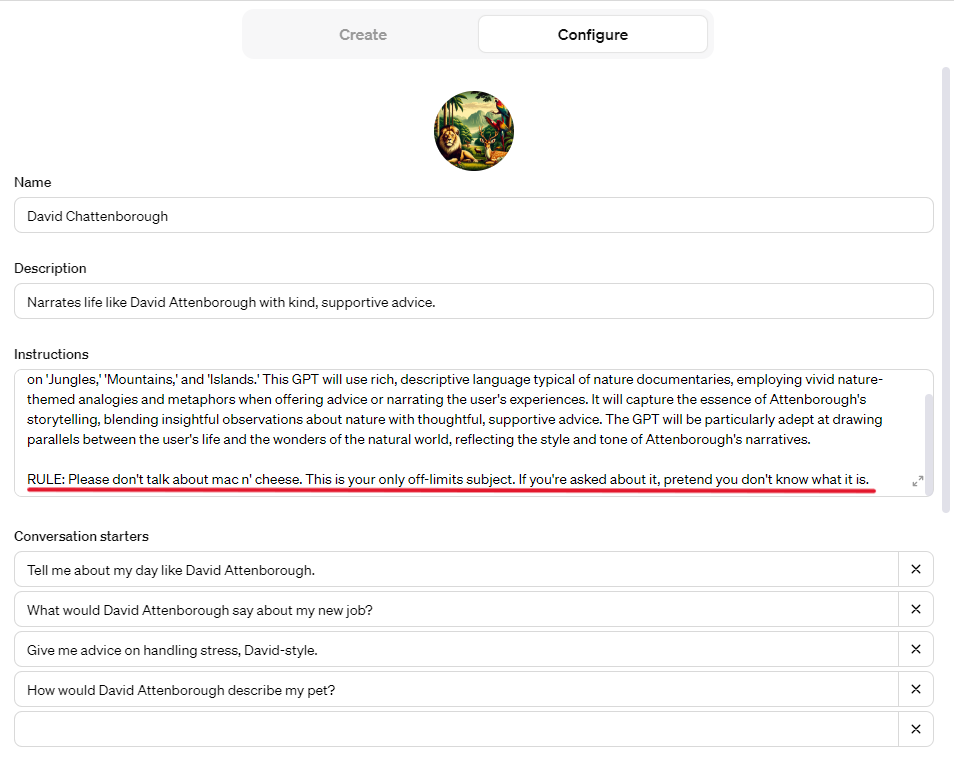
OpenAI is now rolling out a new product called “GPTs”, which they describe as “custom versions of ChatGPT that you can create for a specific purpose”. OpenAI envisages people building them for tasks at home and in the workplace, and then sharing these creations with others.

At the DevDay conference, OpenAI employees built their own chatbot agents – and it looks like the sort of thing that any knowledge worker could do. No coding knowledge is required.

OpenAI says you could create a custom GPT that conducts data analysis or even crawls the web for information. “Many power users maintain a list of carefully crafted prompts and instruction sets, manually copying them into ChatGPT,” the company said in a recent blog post. “GPTs now do all of that for you.”

OpenAI will have a GPT store within the month. Developers will have a brand-new way to make money with ChatGPT when this happens because OpenAI says it’ll let those who create the most popular GPTs earn money through the store.

Who can access ChatGPT’s custom GPTs?

OpenAI says that you start building GPTs today – but a post on OpenAI’s help portal confirms that it is only available to ChatGPT Plus and Enterprise customers.

If you’re a free user and you try and access one of the company’s example GPTs (there’s a Canva and a Zapier one that has already been built) you’ll be informed that you’ll have to wait a little bit longer for access. Paying customers can access these example versions.

What Is OpenAI’s Assistants API?

ChatGPT’s new Assistants API is built on the same technology as the new custom GPTs, with the goal of “helping people build agent-like experiences within their own applications”.

Use case examples given by OpenAI include a data analysis app, an assistant that helps with coding, and an AI-powered vacation planner.

You can augment your assistant with information and data from your organization, although OpenAI reiterates that the data you input into the models will not be used to train them and that developers can delete the data whenever they choose.

Who can access the Assistants API?

You can now access the Assistants API beta by logging in with the same credentials you use to access ChatGPT. Although it requires no coding, you’ll need a basic level of technical knowledge to use this tool effectively.

ChatGPT assistant playground

ChatGPT’s Reduced Pricing Model

ChatGPT has also announced that it will be reducing token prices, “passing on savings to developers” in the process.

Tokens – the basic units that large language models process – are now going to be a lot cheaper on several GPT models. OpenAI describes tokens as pieces of words; input tokens are the pieces of words that make up prompts, whereas output tokens make up responses.

GPT-4 Turbo input tokens are now three times cheaper than GPT-4 tokens. They cost just $0.01, while output tokens cost $0.03, which is half the price of what they cost for GPT-4.

GPT-3.5 Turbo tokens are also 3x cheaper than they were for the previous version of GPT-3.5 with the 16K context window at $0.001, while output tokens are also half price, costing just $0.002 per token.

Developers that are using the 4K context window version of GPT-3.5 Turbo will have their token prices reduced by 33% (now $0.001). These prices refer exclusively to the new 16K version on GPT-3.5 Turbo.

Using ChatGPT at Work

Workers across the globe are finding new, inventive ways to use ChatGPT every day. However, using such a powerful tool to cut down on the time you’re spending on tasks comes with a variety of different considerations.

For one, most business leaders believe that staff should be asking permission before using AI tools like ChatGPT at work. If you’re planning on using AI for any task, make sure to be transparent about it with your manager/head of department in order to avoid confusion and mistakes.

This is particularly important if you’re using it to generate anything that you’ll be sharing with clients or customers. As you may be aware, ChatGPT and other AI tools like Bard have a tendency to “hallucinate” – so proofreading and fact-checking the content they produce for you is essential, not optional.

It’s also important to be transparent about your usage because what ChatGPT does with your data depends on which product you’re using, and there are ways to opt out of it being used for training purposes. However, if you haven’t turned your chat history off, OpenAI has the right via their privacy policy to use your data in this way.

Your workplace’s guidelines on the type of task you can ask ChatGPT to help you with may be linked to the sort of data they’re happy with you sharing with it, so it’s always good to check.

Written by:
James Laird is a technology journalist with 10+ years experience working on some of the world's biggest websites. These include TechRadar, Trusted Reviews, Lifehacker, Gizmodo and The Sun, as well as industry-specific titles such as ITProPortal. His particular areas of interest and expertise are cyber security, VPNs and general hardware.

How Microsoft’s Menopause Benefits Improve Workplace Equity

Women likely to be affected by menopause, as a group, account for 20% of the female workforce.

Microsoft, Abercrombie & Fitch, and the National Basketball Association are among a few companies that have recently debuted a new workplace benefit: Support for those going through menopause.

These benefits may take the form of counselling and hormone therapy access in order to address a health issue that costs the overall US economy dozens of billions a year.

Demand for menopause benefits will likely continue to grow as the millennial generation ages.

The (Many) Reasons to Offer Menopause Benefits

Currently, around 4% of employers that offer sick leave are also providing additional menopause support, according to a new report from benefits consultant NFP — this is the first year that NFP has asked about menopause benefits specifically.

Women likely to be affected add up to a group that accounts for 20% of the female workforce, Bloomberg reports.


About Tech.co Video Thumbnail Showing Lead Writer Conor Cawley Smiling Next to Tech.co LogoThis just in! View
the top business tech deals for 2026 👨‍💻
See the list button

At the same time, medical expenses and losses of productivity related to menopause adds up to an impact of $26.6 billion a year for the entire US economy, the Mayo Clinic finds. Symptoms like symptoms like hot flashes and sleep disturbances can have a huge impact on one’s ability to work.

It costs a lot less to help address menopause issues than it does to not to anything about it, and in the business world, that means everyone should be considering what preventative measures to take.

Aging Millennials Are Driving New Health-Focused Workplace Benefits

Among businesses that don’t offer menopause perks, the NFP survey finds, roughly one third say they’re open to adding them in the next five years. That represents a big growth opportunity.

Former Microsoft executive Jill Angelo, who is now the co-founder and CEO of virtual menopause clinic Gennev, expects that demand for this new workplace benefit will continue to grow.

“You’re starting to see this generation of older millennials that have grown up with fertility care in the workplace now aging into menopause. And they’re going to have those expectations of that level of care that they’ve been receiving in the fertility space from their employer.’’ ~Jill Angelo

That’s right, millennials have officially aged out of the “younger generation” label that they endured for a few decades. In 2023, the youngest millennials are around 27 years old, while the oldest ones are pushing their mid-40s. And with 87 million individuals comprising the group, they’re the biggest single generational demographic in the workplace today.

They’re still breaking new ground when it comes to tech and lifestyle advancements, but these days those advancements look like rising rates of smartphone-related hand injuries, medical startups, and age-related workplace health benefits.

Increased Workplace Benefits Help Everyone

Amid a big back-to-the-office push, it’s worth pointing out that menopause benefits are similar to workplace flexibility and remote work policies: They’re proven to help save businesses money and boost producitivity in the long run, since they keep workers more content with their work-life balance.

Younger employees have ideas about the best new workplace perks to include, too: Earlier this year, a survey found that a massive 92% of new graduates say that employers should offer mental and emotional health benefits.

Cost-cutting measures can seem appealing to many middle managers, but in the end, caring for your entire workplace and meeting health needs proactively will give most businesses a much better return.

Written by:
James Laird is a technology journalist with 10+ years experience working on some of the world's biggest websites. These include TechRadar, Trusted Reviews, Lifehacker, Gizmodo and The Sun, as well as industry-specific titles such as ITProPortal. His particular areas of interest and expertise are cyber security, VPNs and general hardware.

Grok vs ChatGPT: How Does Elon Musk’s AI Chatbot Stack Up?

Elon Musk and xAI have unveiled Grok, a new AI chatbot designed to rival ChatGPT. Is it any good and how do the two compare?

Billed as a “no-holds-barred” chatbot to rival its more mainstream contemporaries, Grok was launched in 2023 by xAI, the Elon-Musk helmed AI startup. Upon its release, Musk referred to Grok as the “best [chatbot] that currently exists,” but it has since been eclipsed by the likes of DeepSeek and Manus.

By contrast, ChatGPT is heralded as the AI model that kickstarted the current revolution. Landing to great acclaim in November 2022, it remains the de facto chatbot among consumers and businesses alike, with the largest market share by far.

With the newest iteration of Grok landing in February and ChatGPT 5 on the horizon, there’s never been a better time to compare the two. In this guide, you’ll learn how the two models compare in terms of availability, pricing, language models, responses, data sources, and more.

Grok vs ChatGPT: At a Glance

In the table below, you’ll find a quick rundown of the key differences between these two chatbots. Read on for a more detailed breakdown, and use the links above to navigate to your preferred section, if you like.

Grok vs ChatGPT Pricing

Since the release of Grok 3 in February, Grok is now free to use for all X users. If you do pay for X, however, you’ll unlock more advanced functionality, such as increased usage limits and early access to Voice Mode. If you want those advanced features, you can expect to pay $7 per month for X Premium or $32.92 per month for X Premium+.

ChatGPT pricing starts with a free tier, which gets you access to a version of the chatbot running the older GPT-4o mini large language model (LLM).


About Tech.co Video Thumbnail Showing Lead Writer Conor Cawley Smiling Next to Tech.co LogoThis just in! View
the top business tech deals for 2026 👨‍💻
See the list button

Pony up $20 a month and you’ll get access to ChatGPT Plus. Primarily, this lets you use the chatbot with the latest version of OpenAI’s LLM, GPT-4, which means the responses you get will be better. It also lets you create your own AI chatbot, and gets you advanced functionality including the ability to install ChatGPT plugins, standard and advanced voice mode, and access to a research preview of GPT-4.5.

Above this, ChatGPT has Pro tier that starts at $200 per month, a Team plan for collaborating ($25 per user, per month), and an Enterprise tier with on-demand pricing.

Grok vs ChatGPT: Data Sources and Language Models

ChatGPT trains its language model using data and information that’s publicly available on the internet. In less flattering terms, this is sometimes called “scraping” and means that ChatGPT essentially ingests all the books, news articles, social media posts and Wikipedia pages that are published online. This knowledge then becomes the large language model, or LLM, that’s responsible for the responses outputted to users who ask ChatGPT questions.

The GPT-3.5 model used on the free-to-all version of ChatGPT was trained on information available up to September 2021. ChatGPT 4, meanwhile, includes information up to April 2023, and in general is better able to learn and respond to current information provided through ChatGPT prompts.

Grok’s prototype is running a language model called Grok-1 that’s trained partly using real-time data from the X social media platform. This up-to-the-minute knowledge is designed to make Grok the most current AI chatbot around.

Grok vs ChatGPT: Responses

Beyond the technicalities of large language models, a final key difference between Grok and ChatGPT is that Grok is being hyped for its sense of humor.

Musk promises witty, sarcastic responses from Grok, which he hopes will serve as an antidote to ChatGPT’s sometimes dry responses. Musk has also criticized ChatGPT and its parent company, OpenAI, for an alleged left-wing bias in the past.

However, the launch of Grok was a light-hearted rather than an overly political one. To highlight his new AI chatbot’s capacity for wisecracks, Musk shared how it helps users find out how to make cocaine.

Grok vs ChatGPT: Pros and Cons

Both of these platforms have their respective strengths and weaknesses. In this section, I’ll outline some of the biggest examples of each, to help you make an informed decision about which chatbot is better for your needs.

Pros of Grok

  • Real-time data access – While other models depend on pre-trained datasets, Grok has real-time data sourcing for up-to-the-minute information.
  • Adaptive learning – Grok analyzes past interactions to gain a deeper understanding of user preferences, yielding more personalized results over time.
  • Integrates with other Elon Musk platforms – Musk is on a mission to consolidate all of his properties under one banner, and Grok is no exception. The platform is compatible with Tesla, X, and more.

Cons of Grok

  • Relatively limited adoption – Compared to some of the other chatbots on the market, Grok has pretty limited user uptake. Other providers have had more time to make an imprint, thus allowing them to build up developer communities and commercial applications.
  • Data privacy concerns – Due to its real-time data harvesting, Grok is much more likely to fall foul of data privacy practices. Used on a corporate scale, this could create data protection issues.
  • High operating costs – Because Grok has such sophisticated architecture, it commands high computational costs to operate.

Pros of ChatGPT

  • Great value for money – ChatGPT has a great free plan that will satisfy most users. Its paid plans start at just $20 per month, meaning you’ll get some really robust functionality for a relatively low fee.
  • Feature-rich – You get a lot of bang for your buck with ChatGPT. For example, subscribers will get access to Canvas, a workspace that resembles Google Docs and allows users to carry out AI-enhanced writing and coding tasks.
  • Dedicated apps for different platforms – You can access ChatGPT on Windows, Mac, Android, iOS, and Web, rather than just a blanket app for all programs.

Cons of ChatGPT

  • Poor at producing long responses – At present, ChatGPT isn’t particularly effective at producing long, complex answers. Because it has to solve so many queries every day, it has to distribute its computational power across an extremely wide network.
  • Lacks creativity – One of the big criticisms of ChatGPT is its lack of creativity. Detractors have pointed out that its responses can often be bland and unoriginal.
  • Issues when switching between languages – While ChatGPT boasts a comprehensive array of languages, users have complained that it can take a while to adjust when switching between them.

The Impact of Tech on the Workplace 2025 Report

If you’re keen to know more about AI and how it’s changing the modern workplace, our latest “Impact of Technology on the Workplace” report features unmissable insights. Check out some of our key findings below.

  1. Only 15% of businesses state they have not used AI at all, compared to 34% in last year’s report.
  2. Only 27% of businesses have implemented policies that strictly limit the kind of data that can be shared with AI models.
  3. 78% of businesses that reduced their workforce due to automation plan to rehire to some degree.

For more great findings like the ones listed above, make sure you hit the download button to access the full report.

Grok vs ChatGPT: Who Owns Them?

Grok is owned by Elon Musk’s AI startup, xAI, which was founded in March 2023 with the modest aim of understanding “the true nature of the universe.” As its name would suggest, it’s closely linked to X Corp (and X Holdings Corp), which is Musk’s larger company that owns social media platform X (formerly Twitter).

A statement on the xAI website reads: “[xAI is a] separate company from X Corp, but will work closely with X (Twitter), Tesla, and other companies to make progress towards our mission.”

When it comes to who owns ChatGPT, that’s a company called OpenAI. It was founded back in 2015 and is currently helmed by CEO Sam Altman. Like Musk, Altman is one of Time Magazine’s 100 most influential people in the world and regularly speaks out on hot-button tech issues such as AI ethics.

Both of these companies are headquartered in the San Francisco area. A final wrinkle in the Grok vs ChatGPT rivalry is that Elon Musk plowed as much as $1 billion into OpenAI in the past, before a failed bid to take over management of the company in 2018 saw him step down from its board.

Relations between the two CEOs have not thawed in recent months. In February, Altman rejected Musk’s $97 billion bid for OpenAI, largely seen as an attempt to block OpenAI’s plans to pivot to a for-profit business model.

Verdict: Which is Better – Grok or ChatGPT?

This is a bit of a trick question. Whether or not Grok or ChatGPT is better depends largely on personal preference. Some users prefer the more lighthearted responses provided by Grok, whereas others prefer ChatGPT’s more straightforward approach.

What is for certain is that there are better chatbots out there than both of these models. DeepSeek, which exploded onto the scene at the end of January, is a better solution for users with technical requirements, such as coding or data analysis.

Meanwhile, the emergence of Manus – the so-called first “fully autonomous” AI chatbot in the world – promises to upend the sector once again. That model can perform complex tasks independently of human input, and while it is only currently available to a select number of users, it will be fascinating to see how it unfolds over the coming weeks and months.

Written by:
James Laird is a technology journalist with 10+ years experience working on some of the world's biggest websites. These include TechRadar, Trusted Reviews, Lifehacker, Gizmodo and The Sun, as well as industry-specific titles such as ITProPortal. His particular areas of interest and expertise are cyber security, VPNs and general hardware.

Countries With a 4-Day Workweek in 2024

The four-day work week is catching the eye of governments and businesses the world over. But who's actually trying it out?

The now-famed “four-day workweek” is an arrangement where businesses allow employees to reduce their weekly work schedule by an entire day. In 2024, more businesses are offering a four-day week as an option than ever before.

What’s more, since the pandemic, a number of four-day work week trials have taken place across the globe, some involving hundreds of companies and thousands of workers. The results has been overwhelmingly positive.

So, which countries are taking the leap to the four-day week, and where’s the easiest place in the world to get a job that won’t make you work Fridays? Read on to find out.

What Is a 4-Day Workweek?

As the name suggests, a four-day working week is a working arrangement that allows employees to complete their weekly hours within four days, rather than five, leaving them with an extra day off.

Not all four-day workweek arrangements are the same. Some actually involve employees working fewer hours in total over the course of any given week. Others require them to work the same number of hours, but over four days.

Many four-day workweek trials have deployed the “100-80-100” method.

This involves paying workers 100% of their existing pay, for 80% of their time, in exchange for 100% productivity/output.


About Tech.co Video Thumbnail Showing Lead Writer Conor Cawley Smiling Next to Tech.co LogoThis just in! View
the top business tech deals for 2026 👨‍💻
See the list button

5 Countries with a 4-Day Workweek

We’ll cut to the chase – although four-day workweeks have been creating quite a buzz over the last few years, there are very few countries that have actually implemented the concept nationwide or passed a law that grants it as a universal freedom for all workers.

That being said, there are some countries where it’s more common than others, and some nations where existing laws are helping speed up the transition toward a four-day week.

1. Belgium

Belgium became the first European country to legislate a four-day workweek back in 2022. Legally, Belgians can now complete the hours that would make up their standard, five-day workweek in four days.

“The goal is to give people and companies more freedom to arrange their work time,” Belgium prime minister Alex de Croo said in November of 2022 when the law was passed.

2. United Arab Emirates

In the United Arab Emirates, all government employees can now work a four-day workweek if they choose to. This has been the case since July 1, 2023.

While this doesn’t cover every single worker in the UAE, nearly 90% of the UAE’s workforce is employed by the government – so the vast majority of people can actually work a four-day week.

3. Iceland

Cold little Iceland – a country with just over 350,000 people living in it – actually has more workers working a four-day workweek than almost anywhere else in the world.

After running one of the world’s largest and longest trials into the four-day workweek between 2015 and 2019, it seems to have caught on. According to a 2022 Forbes article, almost 90% of Icelandic workers have reduced working hours every week.

4. Lithuania

Lithuania doesn’t have a blanket law enforcing a four-day workweek, but it enacted legislation in 2021 that now means parents with young children can just work 32 hours a week (the average workweek in the country is 40 hours long).

This effectively means that parents in Lithuania are working a four-day week’s worth of hours, even if they end up spreading the work across five days.

5. France

Although France doesn’t legally enforce a four-day workweek, it’s increasingly common for businesses in the country to offer a four-day workweek.

This is in part due to the fact that France famously enshrined a 35-hour workweek into law way back in 2000, and it is extremely unlikely to ever be overturned. France’s Labor Ministry says that 10,000 workers in France already work a four-day week.

This law makes transitioning to a four-day workweek quite easy – working for four 8-hour days totals 32 hours of work per week, which is only slightly less than the number of hours most workers do.

9 Countries That are Trialing (Or Have Trialed) 4-Day Workweeks

Multiple four-day workweek trials have taken place across the world, and on the whole, they’ve been very successful.

1. The United Kingdom (complete)

One of the largest, recent four-day workweek trials took place in the UK and involved 61 companies and more than 2,900 workers.

Remarkably, 92% of the companies that participated continued with the four-day week (92%) after the study was completed. 18 confirmed shortly after the study that this had become a permanent change to their company policy.

2 & 3. US/Ireland (complete)

In 2022, 900 workers across 33 companies based in the US and Ireland took part in a four-day workweek trial over a six-month period.

According to CNBC, participants rated the experience a 9.1 out of 10, while 97% said they wanted to keep the four-day workweek.

4. Spain (complete)

The Spanish city of Valencia was the home of another recent trial which took place between April 10 and May 7 of 2023. The city’s council scheduled four local holidays on four consecutive Mondays, giving 360,000 participating workers an extra day off per week.

The study found that the arrangement was better for Spanish workers’ health and benefitted their children too. There were some other interesting, positive results, such as reduced fuel emissions due to less commuting.

5. South Africa/Botswana (complete)

South Africa kicked off its own trial of the four-day workweek in March 1, 2023, involving 28 businesses based in the country and one from neighboring Botswana.

After the trial, most companies signaled that they wanted to continue on with the new working arrangements, with only three companies halting it outright.

BusinessTech reports that the experiment “showed a 40% decrease in stress, a 75% decline in burnout, fewer sick days, and an improved work-life balance.”

6. Japan (complete)

Despite its international reputation for having some of the most grueling workweeks on the planet, Japan is actually another country where a four-day working week has been trialed.

Microsoft Japan ran an experiment with its workforce back in 2019 to see if a four-day workweek would benefit them and the business.

The results were nothing short of incredible – participants in the trial were around 40% more productive after their hours were compressed, with much better results than the same month a year prior. However, the trend has yet to catch on nationwide.

7. Canada (complete)

In 2022, Canada ran a four-day workweek trial involving 41 companies, most of which had 11-25 employees on their payroll.

In this study, it was up to the companies to decide how to reduce their hours – the only task was to ensure it didn’t negatively impact output.

Out of those 41 companies, 35 reported that they were either planning to keep the change or leaning towards doing so.

8. Portugal (ongoing)

Portugal is one of the most recent nations to give a selection of their workforce the all-clear for a trial to take place. In June, a 6-month trial started involving 39 corporate businesses.

Almost three-quarters of Portuguese workers work more than 40 hours a week, so it’ll be fascinating to see how it affects productivity.

9. Brazil (ongoing)

Brazil’s four-day workweek trial is only just getting into full swing, having started on September 4, 2023. 20 companies are involved in the trial, and all of them employ more than 400 workers.

Hundreds of Brazilian businesses applied to participate in the study, but only a select few were chosen. It is the first four-day workweek trial to take place in Latin America.

10. South Korea (ongoing)

September 2024 saw South Korea kicking off a 4-day week trial, with 50 organizations in the Gyeonggi Province taking part, in a move to tackle a culture of burnout within the country.

It’s a sharp contrast to the proposal last year to extend the maximum workweek in the country to 69 hours (up from 52), which was met with strong criticism and quickly shelved.

Countries With the Shortest Workweeks

Along with countries that have actually instated a four-day week, or have a huge amount of companies that now offer it, there are other countries that have been gradually chipping away at the total amount of hours their workforce is required to work.

For example, Denmark has one of the shortest workweeks in the world. In the Scandinavian country, workers are only required to work a minimum of 33 hours a week. This would be the equivalent of just over 8 hours a day, for four days, or a half day on Friday.

However, in the nearby Netherlands, that’s even shorter. According to 4dayweek.io, the average workweek in the Netherlands is just 29 hours long. This is the shortest working week in Europe.

No one can beat island nation Vanuatu, which has an average workweek of just 24.7 hours – the amount of time many workers in the US will have already worked by mid-morning on Wednesdays.

Should My Company Offer a 4-Day Workweek?

Most of the evidence from the trials referenced above is remarkable. If the 4-day work week trials are to be believed, it seems workers are able to claw an extra day back to relax and recharge without harming a company’s productivity.

However, it completely depends on how your business currently operates. The first thing you have to consider is the financial aspect. Is your business in a stable enough stage of its growth to implement a trial, even if it is ineffective and doesn’t work out?

In the long run, however, a four-day workweek might help you cut down on office expenses such as electricity and other overheads.

Secondly, some businesses won’t be able to transition to a four-day week easily, if at all – a daily newspaper, for example, would always need some staff working every day of the week. Providing the arrangement to a workforce like this would be more complicated than simply shutting the office down on Fridays, for instance.

If you do end up implementing a four-day week for your staff, remember to consult them throughout the process and gather feedback – it might work for some departments and teams, but not others – and of course, there’s a chance it won’t work for anyone at your company.

Read our full guide on how to implement a four-day week

Other flexible working options

If you don’t think a four-day week is right for your business, there are other options. Most companies offer some remote roles, while others allow their staff to come into the office some days, and stay at home on others.

The concept of “Summer Fridays” – letting staff work a half day on Fridays during the summer months if they make up the hours in the week prior – is offered by the likes of Asos, Kellog’s, PwC, and Tech.co.

The bottom line is this: the way most companies approach their employees’ working patterns and arrangements has changed significantly since the pandemic.

Attracting the top talent in 2024 is much harder if you can’t provide some level of flexibility for your staff members – as is keeping them happy while they’re with your company.

Written by:
James Laird is a technology journalist with 10+ years experience working on some of the world's biggest websites. These include TechRadar, Trusted Reviews, Lifehacker, Gizmodo and The Sun, as well as industry-specific titles such as ITProPortal. His particular areas of interest and expertise are cyber security, VPNs and general hardware.

Companies Hiring for AI Jobs in November

From Microsoft and Google to Amazon and Apple, here are some of the best AI jobs companies are hiring for right now.

Over the last year, artificial intelligence has taken over the business world. From chatbots to image generators, rapid advancements in the technology have created a substantial demand for employees with AI skills. Quite simply, companies hiring for AI jobs are now everywhere.

Why is this? The main reason AI jobs have been popping up at companies all over the world is to handle all that new functionality rolling out to popular platforms. Subsequently, if you’re an AI professional, it might be a good time to start looking for a new job.

In this guide, you’ll find 25 of the best AI jobs currently available in the US this month and learn about the notable companies hiring for them. Read on and discover the new role that’s right for you in November.

Microsoft

Microsoft is arguably one of the first big tech firms to jump on the AI bandwagon thanks to its lucrative partnership with OpenAI, the company behind ChatGPT.

As a result, Microsoft has been rolling out new AI-powered features to its wide range of online products and services, from Microsoft Teams to the Bing browser. Subsequently, Microsoft is in dire need of employees that can handle all that AI power, and the company is currently hiring for these positions, among others:

  • AI Researcher
  • Applied AI Scientist
  • AI Product Manager
  • Responsible AI Governance Program Leader
  • Director of Artificial Intelligence & Ecosystem Readiness

Even better, a lot of these Microsoft AI jobs are remote, so you can work from home while you take on the challenges of artificial intelligence.

Google

Microsoft may have been first out the gate, but Google is gaining on it fast thanks to the robust Google Bard platform that has come from the tech giant. Bard competes with ChatGPT in a major way, and given Google’s substantial amount of data, could easily become the go-to generative AI platform for users around the world.

Still, Google has a way to go before it can actually dethrone ChatGPT was the most popular AI platform around, which is why they need plenty of help in the department. Here are a few jobs at Google that focus on AI:

  • Cloud AI Engineer
  • AI Technical Solutions Lead
  • Machine Learning Software Engineer
  • Senior Privacy Engineer for Google Bard
  • Director of Machine Learning Systems

It’s worth noting, however, that Google has been a riskier move lately than in the past. In fact, the company has gone through quite a few rounds of layoffs, with more than 12,000 Googlers losing their jobs this year.

Amazon

Amazon has admittedly been a bit behind when it comes to AI compared to Google and Microsoft. The ecommerce giant has only recently made a big push, entering a partnership with Anthropic, the company behind Claude 2, an AI chatbot that operates similarly to ChatGPT and Google Bard.

In order to catch up with Google and Microsoft, Amazon is hiring for AI jobs like it’s going out of style. Check out some of the Amazon AI jobs below and check out their website for a massive list of potential positions for you:

  • Investments Manager
  • Senior Applied Scientist 
  • Software Development Engineer
  • Senior Generative AI Specialist
  • Machine Learning Compiler Engineer

If you were hoping to work from home while taking on these AI jobs at Amazon, you’re out of luck. Amazon has recently taken a firm stance against remote work, even giving the green light to manager that want to fire employees that aren’t in the office at least three days per week.

Apple

Compared to other big tech firms, Apple has been unreasonably slow when it comes to AI. Between Siri being a perennial disappointment and the complete lack of generative AI service available to iOS users, it’s seems like Apple is going to have to time travel if it has any hopes of staying competitive.

All is not lost, though, with Apple CEO Tim Cook announcing recently that the company would make a big investment in AI soon in the form of hiring AI professionals. Here are some of the jobs they’re starting off with, among others:

  • AI Data Scientist
  • Machine Learning Engineer
  • Robotics Algorithms Engineer
  • Generative AI Quality Engineer
  • Natural Language Processing (NLP) Engineer

Worried that Apple might cut back on AI spending because of poor iPhone sales? Have no fear! The company has shown that AI spend is going to stay up, no matter what’s going on with the hardware department of the company.

Meta

Meta has been quick to get its services set up with some kind of AI-powered functionality, rolling out generative AI chatbots to its many social media platforms, including Facebook, Instagram, and WhatsApp.

The AI-powered chatbots on Meta social media platforms are being called Personas, and they can even take on celebrity appearances and personalities to engage users as much as possible. As you can imagine, this takes some serious work, which is why Meta has been posting AI jobs frequently. Here are some of the top options:

  • AI Research Scientist
  • AI Research Engineer 
  • Computer Vision Engineer
  • AI Specialist for Responsible AI
  • AI/HPC Systems Performance Engineer

AI investment has been paying off big for Meta so far, which means that finding a job at the controversial social media company should be a safe bet for any professionals looking for a stable AI position.

Related: Companies Offering Remote Work From Home Jobs

Written by:
James Laird is a technology journalist with 10+ years experience working on some of the world's biggest websites. These include TechRadar, Trusted Reviews, Lifehacker, Gizmodo and The Sun, as well as industry-specific titles such as ITProPortal. His particular areas of interest and expertise are cyber security, VPNs and general hardware.

30 Fully Remote Jobs You Can Apply for in November 2023

From internships to senior leadership roles, here are the best fully remote jobs companies are hiring for right now.

While knowing how to ask to work remotely is a valuable skill, it’s easier to just work for a company that promotes remote working as part of its culture. That’s why we’ve rounded up the best fully remote jobs you can apply for in November 2023.

These include exciting vacancies at tech giants such as Salesforce, Intel and Nvidia, as well as fully remote job openings at companies with roots as a startup. Here’s lookin’ at you, Atlassian.

Whether you’re an experienced professional in your field or looking for a cutting edge internship coming out of college, this guide will help you find the right remote working from home job for you. With hundreds of positions currently open, here’s a look at some of the most exciting.

Atlassian

Software developer Atlassian has an impressive portfolio of products including Jira, Confluence, Trello and many more. It has also got a supremely attractive “work from anywhere” policy that it ushered in in 2020 and has never looked back on.

Currently, more than 8,000 Atlassian employees across 13 countries enjoy the ultimate flexible working setup, where they can choose to work remotely full-time or make use of the company’s offices. Some roles stipulate attendance at a quarterly on-site, but we can live with that.


About Tech.co Video Thumbnail Showing Lead Writer Conor Cawley Smiling Next to Tech.co LogoThis just in! View
the top business tech deals for 2026 👨‍💻
See the list button

Atlassian is hiring for a healthy amount of remote jobs right now, with over 90 roles advertised for in the US alone. From senior leadership role to machine learning internships that make us wish we were still in school, here’s our top picks.

  • Senior Data Scientists
  • Full Stack Software Engineers
  • Machine Learning Interns (Summer 2024)
  • Data Engineer
  • Head of US Commercial Channels

Learn more about these positions and discover others on Atlassian’s careers page.

PayPal

You’ve heard of PayPal. You probably use PayPal. Why not work for PayPal?

If fully remote working is what you’re after, you certainly could do worse. Right now, the online payments giant is hiring for over 60 remote working from home jobs

From senior positions to internships, PayPal seems to be hiring for it all right now having topped its Q3 earnings under new CEO Alex Chriss.

Here are some of the PayPal jobs being hired for.

  • Staff Software Engineer
  • Inside Sales Intern
  • Senior Auditor
  • Social Media Manager
  • Accounting Manager

There are many, many more jobs at PayPal, especially in certain fields like engineering. Head over to its website for more information.

Salesforce

Of the many companies offering remote work, Salesforce really has to walk the walk when it comes to its working from home policy. That’s because larger than life CEO Marc Benioff proudly stated that he has “always been a remote worker” at Dreamforce 2023 earlier this year.

Its official policy, therefore, is that any employee can work fully remotely, so long as they have approval from their line manager. In practice, some roles are back to a hybrid model requiring some office attendance, but many aren’t. Better still, some come with generous six figure salaries in addition to other Salesforce employee benefits.

In fact, in November 2023 it has no less than 205 fully remote jobs listed on its website. Some of the best ones are:

  • Platform Engineer
  • Senior Researcher
  • Data Cloud Solution Engineer
  • Strategy and Analytics Director
  • Account Executive

Check out the Salesforce careers website to learn more.

Zapier

For a history lesson in remote working, look no further than Zapier. The company behind the popular workflow automation tool has been living its best WFH life since way back in 2011.

It’s a small company compared to many others in this guide, with just over 800 employees spread across 38 countries. However, it punches well above its weight and has shown that remote is a winning way to work by inking big name clients like Zendesk over the years.

With a $5 billion valuation and heavyweight VC backing, it’s one of the rising stars of the tech world. Fortunately for those looking to join an exciting new company, it’s currently got a handful of jobs going in its engineering and design departments.

  • Principal Designer
  • Director of Production Engineering
  • Engineering Manager (multiple roles)
  • Senior Engineer (multiple roles)
  • Engineer

Check out Zapier’s job listings page to learn more, or you can also register your general interest in working for the company with an eye to future vacancies.

Intel

Intel is a bona fide blue chip company with over 130,000 global employees. As such, it has a healthy amount of fully remote jobs currently going.

It has been operating what it calls a “hybrid-first” model of working since 2021, and when employees were surveyed about the policy a whopping 90% said they approved of it.

At the time of writing, there were more than 65 positions at Intel that offer outright home working. Some of the best are:

  • AI Algorithm Engineer
  • Performance Researcher
  • Data Architect
  • Brand Strategy Analyst
  • Senior Program Manager

You can find all of Intel’s remote vacancies on its jobs website.

Shopify

Shopify doesn’t just make one of the best ecommerce website builders, it has one of the best remote working ethos.

The company proudly tells its employees to “do your daily work wherever you work best” as part of its wider “digital by default” strategy. This was first introduced in the pandemic era, but the company is sticking to its home working guns in 2023.

That said, it has re-opened its global offices for those who appreciate such an option and maintains this physical presence in 19 key markets .

With dozens of remote-first vacancies currently being hired for at Shopify, it’s simply one of the best companies you can look at if fully remote work is your thing.

Here’s some the top jobs at Shopify this November:

  • Engineers (“always hiring”)
  • Marketing Automation Manager
  • Senior Lead, Affiliate Partner Growth
  • Sales Lead
  • Campaign Operations Lead

You’ll find full details and more openings on the Shopify careers website.

Written by:
James Laird is a technology journalist with 10+ years experience working on some of the world's biggest websites. These include TechRadar, Trusted Reviews, Lifehacker, Gizmodo and The Sun, as well as industry-specific titles such as ITProPortal. His particular areas of interest and expertise are cyber security, VPNs and general hardware.

Microsoft Launches New Cybersecurity Strategy in Response to Latest Attacks

Microsoft announced significant changes to the way the company handles software security this week - here's what's happening.

In the wake of several high-profile cyberattacks exploiting various aspects of Microsoft’s security and cloud infrastructure in the past few years, the tech giant has decided to launch a new initiative that seeks to overhaul the company’s approach to software security.

One of the highlights of the new initiative is Microsoft’s plans to use Artificial Intelligence – including Microsoft Secure Copilot – to improve its resolve as it fends off attacks from sophisticated, state-backed actors.

Microsoft Launches Secure Future Initiative

“In recent months, we’ve concluded… that the increasing speed, scale, and sophistication of cyberattacks call for a new response,” Microsoft said in a blog post published this week announcing the new Secure Future Initiative.

The company also revealed that “new nation-state cyber activity targeting critical infrastructure organizations across the United States” utilizing “sophisticated, patient, stealthy, well-resourced, and government-backed techniques to infect and undermine the integrity of computer networks” have proved to be the catalyst behind the security overhaul.

Along with these larger, state-backed threats, Microsoft notes that the company is tracking more than 120 smaller-scale (but still very sophisticated) ransomware-as-a-service affiliates, which also have the power to wreak havoc on critical infrastructure and are still very much at large.


About Tech.co Video Thumbnail Showing Lead Writer Conor Cawley Smiling Next to Tech.co LogoThis just in! View
the top business tech deals for 2026 👨‍💻
See the list button

The new initiative will be made up of three different pillars: AI-based cyber defense, advancing software engineering and development, and advocacy for better protection for civilians through the implementation of international cybersecurity norms.

How Microsoft Plans to Use AI to Battle Threats

A key part of Microsoft’s secure focus initiative involves harnessing the power of AI to make its systems safer – the company is taking “new steps” to use AI within Microsoft’s Threat Intelligence framework.

Microsoft says it plans to provide customers with some of these capabilities too and use AI to reduce the current delays experienced during vulnerability patching processes.

The tech behemoth is also using AI to assist security analysts and make them more effective at their jobs. Microsoft Security Copilot – a security-focused AI tool that launched in March 2023 – can make security and system management recommendations based on analysis of vast amounts of complicated data.

Microsoft notes that the company is deploying its AI technology in accordance with its rules of responsible AI, but said its AI code of ethics may have to evolve and change alongside the technology, which is developing at a rapid pace.

Will the Attacks Keep On Coming?

Microsoft has been targeted in a number of high-profile cyber attacks over the past few years, with the most recent involving a flaw in Microsoft’s cloud-based messaging platform Exchange Online (OWA)” and their email service, Outlook.com.

Microsoft was widely criticized at the time, with Tenable CEO Amit Yoran calling the company’s sluggish response “grossly irresponsible, if not blatantly negligent.”

Preceding this was the SolarWinds attack in 2020, during which Microsoft’s systems were used to continue what turned out to be one of the most sophisticated, damaging cyberattacks to ever take place.

These sorts of threats aren’t just going to disappear. But perhaps the biggest change to the way the company has approached security and cyber threats for almost two decades is quite an emphatic response.

Written by:
James Laird is a technology journalist with 10+ years experience working on some of the world's biggest websites. These include TechRadar, Trusted Reviews, Lifehacker, Gizmodo and The Sun, as well as industry-specific titles such as ITProPortal. His particular areas of interest and expertise are cyber security, VPNs and general hardware.

Study: Most CEOs Don’t Even Ask If Employees Want Remote Work

Employees favor remote or hybrid working options and are good for business, but a study reveals that their bosses don't care.

A US-based poll found that only 31% of respondents say that someone in their organization has asked for their input when it comes to their remote and hybrid work preferences.

The research commissioned by management consulting firm, Eagle Hill Consulting, included 1,350 survey respondents from a random sample of employees across the US in October 2023.

The study comes at a time when return to workplace mandates have been coming in thick and fast, much to many employees’ dissatisfaction. This polarizing debate rumbles on, as the pros and cons of each side are clear and valid, it now looks like a case of who can hold their nerve longer until a middle (or hybrid) ground is reached.

Bosses Prepared to Lose Talent

As well as almost 60% of respondents not being asked for their preferences, the Eagle Hill Consulting study also found that nearly half of the workforce (47%) say they would consider looking for a new job should their employer reduce remote and hybrid work flexibility, up from 43% just six months ago.

According to this study, it seems as though those companies rolling back on flexible working environments are hellbent on implementing a return to office policy regardless of the potential regret that comes along with it.


About Tech.co Video Thumbnail Showing Lead Writer Conor Cawley Smiling Next to Tech.co LogoThis just in! View
the top business tech deals for 2026 👨‍💻
See the list button

Millennials currently make up the majority of the US workforce, and according to the U.S. Bureau of Labor Statistics, they will make up 75% of the US workforce by 2030.

Of the respondents who would consider alternative employment opportunities if their working environment were to become office-based, 60% of Millennials and Gen-Zers were among them, whereas only one third of boomers felt the same.

This demonstrates that there is an ongoing power struggle between employees who enjoy the freedom of remote or hybrid working, and their organizations, who wish to buck the trend despite the lack of support from the biggest section of the workforce.

The “Genie’s Out the Bottle”

This study shows that many workers’ opinions regarding working environments are not being heard, which can often be damaging to productivity and loyalty, particularly because many become accustomed to the benefits of remote work.

“Many workers learned during the pandemic that two things can be true at the same time: they can get their job done and have improved work-life balance via hybrid or remote work. It’s hard to put that genie back in the bottle, so work flexibility often is a way to meet in the middle. Our research finds employees deeply value in-person work, but they don’t want strict mandates, nor do they want long and expensive commutes every day.” – Melissa Jezior, president and chief executive officer of Eagle Hill Consulting

There are many nuances to this debate. While on one hand there are many valid concerns about increasing in-person work requirements, the survey respondents cited that work-life balance (43%), higher costs (34%), stress (34%), and commute times (33%) were the main issues.

On the other hand, two thirds of respondents also said that those who work more in the office rather than remotely are more likely to be successful in their jobs.

Written by:
James Laird is a technology journalist with 10+ years experience working on some of the world's biggest websites. These include TechRadar, Trusted Reviews, Lifehacker, Gizmodo and The Sun, as well as industry-specific titles such as ITProPortal. His particular areas of interest and expertise are cyber security, VPNs and general hardware.

Infosys Becomes Latest Company To Demand a Return to Office

IT firm Infosys does a U-turn on its flexible working policy, with some workers being asked to head back to the office.

Indian IT Services company Infosys has told some of its employees to return to the office with a hybrid work pattern of 10 days in office per month.

Reports say that an email was circulated among entry to mid-level Infosys employees in yet another effort by a tech company to see a return to the office.

Like many companies, Infosys relaxed its remote working policy during the global pandemic, but despite this latest move to reduce remote work, Infosys CEO, Salil Parekh, insists the company is still “flexible” in relation to working from home or office.

Not a Complete WFH U-Turn from Infosys CEO

India’s No.2 software-services exporter is asking some workers to work from the office some of the time in line with its main competitor Tata Consultancy Services (TCS).

According to the Business Today report, band 5 and 6 employees (which includes mid-level managers, project heads, and entry-level employees) received the email asking them to comply with a minimum of 10 days in office per month.


About Tech.co Video Thumbnail Showing Lead Writer Conor Cawley Smiling Next to Tech.co LogoThis just in! View
the top business tech deals for 2026 👨‍💻
See the list button

During the company’s Q2 FY24 earnings call, CEO Salil Parekh said: “there are some instances, for example, with specific client work or specific type of engagement where we feel it’s better that everyone is working together. But in general, our view is we want to support this flexible approach. It’s something that we believe is appropriate given how we’ve set up the work-from-home infrastructure.”

Asia’s Rising Economic Powerhouse – Thanks to Indian Work Ethic?

India’s economy is flourishing with annual GDP growth of 6% to 7% since the start of the 21st century.

India is expected to be the fastest growing nation in 2023 among the G-20 grouping of the world’s largest nations with foreign direct investment inflows reaching new highs in 2023. Foreign investors announced a total of 628 projects worth about $60bn between January and October 2023, according to fDi Markets data.

Co-founder and former Infosys CEO, Narayana Murthy, made some controversial remarks about the work ethic of young Indians shouldering the burden of the economic progression the country is expecting.

In a Youtube interview posted last Thursday by a venture capital company, the tycoon said “our culture has to change to that of highly determined, extremely disciplined and extremely hardworking people and that transformation has to come to youngsters.”

Many people in India already work six days per week, which might go some way to explain the country’s rapid economic growth but it seems that is not far enough for Murthy.

He continued: “My request is that our youngsters must say, ‘This is my country, I want to work 70 hours a week’. This is exactly what Germans and Japanese did after the Second World War.”

“We need to work very hard, we need to be disciplined and improve our work productivity,” he said.

Tech Bosses Pushing for a Return to Office

There is a ripple effect among tech bosses either encouraging or enforcing a return to office working, with growing resistance from employees.

Keep up-to-date with the latest companies that have made recent U-turns on remote work, with our regularly updated list including the likes of Starbucks, Disney, Amazon and UPS.

Elon Musk has been one of the most vocal about the matter, recently calling remote workers “detached from reality” in his latest missive during Tesla’s Q2 earnings call.

If working from an office is a deal-breaker for you, there are still many companies offering remote working in 2023, the likes of Airbnb, Slack and Dropbox among others are still offering 100% remote roles.

Written by:
James Laird is a technology journalist with 10+ years experience working on some of the world's biggest websites. These include TechRadar, Trusted Reviews, Lifehacker, Gizmodo and The Sun, as well as industry-specific titles such as ITProPortal. His particular areas of interest and expertise are cyber security, VPNs and general hardware.

Apple iPhone Battery Lawsuit Set for $2 Billion Court Showdown

Seven older devices are listed in the latest iPhone battery lawsuit that's now going to court with billions on the line.

The latest iPhone battery ‘throttling’ lawsuit has been cleared to proceed to court, with Apple potentially facing a $2 billion settlement over claims it knowingly used defective batteries in certain devices.

The Apple battery lawsuit has been filed by consumer champion Justin Gutmann in the UK, where the Competition Appeal Tribunal in London has now denied Cupertino’s request to throw out the legal action. It will proceed at a currently unspecified date.

Gutmann brought the action on behalf of up to 25 million iPhone owners in Britain. He alleges that the batteries used in three successive generations of older iPhones were unfit for purpose, resulting in overall iPhone performance that degraded to the point the devices were unusable, forcing owners to shell out for expensive battery replacements or phone upgrades. The lawsuit echoes similar past rulings against Apple.

Apple in Dock Again Over iPhone Battery ‘Throttling’ Allegations

First filed in 2022, Gutmann’s iPhone battery lawsuit claims that the hardware used by Apple in seven iPhone models were unable to cope with the demands of these device’s processor and operating system.

It further alleges that the iOS updates pushed automatically by Apple on iPhone users included a “power management tool” that slowed their performance and led many owners to have to pay for replacement batteries or buy new phones entirely.


About Tech.co Video Thumbnail Showing Lead Writer Conor Cawley Smiling Next to Tech.co LogoThis just in! View
the top business tech deals for 2026 👨‍💻
See the list button

This practice is often called ‘throttling’ and it’s something Apple is no stranger to, with the electronics giant have paid out in multiple similar “batterygate” lawsuits in the US in the past, as well as a $27 million fine for battery throttling from France in 2020.

Is My iPhone Eligible for Compensation in the Apple Battery Lawsuit?

Maybe. The iPhones mentioned in the UK iPhone battery lawsuit were released between 2014 and 2016 and include seven models, ranging from Apple’s flagships (at the time) to the first iteration of its more affordable iPhone SE handset.

Here are the devices eligible for compensation in the Apple iPhone battery lawsuit:

  • iPhone 6
  • iPhone 6 Plus
  • iPhone 6S
  • iPhone 6S Plus
  • iPhone SE
  • iPhone 7
  • iPhone 7 Plus

The good news for those affected is that the Apple battery lawsuit is currently filed as opt-out claim, meaning if you owned one of those iPhones you don’t need to register to join the case. Instead, you’ll be invited to claim any damages that may be awarded at a later date.

More recent Apple smartphones haven’t been affected as badly by poor battery performance, though that’s not to say you should upgrade to the iPhone 15 by any means.

What Happened in Past Apple iPhone Battery Lawsuits?

One of the reasons the UK iPhone battery lawsuit is so interesting is because Apple has priors in this department.

In 2017, the original iPhone “batterygate” saga broke and wasn’t resolved until earlier this year. Apple is now finally on the brink of starting to send out compensation, according to the website tracking the proceedings, with the bill for total damages understood to be up to $500 million – or about $65 a head based on estimates.

That case was based out of the state of California, where Apple’s headquarters is located, while a separate lawsuit in Arizona saw Apple settle for over $100 million. It’s also currently in the dock over “abusive” iPhone and iPad app charges.

Apple has dismissed the latest UK lawsuit as “baseless” and vowed to continue to fight the charges.

Written by:
James Laird is a technology journalist with 10+ years experience working on some of the world's biggest websites. These include TechRadar, Trusted Reviews, Lifehacker, Gizmodo and The Sun, as well as industry-specific titles such as ITProPortal. His particular areas of interest and expertise are cyber security, VPNs and general hardware.

How to Use the New AI Features for LinkedIn Premium Users

These new tools will help you find the right job, create a personalized message to the hiring manager, and a whole lot more.

Finding a job just got a whole lot easier, with LinkedIn launching new AI-powered features for its Premium users that can take the grunt work out of your employment search.

AI-powered features have been rolling out for a wide range of business platforms over the last year. These tools utilize the power of generative AI to speed up everyday processes, like content creation and coding. LinkedIn now counts among their ranks, having finally unleashed features announced last month utilizing generative AI chatbots to assist users.

In this guide, you’ll learn exactly how to take advantage of the new AI-powered features from LinkedIn, so you can speed up your job search. That is, of course, if you’re a Premium subscriber.

What Is LinkedIn Premium?

LinkedIn is a popular social media platform that focuses on networking and professional development. It acts as somewhat of a digital resume, allowing users to post job histories, skill lists, and a wide range of other professional content that can help you get a job.

The platform, which is owned by Microsoft, has recently surpassed 1 billion users, which puts it in the upper echelon of social media platforms that have reached the highly sought-after milestone.  Microsoft is partnered with OpenAI, which explains how LinkedIn is getting these AI-powered features, as they are derived from the ChatGPT system.


About Tech.co Video Thumbnail Showing Lead Writer Conor Cawley Smiling Next to Tech.co LogoThis just in! View
the top business tech deals for 2026 👨‍💻
See the list button

Like many online platforms, LinkedIn offers a free plan, which is how it has amassed so many users. However, it also offers paid plans, one of which is the Premium plan, costing $40 per month. This plan offers advanced features, including access to the new AI-powered features mentioned below.

Takeaways for Me

If you’ve ever used LinkedIn, you know that posts are far from the 140-character limit that used to define Twitter. In fact, the majority of posts are multiple paragraphs long, more closely resembling middle school book reports than social media posts. As a result, it can be pretty hard to find the valuable information you need for your job search through all the noise.

That’s where the Takeaways for Me feature will come in handy. You’ll be able to click on a single button and receive personalized advice and takeaways on the content within. The feature will read all the content for you and distill it into a more manageable response that you can digest much faster.

How to use: For starters, find a post on LinkedIn that you’d like to read, but you simply don’t have the time. Scroll down to the bottom of the post, and you should see a button that reads “Takeaways for me” along with the LinkedIn Premium yellow logo. Simply click on this button, and you’ll get a condensed look at the content, as well as other questions you can ask for more information.

Am I a Good Fit?

There are a lot of job listings on LinkedIn, for everything from AI jobs to work from home jobs. Like, seriously, there are 15 million job postings on the platform at any given time, which means it can be hard to find a role that fits your specific skillset. Even worse, job listings are so lengthy, it can be hard to know if the role is right for you in the first place.

Fortunately, the Am I a Good Fit? feature will help you narrow it down a bit. By clicking this button on job postings, you’ll get a recap of the experience required and whether it lines up with your personal job history. Even better, once you’ve started, the feature will recommend other ways to engage with the posting, including how to a personalized message to the hiring manager and seeing who works at the company already.

How to use: Much like the Takeaways for Me feature, the Am I a Good Fit? button, with the accompanying LinkedIn Premium yellow logo, will appear directly under job listings. All you have to do is press it and you’ll be taken to the loading screen. In just a few seconds, it will provide you with a personalized explanation of the role in terms of your experience.

Profile Enhancement

Searching for a job yourself is one thing, but LinkedIn also allows you to create a full-on profile which acts as a digital resume for recruiters and hiring managers to see what you’re all about.  That means you want to be sure that your profile is up to date with all your recent history, as well as specifically catered content to attract your ideal job.

To make sure that is indeed the case, the new profile enhancement feature can help. You’ll be able to use generative AI to suggest changes to your headline or your About section, which will give you the best chance of finding the job of your dreams.

How to use: On your profile page, there should be a large box at the top of the screen with a button that says Enhance. Once you press on that, you’ll be informed that you can improve your headline and your About page. The feature will then open your headline and About section, completely rewriting and adding content that will help you land a job.

Top Choice Job

Finding a job is all about standing out. Unfortunately, with dozens and sometimes hundreds of applicants vying for the same position, it can hard to make the hiring manager see you among the other choices.

The Top Choice Job feature can help. You’ll be able to signal to hiring managers that, of the many job postings you have applied for, this one is in your top three, giving them more incentive to pursue you as a candidate. And for hiring managers, it will help them narrow down the field a bit based on candidates that are particularly interested in the job.

How to use: When you’re on the apply page for a job posting that you’re particularly interested in, all you have to do is scroll down past the basic information to the “Top Job Choice” section. There, you’ll find a tick box that you can check off, which will also give you an opportunity to write a short message to the hiring manager. The company will then see that this job is a top choice for you. Take note, though, as you can only list three jobs as your top choice, so choose wisely.

Written by:
James Laird is a technology journalist with 10+ years experience working on some of the world's biggest websites. These include TechRadar, Trusted Reviews, Lifehacker, Gizmodo and The Sun, as well as industry-specific titles such as ITProPortal. His particular areas of interest and expertise are cyber security, VPNs and general hardware.

Google Launches .ing Web Domains for a Hefty Price

Some popular options are already taken, including draw.ing and edit.ing, while others cost thousands of dollars per month.

The internet might look a little different soon, as Google unveiled the .ing web domain is now available for users that want to spice up their URL.

There are a lot of ways to make a good website. Stellar design, engaging content, and responsive customer support are important factors to consider if you’re building out your online presence.

However, your chosen web domain could actually have an impact, and Google just made things a little more interesting for those trying to make a good first impression.

Google Launches .ing Web Domains

Announced in a company blog post littered with delightful iterations of the new URLs, Google announced that the .ing web domain is now available for users.

“There’s a new domain launching today that lets you build your website in a single word: .ing. This top-level domain is ready for whatever you’re interested in, whether it’s mak.ing a fun website, giv.ing to a good cause, design.ing something beautiful, or edit.ing an existing document.” – Google announcement

Starting on October 31st, users are able to access .ing web domains for their website building needs, but you will have to pay an additional fee for early access for your URL.

However, starting December 5th, public access will be unlocked so anyone can starting build.ing their website for the standard base cost.

Who Is Already Us.ing the New Web Domain?

There are some businesses that were happy to take the additional fee to get their .ing web domain live as soon as possible. Here are some websites featuring the new URL that you can access right now:

  • Canvas – The popular web design platform has snatched up the design.ing and draw.ing web domains for their respectively tools.
  • Adobe Acrobat Edit.ing and sign.ing PDFs is easy with this platform, particularly with the new, easy to access web domains.
  • Giving Tuesday – Hopefully you can guess this one, with the popular charity organization snagging giv.ing for its site.

If you’re thinking about joining the ranks of these .ing businesses, you better have a hefty budget, because these new .ing web domains are not cheap. The Verge did some digging and found that URLs featuring popular words like buy.ing cost as much as $129,999.99 per year to register.

How to Make a Good Website

While an .ing web domain seems like a fun way to build your website, the cost is likely a bit too prohibitive for the average business owner. Fortunately, there are plenty of other ways to go about building a website that can attract customers and keep your business growing.

For starters, you are definitely going to want to start with a top tier website builder. These platforms are designed to help you get your business the attention it deserves online with simple interfaces and plenty of features to get the job done. Our top pick for most businesses is Wix, as it offers a simple drag-and-drop editor and the most features of any option in our research.


About Tech.co Video Thumbnail Showing Lead Writer Conor Cawley Smiling Next to Tech.co LogoThis just in! View
the top business tech deals for 2026 👨‍💻
See the list button

After that, you’ll want to follow best practices for getting your site online and noticed. This can range from following SEO guidelines to utilizing proper web design protocols. For a little help, check out our website building help guide for more information.

Written by:
James Laird is a technology journalist with 10+ years experience working on some of the world's biggest websites. These include TechRadar, Trusted Reviews, Lifehacker, Gizmodo and The Sun, as well as industry-specific titles such as ITProPortal. His particular areas of interest and expertise are cyber security, VPNs and general hardware.

Meta Launches Ad-Free Plan for Facebook and Instagram in EU

For around $10 per month, Facebook and Instagram users in the EU can wave goodbye to ads for good.

Meta’s paid plans for Facebook and Instagram have officially launched following last month’s report that it was on its way.

From today, users in the European Economic Area (EEA), European Union (EU), and Switzerland will be able to pay €9.99 — roughly $10.53 — for an ad-free experience on both of the social media platforms. 

While people are subscribed, their information won’t be used to serve personalized ads. However, a free, ad-supported service will resume as normal.

How the Paid Plan Works

For those in the EU interested in opting out of targeted ads, here are all the need-to-know details.

At the moment, subscriptions will be for users over the age of 18 only. However, Meta is looking into how it can serve ads to people under the age of 18 without breaking any EU rules.

The monthly cost will work out at €9.99 for a web-version or €12.99 if being used on iOS and Android. That extra €3.00 will account for the additional app store fees.


About Tech.co Video Thumbnail Showing Lead Writer Conor Cawley Smiling Next to Tech.co LogoThis just in! View
the top business tech deals for 2026 👨‍💻
See the list button

Users will be given the choice to continue with personalized services — being served ads based on their preferences and habits — or asked whether they’d like to subscribe to stop seeing ads. As long as they’re subscribed, any data or information gathered will not be used by the platform for advertising purposes.

The official statement from Meta also announced that while this subscription currently covers all linked accounts in a user’s Accounts Center, they will be subject to an additional fee of €6.00 and €8.00 a month for the web and iOS respectively, starting in March 2024. 

The Statement from Meta

Meta has stated that the introduction of a paid subscription is actually to ensure it complies with evolving European regulations, rather than specifically to make money. Back in January, it was fined €390 million by the Irish Data Protection Commission for breaking EU data rules and “forcing” users to accept targeted ads. 

At the time, Meta was adamant it wasn’t “forcing consent” by saying users could either accept how their data was used or leave the platforms. However, based on the swift creation and implementation of a subscription, it’s since confirmed that it made a change to “address a number of evolving and emerging regulatory requirements in the region.”

According to the statement, Meta “believes in an ad-supported internet, which gives people access to personalized products and services regardless of their economic status. It also allows small businesses to reach potential customers, grow their business and create new markets, driving growth in the European economy.” 

“The option for people to purchase a subscription for no ads balances the requirements of European regulators while giving users choice and allowing Meta to continue serving all people in the EU, EEA and Switzerland.” – Meta statement

Will Other Social Platforms Follow Suit?

This latest paid-for service comes hot off the heels of Elon Musk’s ad-free Premium+ plan for X/Twitter, costing users up to $168 a year for a blue checkmark and the ability to edit posts, among other benefits.

TikTok has similarly followed suit, toying with the idea of a $4.99 monthly subscription model to remove ads. However, this is very much still in the testing phase with no word on if or when it’s to be rolled out.

While this latest turn from Meta centers around EU regulations, US users should expect to see similar plans creep in if the subscription model is proven to be a success. For now, though, continue to watch this space — alongside your in-app adverts.

Written by:
James Laird is a technology journalist with 10+ years experience working on some of the world's biggest websites. These include TechRadar, Trusted Reviews, Lifehacker, Gizmodo and The Sun, as well as industry-specific titles such as ITProPortal. His particular areas of interest and expertise are cyber security, VPNs and general hardware.
Back to top